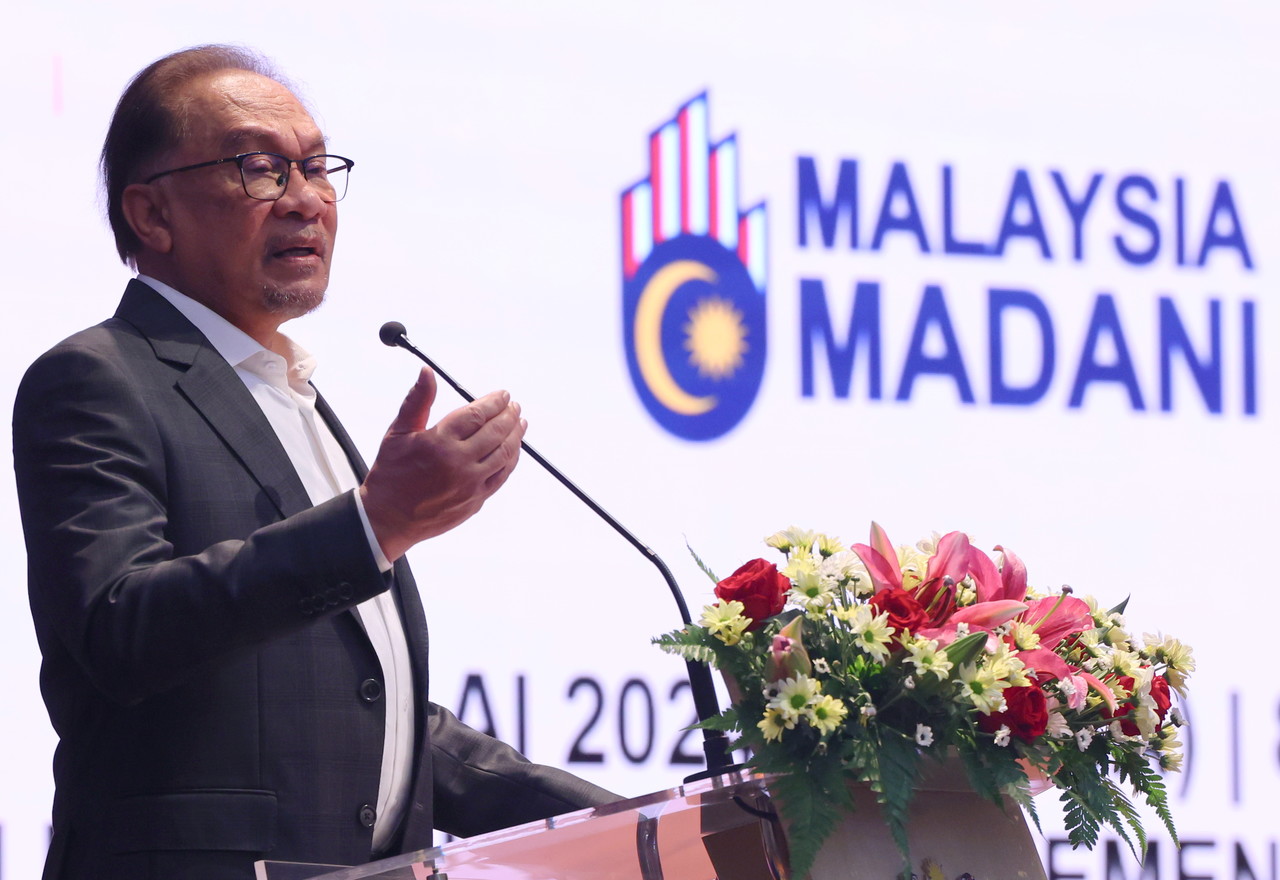
In an era marked by rapid globalisation, technological improvements, socio-economic restructuring, Malaysia is seeking a bold transformation to redefine its development trajectory. The Madani Economy, introduced by Prime Minister Anwar Ibrahim in 2023, is a comprehensive economic framework aimed at reshaping Malaysia into a more equitable, sustainable, and globally competitive nation. Rooted in the values of compassion, sustainability, and good governance, the Madani Economy represents more than just an economic reform – it is a national vision for holistic vision.
Malaysia has made significant progress since its independence in 1957, evolving from an agrarian economy to one driven by manufacturing and services. The Madani Economy was conceived as a forward-looking economic reset, aligning national development with human values, inclusiveness, and environmental consciousness.
The Framework
The term “Madani” is derived from the Arabic word meaning civilised or cultured society, and it reflects Anwar Ibrahim’s broader vision of a Malaysia Madani – a nation rooted in ethical governance, cultural depth, and social justice. The Madani Economy Framework, unveiled on July 27, 2023, outlines a strategic roadmap that aims to elevate the nation’s economic performance while ensuring that growth is sustainable, equitable, and centred around human dignity.
At the core, the Madani Framework promotes:
Strong institutions and clean governance
Shared prosperity and social inclusion
Environmental sustainability
Digital innovation and competitiveness
Human capital development
Fiscal discipline and resilience
Key targets:
The structure sets out seven medium- to long-term targets to be achieved within a decade:
Top 30 Global Economy – position Malaysia among the top 30 countries in global competitiveness.
Top 25 in Human Development index (HDI) – enhance human well-being through improved education, healthcare, and income equality.
Top 25 in Corruption perceptions Index – promote transparency and reduce corruption across public and private sectors.
Female Labour Force Participation – empower women to contribute meaningfully to the workforce by reaching a participation rate of at least 60%.
Income Gap Reduction – narrow the wage gap between the top 20% and the bottom 40% income groups.
Fiscal Sustainability – ensure prudent government spending and reduce national debt levels.
Top 12 in the Global Competitiveness Index – to produce goods and services efficiently to compete in the international market while increasing the living standards of its citizens.
Core pillars:
Good governance to restore confidence: Clean, transparent and efficient governance is the foundation of the Madani Economy. The government emphasises institutional reform, judicial independence, and stronger checks and balances. Efforts include digitalisation of public services, anti-corruption drives, and public accountability mechanisms.
A just society to ensure inclusion: Equity and social justice are central. The framework aimWs to uplift marginalised sections, especially the B40 group, indigenous populations, and rural Malaysians. The government is expanding targeted subsidies, enhancing social protection, and ensuring fair access to quality education and healthcare.
Sustainable development: Environment sustainability is non-negotiable. Policies are aligned with Malaysia’s commitment to achieve net-zero greenhouse gas emissions by 2050, expand renewable energy sources, and protect biodiversity. The Madani economy promotes climate-resilient infrastructure and green financing.
Digital transformation: Digitalisation is key to improving productivity and competitiveness. Initiatives such as the Malaysia Digital Economy Blueprint (MyDigital) and 5G rollout are being accelerated. Supported is provided to micro, small, and medium enterprises (MSMEs) to adopt digital tools and access global markets.
Empowering the Rakyat (People): The focus is on quality education, skills development and entrepreneurship. The government is reforming the Technical and Vocational Education and Training (TVET) sector, promoting lifelong learning, and investing in digital literacy to future-proof the workforce.
Economic complexity and industrial upgrading: Malaysia seeks to move up the value chain by advancing sectors such as semiconductors, aerospace, green technology, and high-value services. Policies support innovation, research and development (R&D), and domestic industry growth through strategic investments and foreign direct investment (FDI) facilitation.
Fiscal and financial resilience: To reduce dependence on oil revenues and manage fiscal deficits, the Madani Economy emphasises tax reform, expenditure rationalisation, and debt management. The goal is to achieve sustainable fiscal space while funding essential services and infrastructure.
Regional development balance: Addressing regional inequalities is essential. Investments are being channelled into less-developed states such as Sabah, Sarawak, Kelantan, and Perlis. Integrated transport projects, industrial corridors, and rural infrastructure are prioritised to stimulate balanced growth.
Implementation
Since the launch of the Madani Economy, the Malaysian government has introduced a series of strategic initiatives to bring its vision to life. Key among these is the Progressive Wage Model (PWM), designed to gradually increase wages while supporting productivity and business competitiveness. Programmes like Menu Rahmah provide affordable meals to help ease the cost of living for low-income groups, while Sumbangan Tunai Rahmah (STR) delivers targeted financial aid to the B40 and M40 segments. The government has also implemented the Pangkalan Data Utama (Padu) Database System, a centralised digital platform to streamline the delivery of subsidies and social welfare programmes, ensuring precision and transparency. To promote environmental sustainability, initiatives like the Green Technology Financing Scheme (GTFS) support the growth of renewable energy and eco-friendly initiatives. Additionally, national development plans such as the 12th Malaysia Plan (2021-2025) and annual budget frameworks are closely aligned with Madani principles, ensuring policy coherence, continuity, and impact across all sectors.
Increasing Investment
Through this economic framework, there are plans to create greater commercial ties between Malaysia and its neighbouring countries in Southeast Asia. PM Anwar mentions that efforts have to go beyond Free Trade Agreements (FTAs) to include strategic agreements and trade diplomacy between the countries to improve the multilateral and bilateral market integrations and make it easier for neighbouring nations to transport commodities, skilled labour, capital, and technologies.
PM Anwar plans to develop more high-competitive local companies to enter the regional market, especially member nations of ASEAN. Under the Madani Economy, Malaysia is to be made a more attractive destination for foreign investors. The Malaysian Investment Development Authority plans to strengthen the agencies operating under its umbrella to attract investments and facilitate investors’ affairs proactively. The framework aims to restructure existing investment incentives to promote local investments that create high-paying jobs. Industrial zones are being upgraded with advanced infrastructure and increased human capital development to fulfil the needs of investors.
Encouraging business to transition towards better sustainability and efficiency has become a major focus. Leaders of the country are highlighting ways to transform the economic environment through innovation, automation, and digitalisation towards a more sustainable, low-carbon economy. In this regard, the Ministry of Economy and the Ministry of Natural Resources, Environment, and Climate Change, have introduced the National Energy Transition Roadmap (NETR). This roadmap aims to quicken the country’s energy transition and alter how energy is produced to increase climate resilience. It offers particular incentives to encourage these new green growth initiatives.
Conclusion
The Madani Economy is a comprehensive vision for a fairer, greener, and more prosperous Malaysia. By placing people at the heart of development and reinforcing values like transparency, justice, and sustainability, the framework aspires to advance national confidence and chart a future of shared prosperity. By doing so, Malaysia is positioning itself as a dynamic, competitive, and compassionate nation. The Madani Framework is a policy shift that celebrates the Malaysian spirit- one that embraces unity in diversity and drives the country confidently into a brighter, more prosperous future.