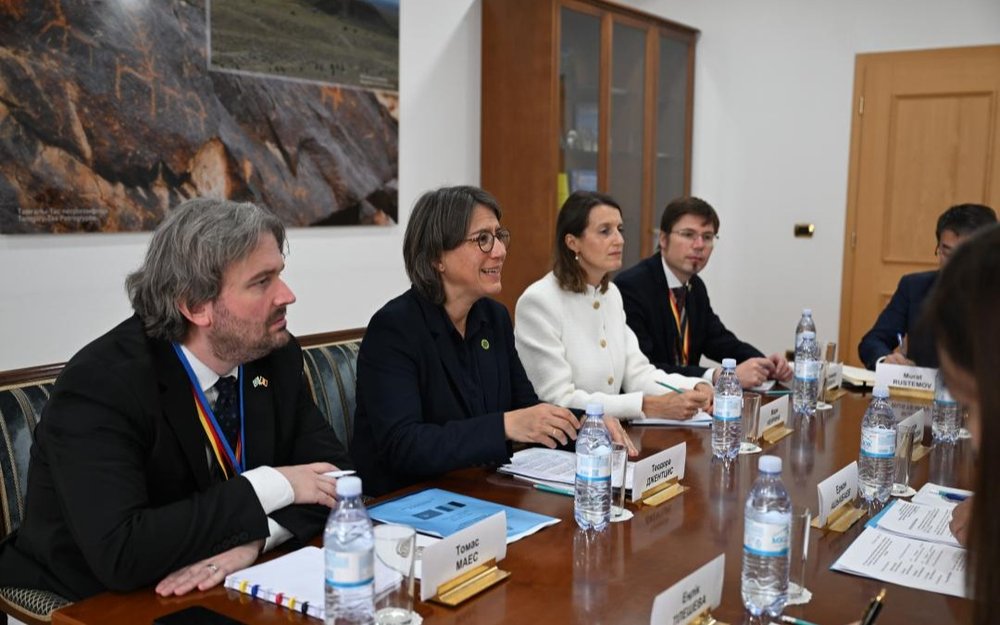

The inauguration of the first-ever India-Mali Forum for the Promotion of Exports, held in June 2026 in Bamako under the joint aegis of Mali’s Ministry of Industry and Trade, the Embassy of India, and the Malian Agency for the Promotion of Exports (APEX-Mali), marked a significant moment in India-Mali bilateral partnership and investment ties. More than a ceremonial trade event, the forum gave institutional momentum to an expanding commercial partnership and created a platform to convert growing trade into investment, value-added production and longer-term strategic partnership. Held under the theme “Reinforcing Trade and Strategic Partnerships,” it reflected a bilateral relationship that is beginning to acquire greater economic depth. The timing was significant. India-Mali bilateral trade surpassed US$326.61 million in FY2025-26, registering a 55 per cent increase over the previous financial year. The trade has been steadily growing with Indian exports driven by pharmaceuticals, machinery, and agricultural equipment, supporting Mali’s demand for accessible industrial and consumer products. Meanwhile, Bamako has increasingly supplied agricultural products and finished leather to meet the expanding Indian market demand.
India-Mali trade recorded a revival of 4.8 per cent in 2024-25. The strongest recent momentum was visible in the latest partial period—April 2025 to January 2026—with trade reaching US$287.61 million, an increase of approximately 181 per cent. This was driven largely by a sharp rise in India’s imports from Mali, which nearly trebled in 2024-25 and climbed further during the first ten months of 2025-26. India’s Duty-Free Tariff Preference (DFTP) Scheme has been an important driver of this expansion, helping to improve market access for Malian goods. The shift in trade composition is also noteworthy. India traditionally maintained a substantial trade surplus with Mali; the recent shift indicates that Mali is gaining a more meaningful place as a supplier in India’s market, marking a possible maturation of a historically India-export-led relationship into a more reciprocal commercial partnership.
Building upon the shared intent to diversify bilateral economic relations beyond conventional trade, the inaugural India-Mali Forum for the Promotion of Exports utilised Business-to-Business (B2B), Business-to-Government (B2G) and Government-to-Government (G2G) engagements. Rather than restricting cooperation to trade promotion, these formats aim to create channels for commercial and policy coordination, investment facilitation and the identification of bankable projects.
Diversifying Trade, Deepening Economic Ties
The priority sectors identified at the forum, including renewable energy, pharmaceuticals, cotton and textiles, agro-processing, automotive and agricultural machinery, and mining, closely correspond to the national economic objectives of both countries. Mali’s interest in digitising its Certificate of Origin system, drawing on India’s e-CoO model, is particularly relevant for trade facilitation across a broad range of goods. Together, this measure translates broad commitments on trade cooperation into practical channels for regular, two-way commerce. For Mali, this development aligns with its Vision Mali 2063 road map, centred on strengthening domestic value chains, industrial transformation and the diversification of exports beyond raw commodities. For India, it complements the pursuit of securing supply chains and critical inputs, wider markets for its pharmaceutical and manufacturing sectors, and more resilient South–South production networks.
New Delhi’s developmental partnership, providing concessional Lines of Credit (LOCs) amounting to approximately US$303.6 million, has supported rural electrification, power transmission, railway equipment, agricultural mechanisation, tractor assembly, and agro-processing in Mali. These initiatives are further supplemented by India’s human resource development efforts for Bamako through its training programmes under the Indian Technical and Economic Cooperation (ITEC), scholarships for higher education, and free tele-education courses offered through the digitised network of e-VidyaBharati and e-AarogyaBharati (e-VBAB). These commitments are significant because domestic processing, whether in minerals, cotton, shea or food products, depends on reliable power, transport connectivity, machinery and technical skills.
Conclusion
Taken together, these strands point to an India-Mali relationship that is moving beyond the exchange of raw commodities and towards deeper industrial and commercial engagement. Mali brings resources, an expanding domestic market and a clear industrial roadmap in Vision Mali 2063; India brings technology, development finance and a growing appetite for African partnerships. Mali’s announcement of a dedicated Investment Forum in 2026, to showcase further bankable projects, offers an early opportunity to build on the momentum.