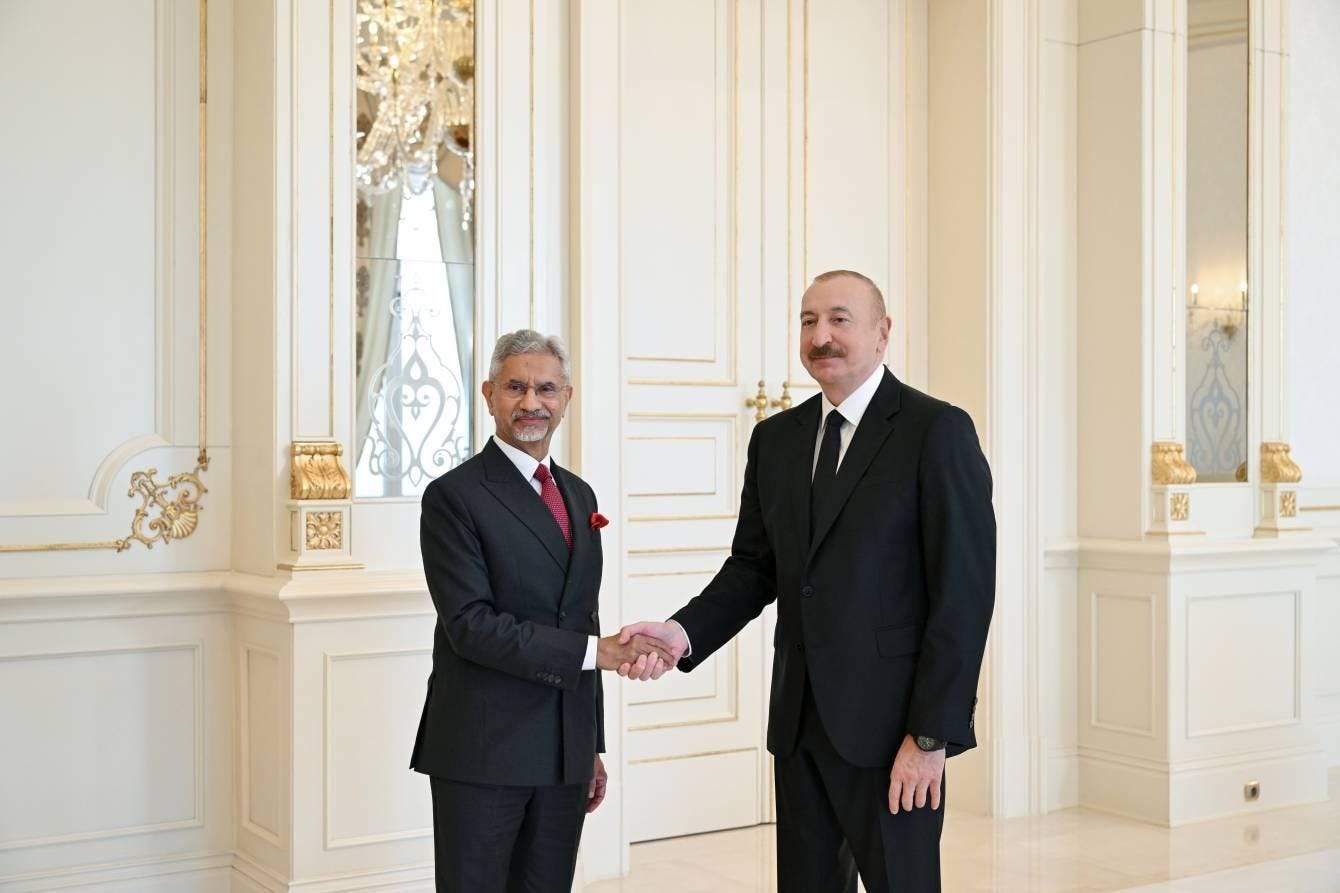
India and Azerbaijan are seeking to give fresh momentum to their bilateral relationship, with External Affairs Minister Dr. S. Jaishankar’s visit to Baku providing an important opportunity to strengthen diplomatic engagement, expand economic cooperation and address regional and international concerns. His meetings with President of Azerbaijan Ilham Aliyev and Foreign Minister Jeyhun Bayramov formed part of renewed high-level engagement between the two countries. The visit followed the meeting between Prime Minister of India Narendra Modi and President Ilham Aliyev on the sidelines of the Shanghai Cooperation Organisation summit in Bishkek in September 2026. That engagement provided an opportunity for both governments to review their relationship and consider ways to advance cooperation in areas of mutual interest.
During his meeting with President Aliyev, Dr. Jaishankar conveyed the greetings of President Droupadi Murmu and Prime Minister Narendra Modi. The two leaders’ representatives discussed the current state of bilateral relations and the opportunities available to develop cooperation in political, economic, technological, cultural and humanitarian fields. Both sides also recognised the importance of maintaining regular high-level contacts and encouraging exchanges between their business communities. The discussions reflected a shared interest in keeping diplomatic channels open and building a more productive relationship, despite differences that have affected bilateral ties in recent years.
A central part of Dr. Jaishankar’s visit was his meeting with Foreign Minister Jeyhun Bayramov. The discussions covered trade, investment, energy, transport connectivity and other sectors with potential for closer cooperation. Both sides also exchanged views on regional and international developments, highlighting the importance of continued dialogue and political consultations. For India and Azerbaijan, the challenge is to translate diplomatic engagement into practical cooperation. The visit provided an opportunity to assess existing arrangements, identify areas where progress is possible and establish a stronger basis for future engagement.
Trade and investment are among the most important areas in which the relationship could develop further. According to the Indian Embassy in Baku, bilateral trade between India and Azerbaijan reached approximately US$401 million in 2025. Indian exports accounted for US$226 million, while imports stood at US$175 million, consisting largely of crude oil. These figures demonstrate the existing economic relationship while also pointing to opportunities for diversification. The two governments have identified pharmaceuticals, agriculture, information technology and energy as areas in which cooperation could be expanded. Greater engagement between companies, investors and industry representatives could help both countries explore new commercial opportunities. Energy cooperation remains a particularly significant component of the relationship. Indian state-owned company ONGC Videsh Ltd has invested more than US$1.2 billion in stakes in Azerbaijan’s Azeri-Chirag-Gunashli oil and gas fields and the Baku-Tbilisi-Ceyhan pipeline. This established commercial presence provides a foundation for continued engagement in the energy sector.
Transport connectivity also featured in discussions between the two foreign ministers. Azerbaijan’s geographical position gives it an important role in regional trade routes connecting Asia with Europe and other markets. Both countries have an interest in improving the movement of goods and making existing transport links more effective. The International North-South Transport Corridor is another relevant area for cooperation. The wider initiative aims to facilitate trade and transport between India, Iran, Russia and other participating countries. Closer coordination on connectivity could support commercial exchanges, although progress will depend on infrastructure, regional conditions and practical arrangements between participating states.
People-to-people ties offer another route towards strengthening bilateral relations. Azerbaijan received 166,944 Indian visitors in 2025, making India its fourth-largest source of international tourists. Direct air connections between Delhi, Mumbai and Baku also provide an important link for tourism, business travel and family visits. Cultural connections extend well beyond contemporary tourism. The historic Ateshgah fire temple near Baku contains inscriptions in Devanagari and Gurmukhi, reflecting the presence of Indian merchants in the region. The literary legacy of Azerbaijani poet Nizami Ganjavi and the historical association between Azerbaijani singer and actor Rashid Behbudov and Indian actor Raj Kapoor further illustrate the longstanding cultural links between the two societies. The two governments also have established channels for cooperation in education and professional development. Through India’s Indian Technical and Economic Cooperation programme, Azerbaijani officials can access training opportunities in different fields. Continued educational exchanges, cultural programmes and professional partnerships could strengthen mutual understanding alongside formal diplomacy.
Regional and international issues formed another important part of the discussions in Baku. The two sides reviewed developments affecting the South Caucasus and the wider international environment, as well as cooperation through multilateral organisations. Their exchanges underlined the importance of dialogue, respect for sovereignty and continued diplomatic contact when addressing differences. Dr. Jaishankar’s October visit stands as a significant step in efforts to strengthen India–Azerbaijan relations. With established energy investments, growing tourism links and opportunities in trade, technology and transport, both countries have areas of common interest on which to build. Whether this renewed diplomatic momentum develops into a broader partnership will depend on the consistency of engagement and the concrete outcomes achieved in the months ahead.