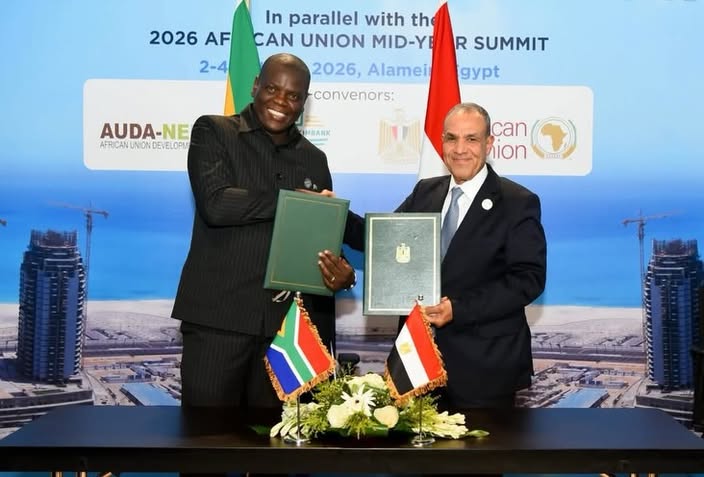
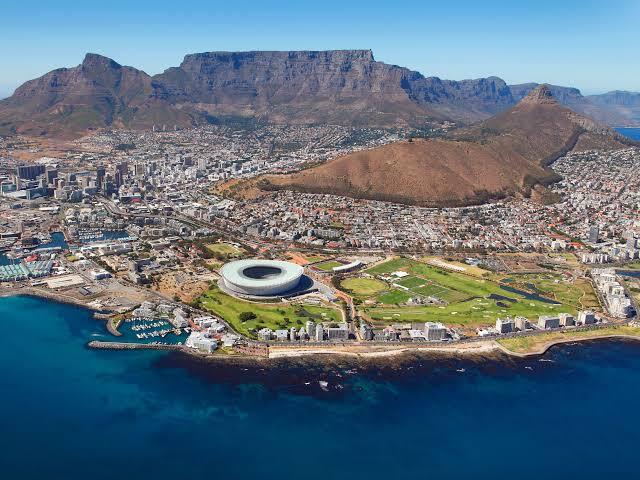
South Africa is a sophisticated, high-potential emerging market that serves as a dynamic domestic economy and the premier commercial gateway to a broader African market of over one billion consumers. Strategically positioned at the southern tip of the continent, this leading economic anchor and prominent BRICS member unites deep institutional maturity with a rapidly expanding, high-purchasing-power middle class.
South Africa’s unique investment appeal lies in its duality which also seamlessly pairs an unparalleled abundance of natural resources, including a commanding share of global platinum and gold reserves. The country is known for its cutting-edge, technologically advanced business ecosystem, which drives investment opportunities and which positions South Africa as a leader in the African continent.
Backed by world-class financial systems, robust corporate governance, and a highly progressive legal framework, South Africa delivers a secure, transparent, and resilient environment for international corporate capital. From pioneering Africa’s green energy transition through multi-billion-dollar decarbonisation programmes to serving as a leading hub for venture capital and digital innovation, South Africa offers global investors an agile, cost-effective, and strategically integrated base poised for long-term growth.
Building on the country’s global brand reputation is intrinsically linked to strengthening its international competitiveness. As the continent’s most technologically advanced and highly developed economy, South Africa offers an exceptionally robust foundation for foreign capital. Boasting a multisector economy valued at approximately R7 trillion, South Africa alone generates roughly 12% of Africa’s total Gross Domestic Product (GDP). The Johannesburg Stock Exchange (JSE) — Africa’s largest bourse — further underscores the country’s stature as the continent’s pre-eminent financial centre. It is little wonder, then, that the country hosts a higher concentration of multinational corporations than any other African nation.
South Africa’s subterranean wealth remains unparalleled. The country holds an astonishing 90% of the world’s platinum reserves and 41% of its gold. This geological wealth is underpinned by a sophisticated operational environment. The government maintains a pro-business, free-market philosophy, supported by a mature framework of regulatory bodies that rigorously safeguard both corporate and consumer interests. This stability has allowed investment activity to diversify broadly across the economy. Today, capital deployment is prominently distributed across financial services, real estate, and business services, with fixed investment expenditure overwhelmingly driven by a proactive private sector. The government’s landmark Operation Vulindlela reform programme further accelerates structural transformation across critical sectors including energy, logistics, water, and digital infrastructure.
On the global stage, South Africa serves as the primary geopolitical and economic anchor for regional trade. It is a cornerstone member of the Southern African Development Community (SADC), the Southern African Customs Union (SACU), and the Indian Ocean Rim Association (IORA), collectively facilitating seamless trade across the African continent and the broader Indian Ocean region. South Africa is also a member of the World Trade Organization (WTO) and the BRICS bloc, and a pivotal architect of the African Continental Free Trade Area (AfCFTA) — uniquely positioning South Africa as the ultimate investment gateway to the broader continent. This global prominence was recently underscored by South Africa’s historic tenure presiding over the G20 intergovernmental forum, marking the very first time an African nation has held this leadership role.
The country strategically leveraged this international spotlight during its high-profile engagement at the World Economic Forum (WEF) annual meeting in Davos. Leading the conversation as the G20 chair, the South African delegation directly engaged global business leaders, policymakers, and heads of state. South Africa successfully reinforced its national brand, demonstrating that it possesses not just the economic infrastructure, but also the visionary leadership required to anchor global investments for the future.
Why South Africa is the Discerning Investor’s Choice
South Africa stands as one of the most sophisticated, diverse, and high-potential emerging markets, one that possesses a highly favourable demographic profile characterised by a rapidly expanding middle class with escalating purchasing power.
While traditionally celebrated for its immense mineral wealth — holding globally significant reserves of platinum, gold, iron ore, manganese, chrome, and uranium — the country is increasingly attracting international exploration capital to its nascent oil and gas sectors, particularly offshore and along the Orange Basin.
Beyond these natural resources, South Africa’s investment appeal is also underpinned by an advanced manufacturing base, exceptional research and development (R&D) capabilities, and an extensive and modern physical infrastructure network. The country is currently pioneering the deployment of green technologies and sustainable industries, simultaneously mitigating environmental impact and driving robust job creation.
Operationally, South Africa offers a highly competitive cost-of-doing-business index relative to peer emerging markets. The labour market provides an abundant workforce alongside highly cost-effective professional and industrial talent across various sectors. The business landscape is supported by mature financial, legal, and telecommunications sectors, which have established the country as a premier hub for global Business Process Outsourcing (BPO) operations. This institutional strength is paired with long-term macroeconomic and political stability.
To sustain this competitive edge, the South African government actively enforces comprehensive legislation dedicated to targeted skills development and the cultivation of advanced technical competencies.
Ultimately, South Africa represents the definitive choice for discerning investors because it seamlessly bridges the gap between vast resource potential and institutional stability. By combining a robust financial and legal framework with a highly competitive cost-of-doing-business index, the nation significantly lowers operational risk whilst maximising commercial scalability. Investors recognise that South Africa is no longer merely a traditional mining powerhouse — it is a forward-looking economic engine actively pioneering green industries, expanding into nascent energy sectors, and cultivating a highly skilled workforce. Backed by an urbanising, high-purchasing-power middle class and robust infrastructure, South Africa provides the rare, resilient environment where international corporate capital can securely anchor itself to capture long-term growth across the entire African continent.
Investor-Centric Frameworks and Lifestyle Appeal
South Africa’s ascent as a preferred global destination for trade and foreign direct investment (FDI) is a direct result of its agile approach to investor requirements. The government offers a robust suite of tailored investment incentives, industrial financing mechanisms, and trade regulations explicitly designed to accelerate commercial activity and expand international trade volumes.
Complementing this commercial proposition is South Africa’s world-renowned scenic beauty and reputation for premium hospitality, which seamlessly bridges high-stakes commerce with lifestyle appeal. The country has solidified its status as a leading global hub for Meetings, Incentives, Conferences, and Exhibitions (MICE), supported by a rapidly modernised travel infrastructure, including an expanding Electronic Travel Authorisation (eTA) system.
The economic impact of this lifestyle appeal is formidable. International tourism arrivals reached a historic milestone of 10.5 million visitors, surpassing pre-pandemic benchmarks. The travel and tourism sector now drives nearly 9% of South Africa’s total GDP and sustains 1.8 million direct and indirect jobs. This unique duality — providing a cost-effective corporate operational base alongside an unparalleled quality of life — explains why global executives increasingly view South Africa not merely as a market in which to deploy capital, but as an exceptionally attractive destination for corporate travel and long-term residency.
Foreign Direct Investment Performance
South Africa maintains its stronghold as a premier destination for FDI on the continent. The nation demonstrated its immense capital absorptive capacity in 2021 by capturing nearly half (48.9%) of all African FDI inflows. As continental FDI flows have broadened across more African markets, South Africa has maintained its position as a consistently top-ranked destination, regularly featuring among the top three African markets for greenfield investments, particularly in the tourism sector.
Between 2014 and 2025, South Africa successfully secured 28 major tourism investment projects valued at USD 347.8 million, with Johannesburg, Cape Town, and Durban emerging as the primary urban hubs for international capital. This tourism-related FDI is highly diversified, spanning hospitality accommodation, specialised travel services, and cutting-edge digital tourism platforms.
In parallel, the country has solidified its reputation as a leading technology and innovation hub. From 2019 to 2024, South Africa attracted USD 3.1 billion in venture capital, representing a substantial 21% of the continent’s total VC funding, anchored by a sophisticated ecosystem of more than 200 active investment funds.
Fiscal Incentives and Competitive Advantages
South Africa’s competitive position in the global market is underpinned by a sophisticated, institutionalised support ecosystem designed to maximise investor returns and de-risk capital deployment. The nation’s fiscal framework offers comprehensive, targeted tax incentives that significantly lower the total cost of business set-up and ongoing operations.
Qualifying enterprises operating within designated Special Economic Zones (SEZs) benefit from a preferential 15% corporate tax rate alongside comprehensive VAT and customs duty suspensions. To foster high-value industries, the government also provides a generous research and development (R&D) stimulus offering up to a 150% tax deduction on qualifying expenditures. Furthermore, the operational cost of scaling workforce requirements in labour-intensive sectors is significantly reduced through the Employment Tax Incentive (ETI), which provides a highly cost-effective mechanism for hiring younger professional and industrial talent.
This domestic fiscal architecture is further enhanced by an extensive network of Double Taxation Agreements (DTAs) with key global economies, which effectively mitigates cross-border tax liabilities and streamlines international capital flows.
Institutional Synergy and Investment Alignment
Beyond fiscal policy, South Africa provides seamless administrative backing through InvestSA, the nation’s premier Investment Promotion Centre. Functioning as a single, high-level point of contact, InvestSA operates in close alignment with key government ministries to fast-track regulatory approvals, reduce bureaucratic friction, and simplify licensing procedures. This coordinated approach ensures that incoming FDI is strategically synchronised with national economic priorities, particularly in high-growth sectors such as digital transformation, green energy infrastructure, and sustainable development.
This powerful synergy transforms South Africa’s vast natural assets and robust physical infrastructure into a highly commercialised proposition. By pairing a resilient, growth-oriented economy with sophisticated sovereign support, the country establishes itself not merely as a leading destination for tourism and leisure infrastructure, but as an exceptionally competitive, world-class contender for global corporate capital.
Conclusion
Armed with a clear macroeconomic vision, ambitious R3 trillion investment targets, and a decisive strategy to lead Africa’s green energy transition, the nation has moved far beyond mere potential. For global investors, South Africa is no longer simply a destination to watch — it is the definitive platform from which to execute bold, future-proof strategies.
The ambitious restructuring of South Africa’s energy grid, its pioneering role in the AfCFTA, and its rise as a continental technology and venture capital hub are no longer distant aspirations — they are accelerating realities. For global business leaders seeking the next frontier of growth, the groundwork has already been laid. Investing in South Africa is more than a strategic entry point into a R7 trillion economy— it is a definitive stake in the future of African global commerce.