
India’s wildlife conservation story has changed considerably over the past several decades. Species that once faced severe population declines are now showing signs of recovery, supported by protected areas, stronger laws, scientific monitoring and programmes dedicated to individual animals and their habitats. The progress is particularly visible in the country’s tiger, Asiatic lion, greater one-horned rhinoceros and Asian elephant populations. Each has faced different threats, including poaching, habitat loss, fragmentation and increasing contact with human settlements. Their recovery demonstrates what sustained conservation policies can achieve in one of the world’s most populous countries. Recent government assessments show India is home to more than 3,600 tigers, 891 Asiatic lions, more than 3,300 greater one-horned rhinoceroses and more than 22,000 wild elephants.
India’s modern tiger conservation programme began in 1973 with Project Tiger, introduced when the country’s tiger population had fallen to dangerously low levels. The programme established protected habitats and strengthened measures against poaching while improving prey populations and forest management. Over time, the system developed into a wider network involving the National Tiger Conservation Authority, state governments, tiger reserves, scientific monitoring and periodic national population assessments.
The 2022 national tiger assessment estimated 3,682 tigers in India, compared with 2,967 in 2018 and 2,226 in 2014. India is now estimated to hold more than 70 per cent of the world’s wild tiger population. Tiger conservation has also become closely connected with the protection of wider ecosystems. Forests, water sources, prey species and wildlife corridors all form part of the landscape required to sustain tiger populations. India had 58 tiger reserves across 18 states by 2026. Authorities have also identified 32 important tiger corridors to maintain connectivity between habitats.
Unlike India’s tigers, which are distributed across several states, the country’s wild Asiatic lions are found only in Gujarat, concentrated in the Gir and Greater Gir landscape. The latest official assessment recorded 891 Asiatic lions in 2025, compared with 674 in 2020. The population has also expanded into surrounding forests, river corridors and other suitable areas.
Gujarat’s conservation measures include habitat improvement, grassland restoration, strengthening the prey base and monitoring lion movements. Veterinary facilities and surveillance systems have also been developed to address disease and other risks. Barda Wildlife Sanctuary has been developed as an additional habitat for lions, helping reduce the risks associated with having a population concentrated in one principal landscape. Project Lion, announced by the Government of India in 2020, provides a wider framework for conserving the species. Its focus includes habitat management, ecological monitoring and maintaining corridors across the Greater Gir landscape.
The greater one-horned rhinoceros has also experienced a notable recovery. The species suffered heavily from hunting and poaching, while the loss of riverine grasslands reduced its available habitat. India is now the principal stronghold of the species. Government figures put India’s greater one-horned rhinoceros population at about 3,300. Together with Nepal’s 752 rhinos, the global population is about 4,075. Wild rhinos are found in Assam, Uttar Pradesh and West Bengal.
Assam remains particularly important. The state is home to nearly 70 per cent of the world’s rhino population, with Kaziranga National Park serving as one of the species’ most important strongholds. Anti-poaching operations, habitat management and population monitoring have played an important role in this recovery. Rhino conservation has also extended beyond Assam, with efforts to protect and restore populations in other parts of the country. The Government has initiated Project Rhino to provide greater support for rhino protection, habitat management and scientific research. India has also developed a National Conservation Strategy for the Greater One-Horned Rhinoceros, with the broader aim of strengthening existing populations and restoring the species to parts of its former range.
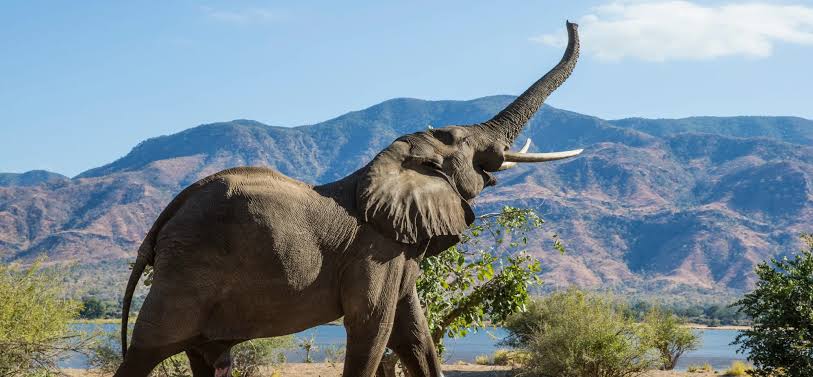
Elephant conservation is particularly complicated because elephants naturally travel across large landscapes, often moving beyond protected areas. India is home to nearly 60 per cent of the world’s wild Asian elephants. The latest government assessment estimated 22,446 wild elephants. Project Elephant, launched in 1992, focuses on protecting elephant populations, habitats and migration routes. By 2026, India had 33 Elephant Reserves across 14 states and 150 scientifically validated elephant corridors.
These corridors are vital because elephants need to move between feeding, breeding and water areas. Early-warning systems, monitoring, field response teams and community participation are being used to reduce dangerous encounters. The protection of elephant corridors is therefore becoming as important as the protection of the reserves themselves.
The recovery of individual species has taken place alongside an expansion of India’s wider protected-area network. The Wildlife (Protection) Act, 1972 remains a central part of India’s legal framework for protecting wildlife and establishing protected areas.
Government support also extends to anti-poaching operations, habitat improvement, wildlife veterinary services, monitoring equipment and measures aimed at reducing human-wildlife conflict. Modern conservation increasingly combines traditional field protection with technology. Camera traps, drones, electronic surveillance and satellite-based monitoring are being used to understand animal movements and strengthen protection.
India’s wildlife recovery is not the result of one programme or a single generation of conservation efforts. It reflects decades of legislation, protected-area expansion, scientific research, enforcement and cooperation between central and state authorities. The country’s forest and tree cover now exceeds 8.27 lakh square kilometres, while its protected-area network covers more than 1.75 lakh square kilometres.
The recovery of India’s flagship species nevertheless demonstrates that population decline is not necessarily irreversible. Tigers have increased substantially since the beginning of the 21st century. Asiatic lion numbers have risen from 674 in 2020 to 891 in 2025. India’s greater one-horned rhino population has grown to more than 3,300, while the country remains home to the majority of the world’s wild Asian elephants.
India’s conservation story is therefore not simply about saving individual animals. It is increasingly about protecting connected ecosystems in which wildlife can survive while communities and infrastructure continue to expand.