Canadian Prime Minister Mark Carney has put India and the Association of Southeast Asian Nations (ASEAN) at the heart of Canada’s efforts to diversify trade and expand access to new consumers. In remarks on August 22, Carney said Canadian businesses currently have tariff-free access to 1.5 billion consumers and that Canada intends to double that figure over the following six months through new trade agreements “from ASEAN to India.”
Bilateral merchandise trade reached $10.9 billion in 2025. Canadian services exports to India stood at $15.6 billion in 2024. Canadian commercial interests in India extend across clean technology and energy transition, critical minerals, infrastructure, digital industries and artificial intelligence, agri-food, education and research. The Canadian government identifies India’s infrastructure requirements, expanding digital economy and demand for critical minerals as areas offering opportunities for Canadian companies and investors.
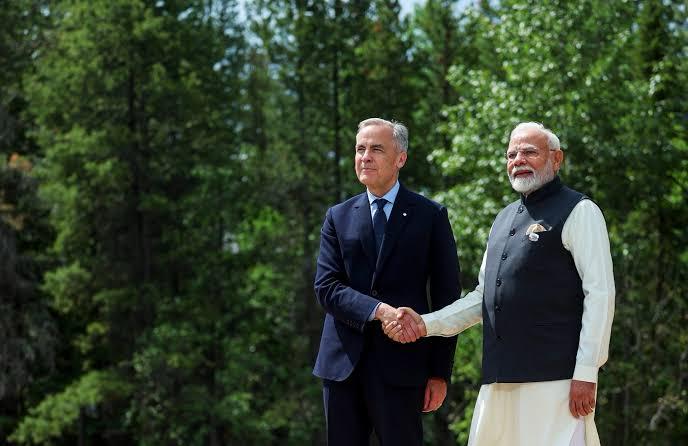
Canada and India began moving towards a more comprehensive trade framework in November 2025. Prime Minister Mr. Carney and Prime Minister Shri Narendra Modi agreed to formally launch negotiations for a Comprehensive Economic Partnership Agreement (CEPA) when they met on the sidelines of the G20 Summit in Johannesburg. The proposed agreement covers goods, services, investment, agriculture andagri-food, digital trade, mobility, and sustainable development. The two countries also established an objective of more than doubling bilateral trade to $ 70 billion annually by 2030.
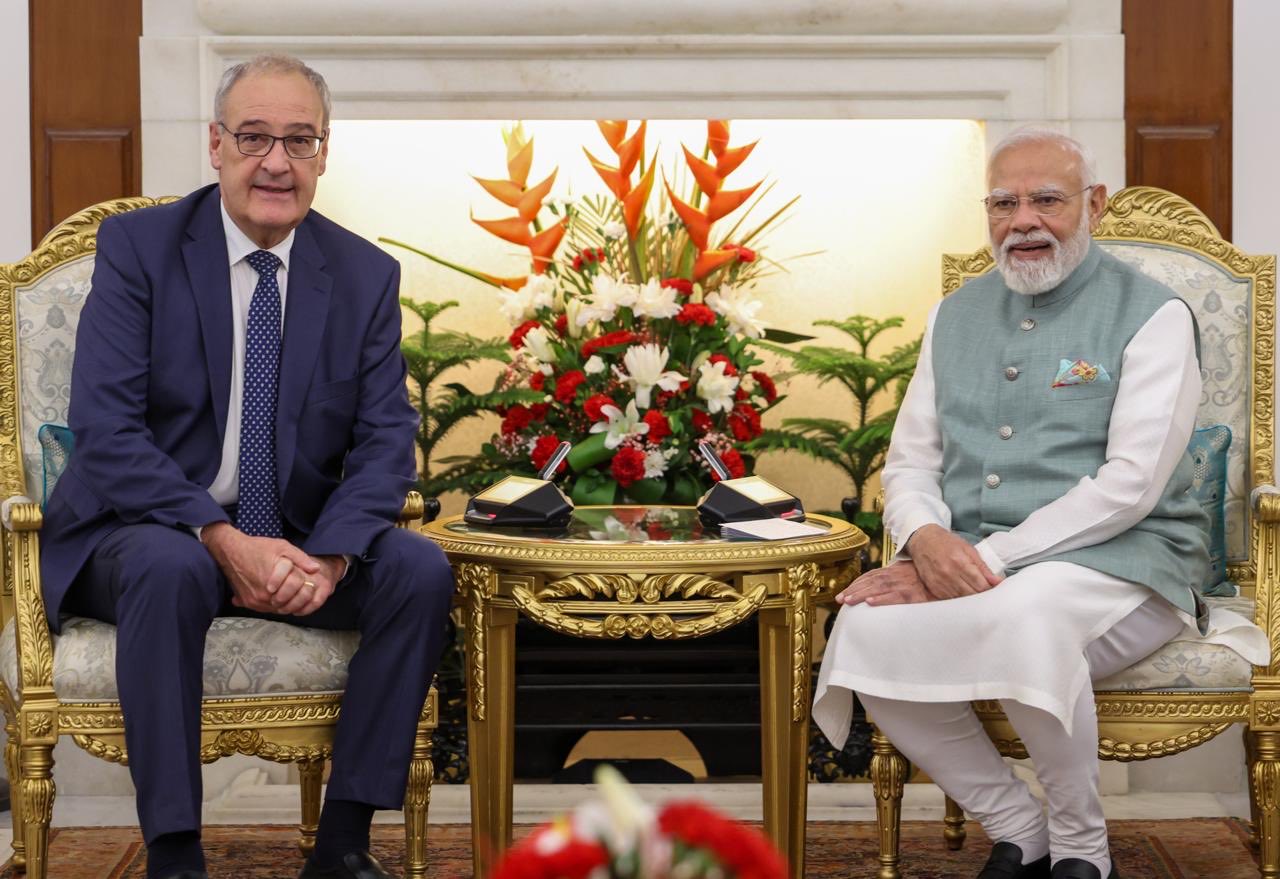
Carney’s subsequent visit to India provided the next major step in the economic relationship. He visited Mumbai and New Delhi in February 2026, marking the first bilateral visit by a Canadian Prime Minister to India since 2018. During the visit, India and Canada formally launched the CEPA negotiations and signed the Terms of Reference for the talks, with both sides aiming to conclude the agreement by the end of 2026. The visit also resulted in several sector-specific agreements. India and Canada signed an MoU on cooperation across critical-mineral value chains, while India’s Department of Atomic Energy and Canadian company Cameco entered into a $2.6 billion long-term uranium supply agreement. The two countries also advanced cooperation in areas including energy, technology, artificial intelligence, talent and innovation, culture and defence.
The trade agenda was followed by ministerial-level engagement in May 2026 by India’s Commerce and Industry Minister Mr. Piyush Goyal to Canada, leading a trade delegation of more than 120 companies, described by the Canadian government as the largest Indian trade delegation sent abroad. His visit was directly connected to the broader trade and investment agenda, including efforts to advance the CEPA negotiations. The two sides also launched the Canada-India Trade and Investment Forum and discussed opportunities in clean energy, critical minerals, agri-food, advanced manufacturing, digital technologies and skills.
The leaders maintained this momentum at the G7 Summit in Évian, France, in June this year, where PM Modi and PM Carney met on the sidelines. They reviewed bilateral economic cooperation, including commercial arrangements involving LNG, LPG, and metallurgical coal, and welcomed progress in the CEPA negotiations. Both leaders reaffirmed their objective of concluding the agreement in 2026.
India features as a key player within the wider Canadian strategy of building economic partnerships across regions as demonstrated by Canada’s engagement with the UAE. During PM Carney’s November 2025 visit, Canada and the UAE signed a Foreign Investment Promotion and Protection Agreement and launched negotiations for a CEPA. The investment agreement entered into force in May 2026, while the Canada-UAE CEPA negotiations were concluded in August.
PM Carney’s latest reference to expanding trade “from ASEAN to India” therefore comes after a slew of measures aimed at strengthening Canada’s commercial engagement across Asia. With the CEPA negotiations continuing, cooperation expanding into strategic sectors, and bilateral trade already spanning across domains, India is set to become a significant component of Canada’s effort to broaden its international trade and investment relationships.