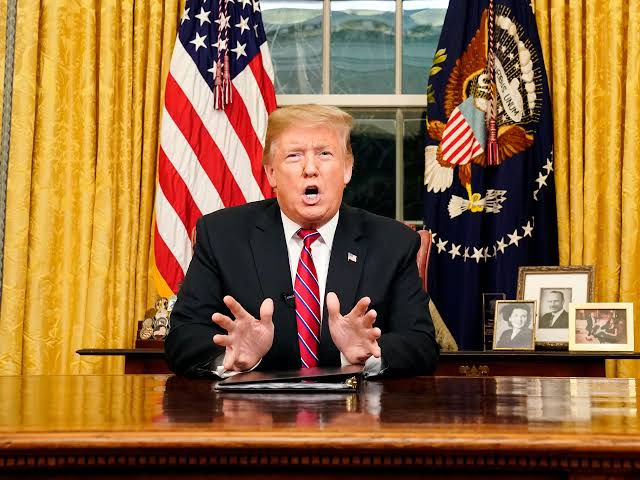
The United States and South Korea have moved into a new phase of their economic relationship, with the two governments advancing major investment projects under the strategic trade and investment framework agreed between Washington and Seoul. The development came into sharper focus on September 30, when U.S. President Donald J. Trump announced plans for South Korean investment of up to $200 billion in strategic projects across the United States. The announcement highlighted energy and infrastructure projects, including nuclear power generation, natural gas development and a large power-generation facility in Texas.
The announcement represents the implementation phase of a much broader economic arrangement between the two countries. Under the framework established in 2025, South Korea committed $350 billion in investment-related activity in the United States. Of that amount, $150 billion was designated for cooperation in the shipbuilding sector, while another $200 billion was allocated to strategic investments.
The United States, meanwhile, agreed to adjustments to its tariff treatment of South Korean goods. The arrangement included a 15 percent tariff framework for qualifying South Korean-originating goods, alongside changes affecting sectors such as automobiles, automotive parts, pharmaceuticals and other products.
The two governments have presented the agreement as part of a broader effort to deepen economic and national-security cooperation and strengthen supply chains in strategically important industries.
The first group of projects to emerge from the strategic-investment programme centres heavily on energy. South Korea’s Ministry of Economy and Finance said on October 1 that three projects had been identified for advancement under the Korea-U.S. Strategic Investment Memorandum of Understanding: a Texas gas-fired combined-cycle power-generation project, a Korea-U.S. nuclear-power framework and the Alaska LNG project. The Texas project, known as Project Star, is expected to provide additional electricity capacity linked to growing demand from energy-intensive industries, including artificial-intelligence data centres. South Korean officials have said the project passed the necessary domestic procedures and would become the first Korea-U.S. strategic investment project to formally move forward. The project is also expected to create opportunities for South Korean companies involved in power-generation equipment, engineering, construction and long-term operations and maintenance.
For Washington, the investment programme is closely connected to its efforts to expand domestic energy and industrial capacity. For Seoul, participation gives Korean companies an opportunity to expand their presence in the American energy and infrastructure market. The two governments are developing a framework for cooperation involving large-scale nuclear power projects. The initiative fits within a wider push by Washington to expand nuclear generation and by Seoul to use the international competitiveness of its nuclear industry in overseas markets. South Korea’s government has stressed that strategic investment projects are expected to be commercially viable and subject to the procedures established under the bilateral investment framework.
The Alaska LNG question
The Alaska LNG project received particular attention during the September 30 White House announcement. The proposed project is designed to transport natural gas from Alaska’s North Slope through a long pipeline to a liquefaction and export facility, potentially allowing LNG to be shipped to Asian markets. President Trump presented South Korean participation in the project as part of the broader $200 billion strategic-investment commitment. However, Seoul subsequently made clear that the Alaska project should not yet be treated as a completed investment decision.
South Korea’s government has said the project would undergo assessment of its commercial viability and compliance with relevant legal procedures. This distinction is important because the strategic-investment framework does not mean that every project discussed by the two governments automatically becomes a final investment. The Korean government has also previously stated that the strategic investment commitment is capped at $200 billion and that annual dollar funding under the arrangement cannot exceed $20 billion. That annual limit was designed to reduce potential pressure on South Korea’s foreign-exchange market while allowing investments to be made as individual projects progress.
Trade concessions accompany investment
The investment commitments form only one side of the wider economic relationship. Under the 2025 U.S.-South Korea trade framework, Washington agreed to tariff arrangements that placed South Korean-originating goods under a 15 percent reciprocal-tariff rate in the circumstances specified by the agreement. The United States also agreed to reduce certain sectoral tariffs affecting South Korean automobiles and automotive parts to 15 percent. The agreement addressed a number of non-tariff barriers as well.South Korea committed to remove a 50,000-vehicle annual cap affecting U.S.-origin vehicles that comply with U.S. Federal Motor Vehicle Safety Standards. Seoul also agreed to work with Washington on issues involving agricultural biotechnology, food and agricultural products, digital services, data transfers and other areas identified by the two governments.
The two countries also agreed to cooperate on intellectual-property protection, labour rights, environmental standards and measures aimed at preventing duty evasion. The economic relationship therefore extends beyond tariffs. The stated objective is to create a wider framework in which trade, investment, industrial capacity and economic security reinforce one another. The significance of the September 30 announcement lies partly in the shift from negotiating the framework to putting individual projects into operation.
The original agreement established the scale of South Korean investment in the United States. The subsequent strategic-investment mechanism created a process for identifying, evaluating and advancing projects. The projects now under consideration cover industries that have become increasingly important to both governments: energy, nuclear power, electricity infrastructure, advanced manufacturing and supply chains. For South Korean companies, participation in these projects could provide access to the large U.S. market while allowing Korean firms to supply equipment, technology and expertise. For the United States, the investment programme provides a channel for attracting capital and industrial capabilities from one of its major Asian economic partners.
The two countries are also seeking to connect these investments with national-security priorities. Their governments have identified secure supply chains and cooperation in strategic industries as increasingly important components of the bilateral economic relationship.
A relationship extending beyond traditional trade
The latest developments point to a U.S.-South Korea economic relationship that is broader than conventional trade in goods. The two countries already maintain extensive commercial links through the Korea-U.S. Free Trade Agreement. The newer framework adds large-scale investment, strategic industries and economic-security cooperation to that relationship. The September 30 announcement therefore marks an important point in the implementation of the investment commitments made under the broader agreement. At the same time, the status of individual projects remains different from one another, with some having progressed through domestic procedures while others continue to undergo commercial and legal assessment.