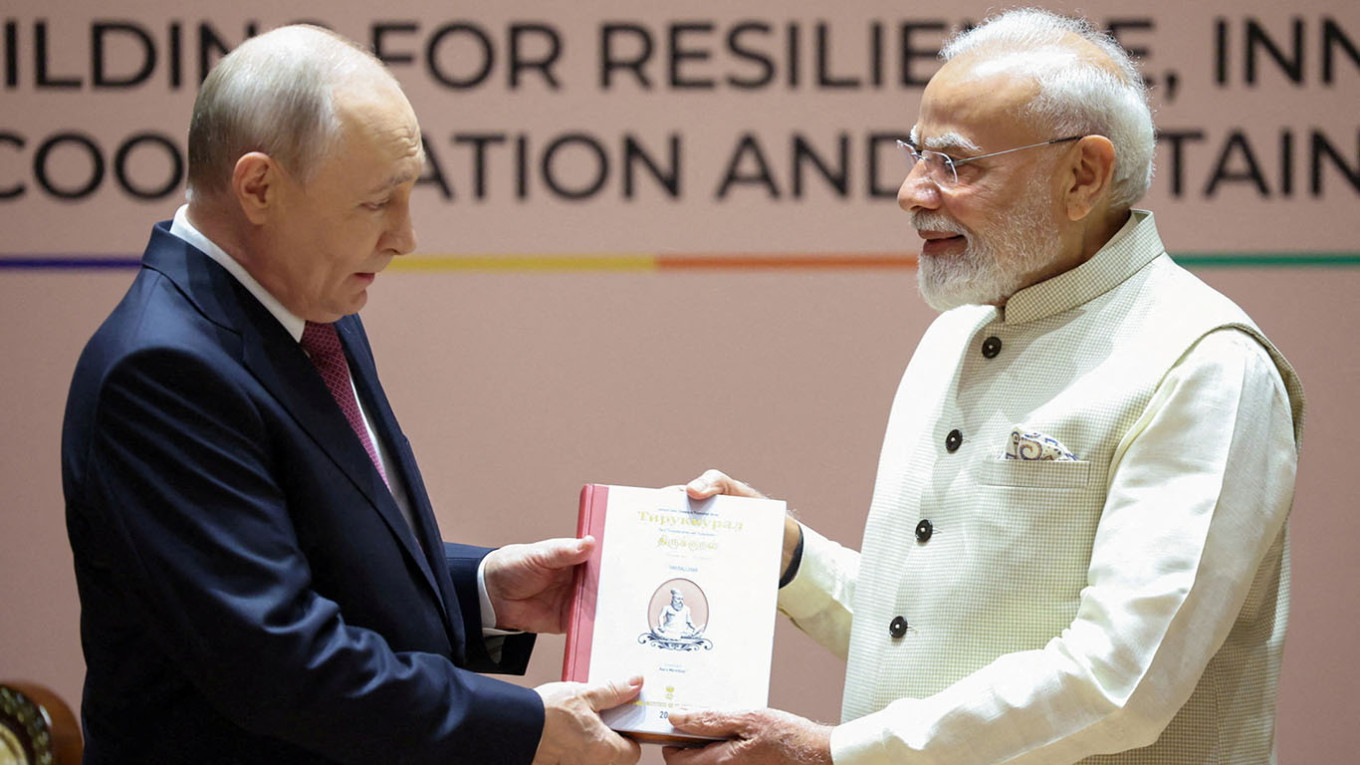
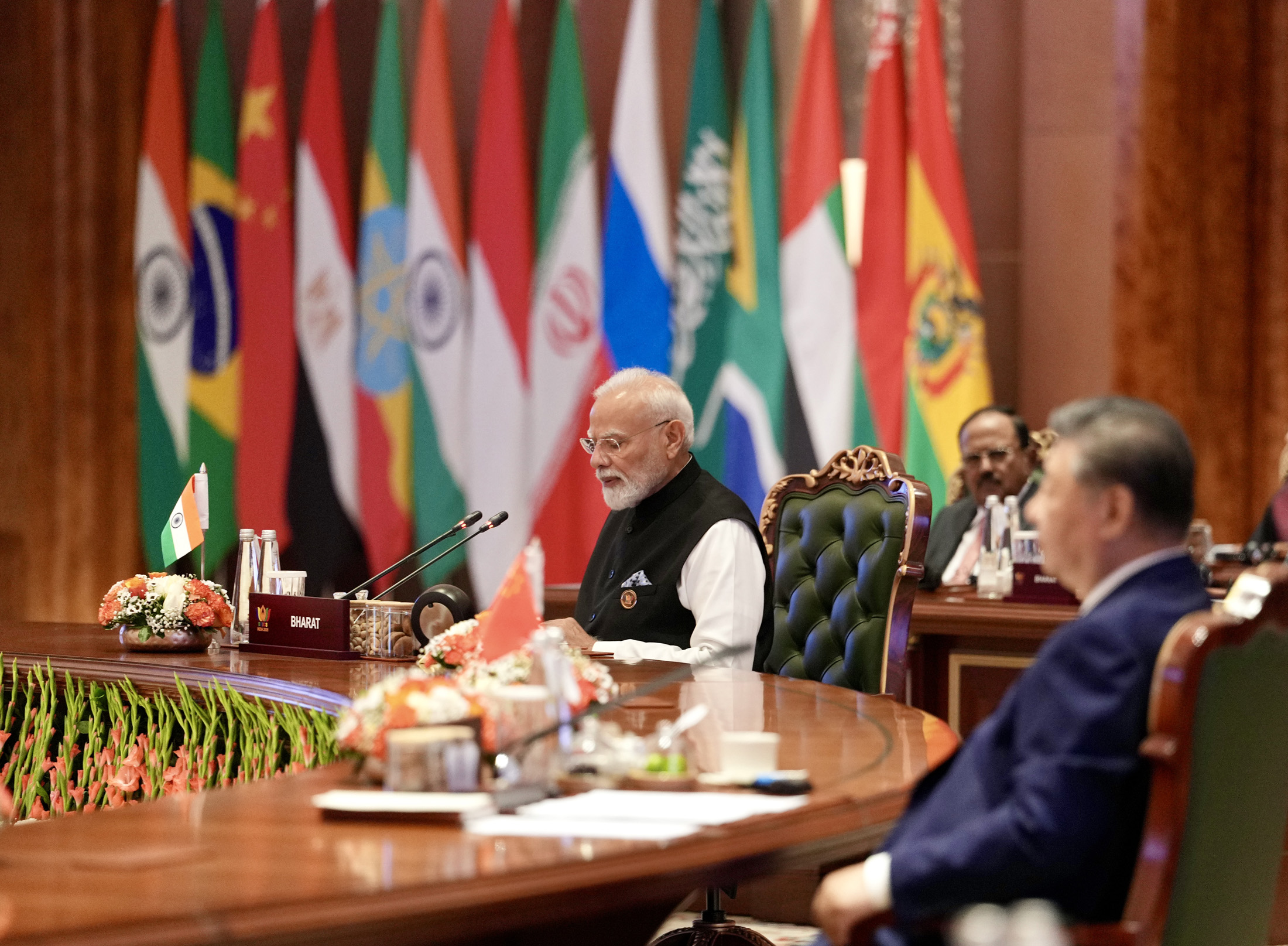
The 18th BRICS Summit opened in New Delhi on 12th September, 2026, Saturday with Prime Minister Narendra Modi calling for a stronger, more effective and more representative role for the Global South in international decision-making, as leaders gathered under India’s 2026 chairship to mark two decades of the grouping. Hosted at Bharat Mandapam, the first day of the summit centred on inclusive global governance, strengthening multilateral institutions and giving BRICS a more practical role in addressing global challenges. India has placed the chairship under the theme “Building for Resilience, Innovation, Cooperation and Sustainability”, with a stated emphasis on a people-centric and humanity-first approach.
The summit also coincided with the 20th anniversary of BRICS, giving the New Delhi meeting added significance as the grouping looks ahead to the next phase of its development. In his opening remarks, PM Modi said India’s chairship had focused on connecting BRICS cooperation more closely with ordinary people. He noted that more than 350 meetings had been organised during the chairship across nearly 30 Indian cities, bringing together ministers, officials, experts, businesses and other stakeholders.
PM Modi described the 20th anniversary as a “coming of age” moment for BRICS and argued that the grouping now needed to turn its internal consensus into more concrete outcomes on the international stage.
PM Modi calls for a new approach to global governance
A major part of the Prime Minister’s address focused on reforming the international system. PM Modi argued that the existing structure of global governance continues to leave many developing countries with limited influence over decisions that directly affect them. He called for a shift towards what he described as a “platform of partnership”, where countries have a greater voice in shaping global rules.
Among his proposals was the creation of a BRICS Continuity and Implementation Mechanism. The mechanism, working through the BRICS Troika, would track decisions and ensure that initiatives continue from one chairship to the next rather than losing momentum when the presidency changes hands. He also proposed creating a secure digital repository recording decisions, responsible nodal points, timelines and implementation status.
On wider international reform, PM Modi proposed that BRICS work towards ten proposals for global governance reform, with the possibility of turning them into a BRICS Reform Roadmap at the next summit. The Prime Minister placed particular emphasis on three areas: representation, responsiveness and rule-making.
He said reform of the United Nations Security Council could no longer be delayed and called for text-based negotiations to be connected to a defined timeline and concrete outcomes. He also argued that international financial institutions should better reflect the economic realities of the present day. The issue of rule-making was another prominent part of his speech. Modi pointed to artificial intelligence, cyberspace, outer space, biotechnology and other critical technologies as areas where international rules are increasingly being shaped.
His argument was that developing countries should not remain merely consumers of rules created elsewhere. Through BRICS, he said, countries of the Global South could build the negotiating skills, legal expertise and institutional capacity needed to participate more effectively in shaping those rules.
New Delhi Declaration sets out broad BRICS priorities
The first day also saw the publication of the BRICS New Delhi Declaration, setting out the broad direction of cooperation among the expanded grouping. The declaration reaffirmed the BRICS principles of mutual respect, sovereign equality, solidarity, inclusiveness, collaboration and consensus. It also emphasised the three established pillars of BRICS cooperation: political and security cooperation, economic and financial cooperation, and cultural and people-to-people exchanges.
The declaration highlighted the contribution of partner countries and welcomed the wider participation of emerging markets and developing countries in BRICS activities. It also recorded the scale of India’s year-long chairship. According to the declaration, more than 400 meetings and engagements involving ministers, parliamentarians, agency heads, officials, experts, businesses and people were held in 30 cities.
The document placed particular importance on global governance reform and greater representation for emerging markets and developing countries in international institutions. Economic and technological cooperation also featured prominently. The declaration welcomed work on industrial cooperation, artificial intelligence, advanced digital production technologies, science and research, digital connectivity, skills development and resilient infrastructure.
The document also welcomed the launch of the BRICS-NDB Knowledge Portal, designed to bring together development experiences, policy innovations and lessons from projects financed by the New Development Bank.
PM Modi-Xi meeting brings India-China issues back into focus
One of the most closely watched meetings on the sidelines was between PM Modi and Chinese President Xi Jinping. According to the Prime Minister’s Office, the two leaders noted steady progress in bilateral relations since their previous meeting in Tianjin in August 2025 and agreed on the importance of taking a strategic and long-term view of ties.
PM Modi stressed that differences should not become disputes and said relations should be guided by mutual respect, mutual sensitivity and mutual interest. The border issue remained central to the discussion. PM Modi emphasised the importance of peace and tranquillity in border areas and adherence to existing agreements and understandings. Both leaders expressed commitment to pursuing a fair, reasonable and mutually acceptable resolution of the boundary question.
The two sides also discussed people-to-people exchanges, cultural contacts, business links and mobility. Economic relations were another part of the conversation, with both leaders acknowledging the need to address concerns surrounding structural trade imbalances, supply chains and market access. PM Modi also thanked China for supporting India’s BRICS chairship and for contributing to the success of the summit.
India expands engagement with Malaysia, Vietnam and Ethiopia
The summit’s sidelines were equally busy.
PM Modi met Malaysian Prime Minister Anwar Ibrahim, with discussions covering the progress of bilateral cooperation following Modi’s visit to Malaysia earlier in 2026. The two sides reviewed cooperation in trade and investment, defence and security, semiconductors, infrastructure, digital economy, energy, fintech, education and tourism. Malaysia also conveyed its concurrence with India’s proposal to establish an Indian Consulate General in Kota Kinabalu, Sabah. Both leaders reaffirmed their commitment to strengthening the India-Malaysia Comprehensive Strategic Partnership and discussed regional and global developments.
With Vietnam, PM Modi met Prime Minister Le Minh Hung and reviewed the progress of bilateral ties, which had been elevated to an Enhanced Comprehensive Strategic Partnership during Vietnamese leader To Lam’s state visit to India in May 2026. The discussions covered the broader relationship and regional and global issues of mutual interest. The Indian government described Vietnam as an important partner in Southeast Asia and a key pillar of India’s Act East Policy.
PM Modi also met Ethiopian Prime Minister Abiy Ahmed Ali. The two leaders discussed strengthening the India-Ethiopia Strategic Partnership, including economic cooperation, defence and security, and capacity building. Their discussions also touched on regional and international developments and cooperation in multilateral forums. Modi welcomed Ethiopia’s participation in the BRICS Summit and said its presence strengthened the collective voice of the Global South.
India-UAE ties feature prominently on summit sidelines
Another important meeting was held between PM Modi and Sheikh Khaled bin Mohamed bin Zayed Al Nahyan, Crown Prince of Abu Dhabi. The two leaders reviewed the India-UAE Comprehensive Strategic Partnership and welcomed the progress made across several areas. A notable economic development discussed was the announcement by the UAE’s International Holding Company of an $11.5 billion integrated greenfield aluminium project in Odisha, described by the Indian government as the country’s largest integrated aluminium investment. The leaders also discussed opportunities for greater cooperation in defence, space, nuclear energy, technology and innovation. They welcomed the UAE’s participation in BRICS under India’s chairship and agreed to continue working closely through the grouping.
Two decades of BRICS marked with commemorative stamps
The first day also carried a symbolic anniversary moment. Two commemorative postage stamps were released to mark 20 years of BRICS cooperation, 2006–2026. The stamps reflect the evolution of BRICS as a platform for dialogue and cooperation, while also incorporating the priorities of India’s 2026 chairship and its emphasis on resilience, innovation, cooperation and sustainability.
A summit focused on what comes next
By the end of the first day, India had used its chairship to put several issues firmly on the BRICS agenda: reform of global institutions, stronger representation for developing countries, continuity in BRICS initiatives, economic and technological cooperation and a greater focus on practical implementation. The New Delhi Declaration also reaffirmed support for China’s BRICS chairship in 2027 and the hosting of the next summit in China.
For India, however, the first day was about more than hosting another international summit. New Delhi used the occasion to press its argument that the growing weight of emerging economies should be reflected in the institutions that govern the international system. PM Modi’s message was clear: BRICS has reached its 20-year mark, but India’s chairship wants the grouping to enter its next phase with greater continuity, more practical cooperation and a stronger voice for countries of the Global South.