New Delhi is set to host the 18th BRICS Summit on September 12 and 13, for the fourth time. bringing together leaders of the expanded grouping of major emerging economies. The summit comes at a significant point in the grouping’s evolution. What began in 2006 as a four-country grouping has grown considerably, with BRICS and its partner countries now forming a 21-country family, according to Prime Minister Narendra Modi. The Indian chairship has placed particular emphasis on building resilience, encouraging innovation, strengthening cooperation and promoting sustainability.
The first major BRICS-related engagements in New Delhi have already begun. On September 11, PM Modi addressed the BRICS Business Forum, where he highlighted the economic scale of the grouping and the growing role of its members in global trade and innovation. PM Modi said BRICS countries and partners together now represent around half of the world’s population, 40 per cent of global GDP and more than 25 per cent of global trade. He also pointed to the expansion of the group’s combined economic strength over the past two decades, arguing that BRICS economies have grown faster than the global economy during this period.
The business forum was described by the Prime Minister as the largest BRICS Business Forum held so far. His message was focused less on broad political declarations and more on turning the bloc’s growing economic weight into practical cooperation. “Strong business partnerships can open new avenues for growth, innovation and shared prosperity,” PM Modi said in a message accompanying his address.
The emphasis on business and innovation reflects several of India’s priorities during its 2026 chairship. Earlier BRICS ministerial meetings held during the year have focused on trade, MSMEs, technology, digital infrastructure, industrial cooperation and supply chains. The BRICS Trade Ministers’ meeting in Jaipur, for example, advanced work on the BRICS Economic Partnership 2030 and adopted measures aimed at improving access to trade finance for smaller businesses. Ministers also agreed on principles relating to export-oriented MSMEs and cooperation on global value chains. These discussions provide some of the economic groundwork for the leaders’ summit in New Delhi.
PM Modi’s meetings with Putin and Pezeshkian
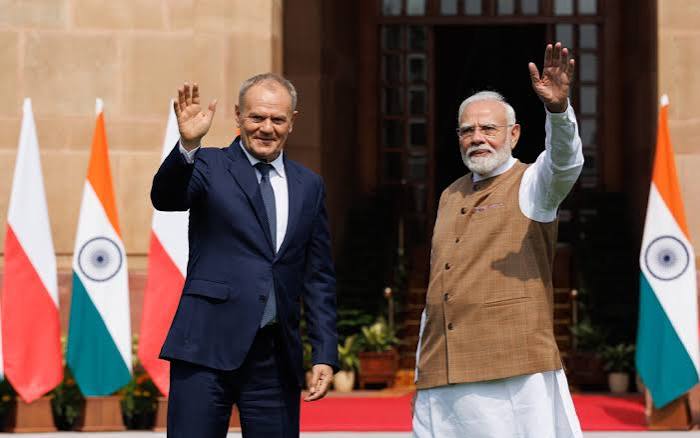
Alongside the BRICS programme, PM Modi had begun a series of bilateral engagements with visiting leaders.
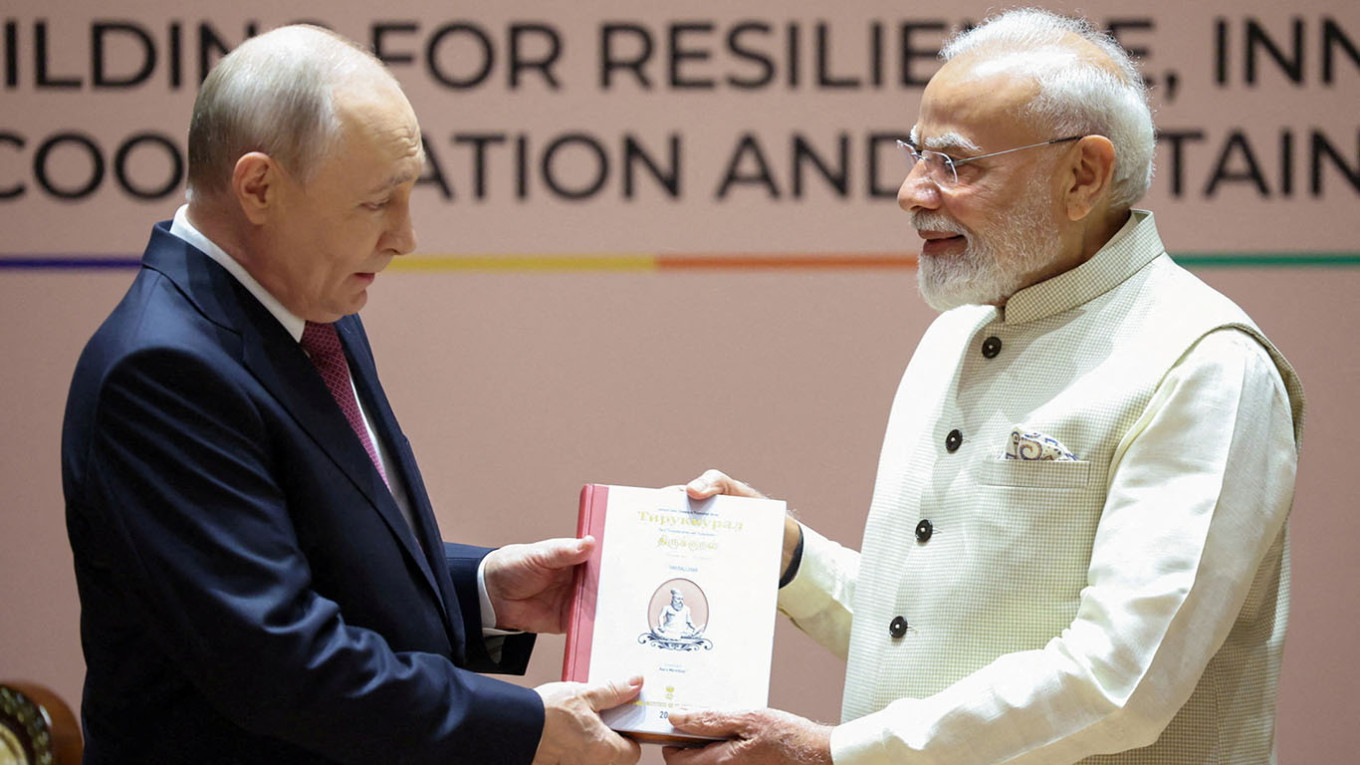
One of the most closely watched meetings had been his discussion with Russian President Vladimir Putin on September 11. The two leaders met in New Delhi on the margins of the 18th BRICS Summit, less than two weeks after their previous meeting in Bishkek during the Shanghai Cooperation Organisation summit. According to the Prime Minister’s Office, the talks covered the broad India-Russia relationship, including political and economic cooperation, defence, energy, space, skill mobility and people-to-people ties.
Trade was an important part of the discussion. The two leaders reviewed efforts to strengthen economic relations and discussed implementation of the Programme for Economic Cooperation 2030.
PM Modi and President Putin also visited INNOPROM India, the Russian international industrial exhibition being held in India for the first time. The exhibition ran from September 9 to 11 and was seen by both sides as an opportunity to expand industrial and commercial links between the two countries. Their conversation also moved beyond bilateral relations. India and Russia exchanged views on BRICS cooperation under India’s chairship and on regional and international developments, including the situation in West Asia and the Black Sea region. The safety of maritime trade and Indian seafarers was also discussed. PM Modi reiterated India’s position that dialogue and diplomacy remain the way forward in resolving conflicts.
President Putin subsequently invited PM Modi to Russia for the 24th India-Russia Annual Summit. PM Modi accepted the invitation, with the dates to be decided through diplomatic channels.
PM Modi also met Iranian President Masoud Pezeshkian in New Delhi. The meeting was particularly significant as it was Pezeshkian’s first visit to India as Iran’s President and came less than two weeks after the two leaders had met on the margins of the SCO Summit in Bishkek. The Indian government said the leaders discussed the India-Iran relationship as well as Iran’s participation in BRICS. Modi thanked Tehran for its continued high-level participation in BRICS meetings despite difficult circumstances. The two leaders also discussed developments in West Asia. Modi again stressed India’s support for dialogue and diplomacy and underlined the importance of maintaining peace and stability, freedom of navigation and commerce, and the safety of seafarers.
What to expect on Day One
The leaders’ summit officially begins on September 12. India is entering the meeting with an agenda built around practical cooperation rather than treating BRICS only as a political forum. The wider programme developed during India’s chairship has already covered areas ranging from trade and industrial policy to digital cooperation, communications, labour and employment, MSMEs and security.
With the BRICS grouping substantially larger than it was when it began two decades ago, India’s challenge will be to translate that expanded membership and economic weight into areas where its members can work together.
For PM Modi, the meetings already held with Putin and Pezeshkian show that the summit is also providing space for bilateral diplomacy alongside the formal BRICS agenda. The leaders’ discussions over September 12 and 13 will determine the next stage of India’s 2026 chairship, with economic cooperation, innovation, the Global South and practical multilateral engagement expected to remain central to New Delhi’s approach.