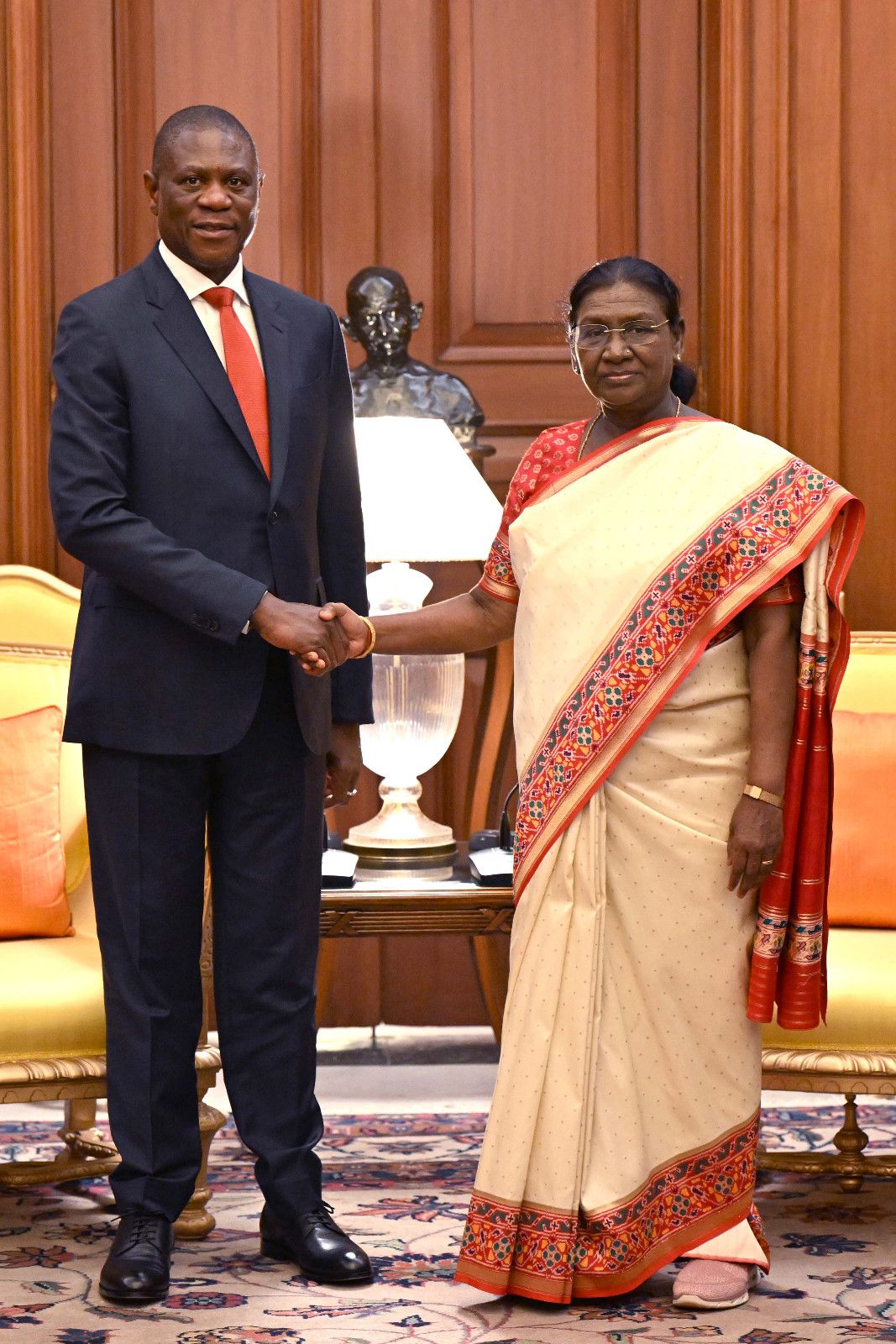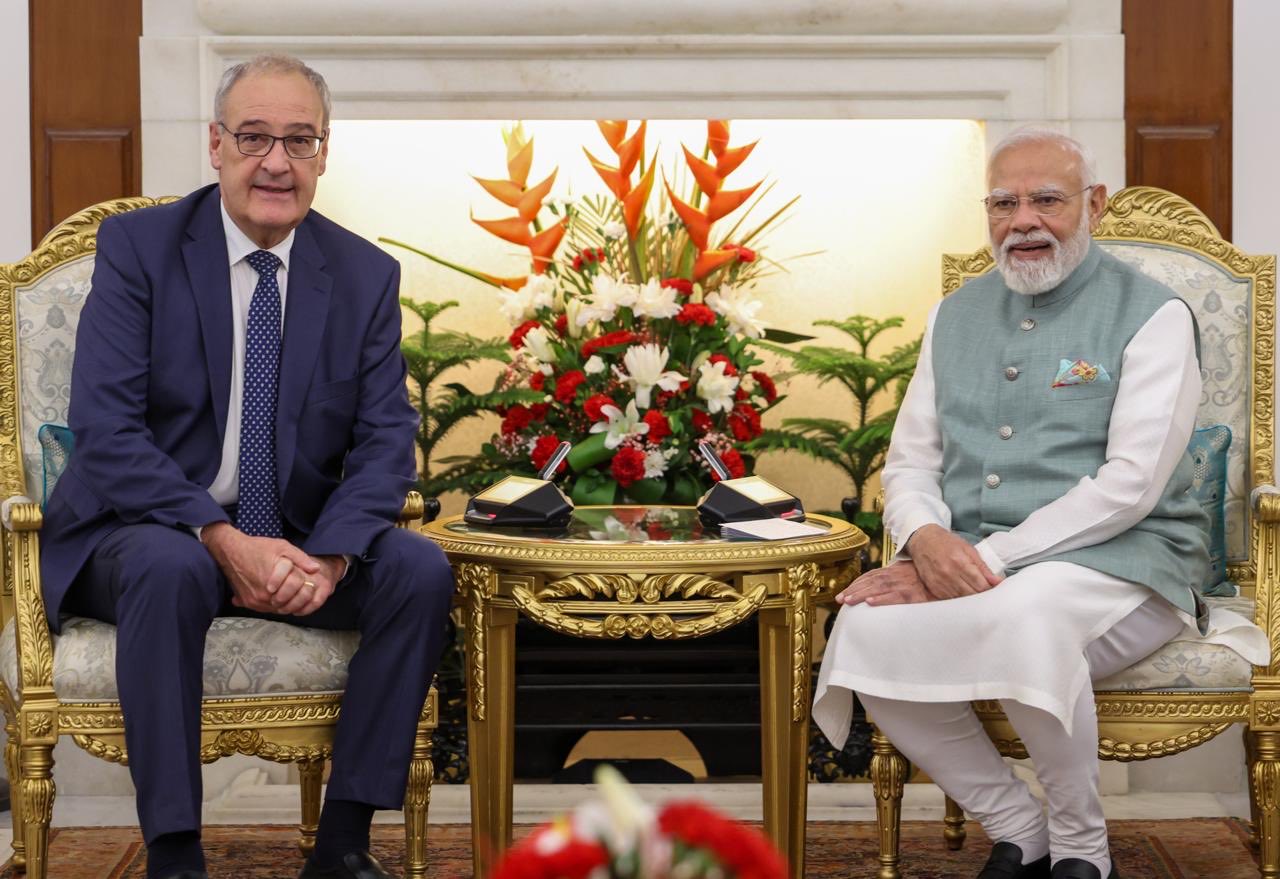
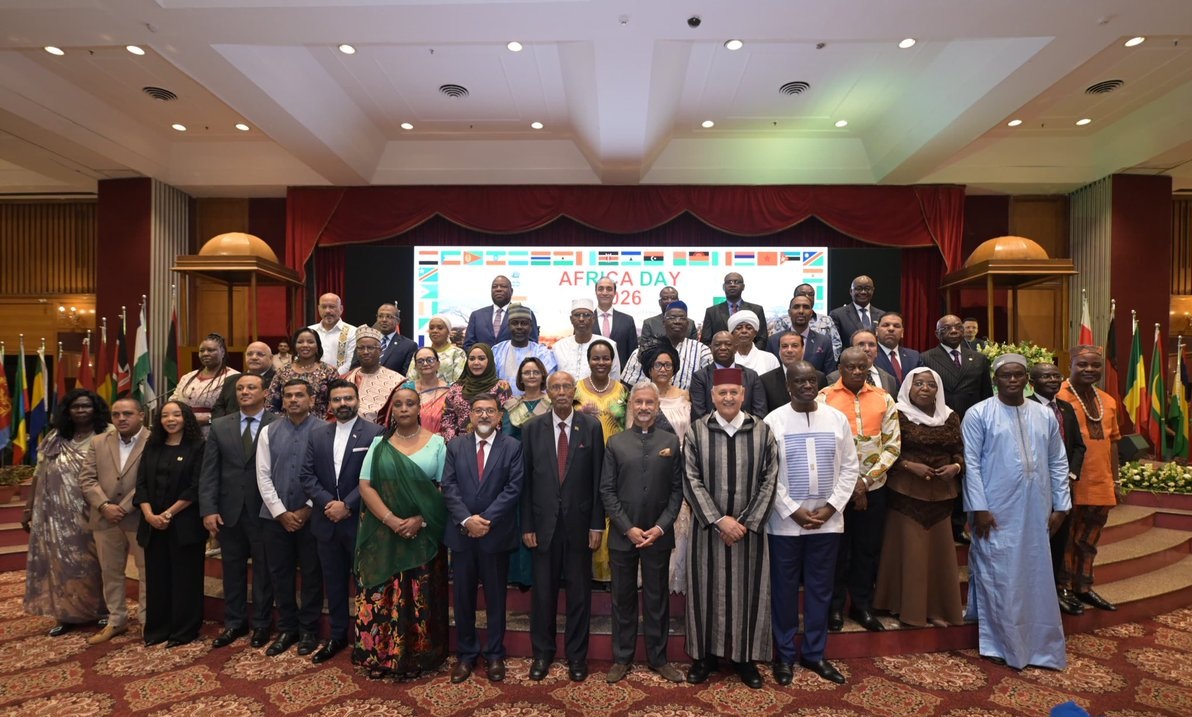
The Africa Day celebrations were held in New Delhi, India on 5 August 2026 on the theme “63 Years of Unity, Integration, and Development”. Africa Day is celebrated every year to commemorate the founding of the group African Unity in 1963, which was succeeded by the African Union in 2002. The 63rd anniversary celebrations held in 2026 were attended by dignitaries from Africa and India. The attendees included the External Affairs Minister of India, Dr. S. Jaishankar as the chief guest; the Ambassador of Eritrea to India and Dean of the Diplomatic Corps, Mr. Alem Tsehaye Woldemariam; the Ambassador of the King of Morocco to India and the Dean of the African Heads of Mission, Mr. Mohamed Maliki; India’s Secretary of Economic Relations, Mr. Sudhakar Dalela; along with members of Parliament, Secretaries, Joint Secretaries, Ambassadors and High Commissioners. African Diplomats training at India’s Sushma Swaraj Institute of Foreign Service were also in attendance.
Dr. Jaishankar and Ambassador Maliki addressed the gathering, and a pre-recorded address from the Chairperson of the African Union Commission, Mr. Mahmoud Ali Youssouf, was also delivered at the event. The leaders hailed the significance of the India-Africa partnership on the global stage, and the geopolitical, environmental and economic goals they are dedicated to and have accomplished so far.
Ambassador Maliki inaugurated the event with his address. He reaffirmed the commitment towards strengthening the strategic partnership between India and Africa, a partnership he commended for its shared history and the reciprocal values of “trust, mutual respect, solidarity”. He highlighted the historic milestones achieved by the partnership, thanking India for its support in securing a permanent seat for the African Union in G20 during its presidency in 2023. He expressed his appreciation for India’s advocacy for the objectives of the Global South in international fora, particularly on subjects relevant to African Union’s “Agenda 2063” such as climate change, sustainable development, food security, digital transformation and multilateral institutional reform. His address also underlined the concrete benefits of the India-Africa Forum Summit for the people of Africa and India. He noted the growing people-to-people connections between the regions through academics, research, innovations, business and investments, and art. Calling India a reliable and credible partner in growth, he hailed the opportunities Africa presents for elevating the strategic partnership across all sectors of growth. He called upon the leaders to boost the commitment towards equitable development and balanced global order when confronted with shifting global dynamics and changes in environment, geopolitics and global economy.
Mr. Youssouf also conveyed his appreciation for India’s support for African Union’s permanent seat in G20, recognising how the landmark achievement enables greater participation by Africa in international conversations surrounding climate change, economy, sustainable development, food security, health, and peace. He also took the opportunity to highlight African Union’s theme of the year, “Assuring Sustainable Water Availability and Safe Sanitation Systems to Achieve the Goals of Agenda 2063”, emphasising the organisation’s forward-looking goals of water security, public health and climate resilience.
The address delivered by Dr. Jaishankar as the chief guest for the day also acknowledged the historical connections shared between Africa and India, from the monsoon winds, to cuisines, knowledge, folklore, philosophies and cultural practices. He drew parallels between India and Africa’s commitment to sovereignty, and between African Union’s “Agenda 2063” and India’s “Viksit Bharat 2047”. He highlighted the Kampala Principles outlined by the Indian Prime Minister Shri Narendra Modi in his address to the Ugandan Parliament in 2018 that have guided India’s diplomatic relationship with Africa in the recent years. The principles uphold free market, digital revolution, reformed global order, and free and inclusive maritime order among others. He reiterated India’s commitment to Africa’s inclusion in the United Nations Security Council and called upon the gathering to support the initiative for India’s permanent seat on the UN Security Council.
He took the opportunity to underline economic partnership between India and Africa, citing billions of worth of trade, Indian investments, development credit and extended grants provided by India, and completion of over 200 projects. On the academic front, he highlighted the thousands of scholarships and training opportunities India offers to Africa, besides the establishment of Centres of Excellence and campuses of Indian universities. These include the e-VidyaBharati and e-AarogyaBharati (e-VBAB) digital education portals, Indian Technical and Economic Cooperation (ITEC) Programme and scholarships by the Indian Council for Cultural Relations (ICCR). His remarks also highlighted India’s cooperation in food security through provision of grains, healthcare and the provision of medicines and vaccines, humanitarian aid, and defence capacity building through military training and maritime exercises such as AFINDEX 2023, Bright Star in 2023 and 2025, IBSAMAR in 2024, and AIKEYME 2025, in line with India’s Vision MAHASAGAR.
The leaders’ remarks upheld India-Africa relations as a leading force in shaping a new global order guided by principles of inclusivity and justice. In his address, Ambassador Maliki commented, “Long live India-Africa friendship,” while Dr. Jaishankar concluded his speech with, “Africa is our partner. Africa is our priority” – celebrating the partnership and foreseeing a bright future for its people.