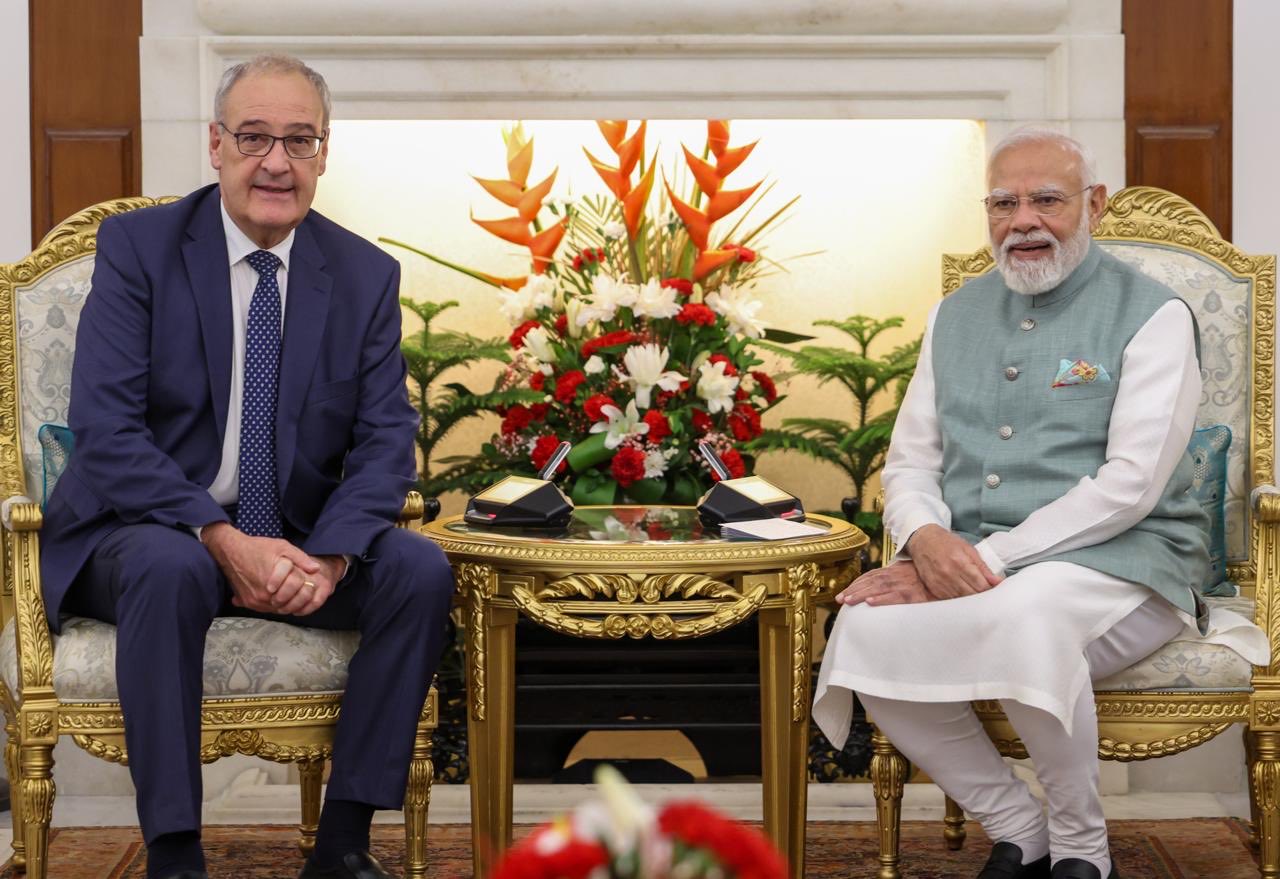
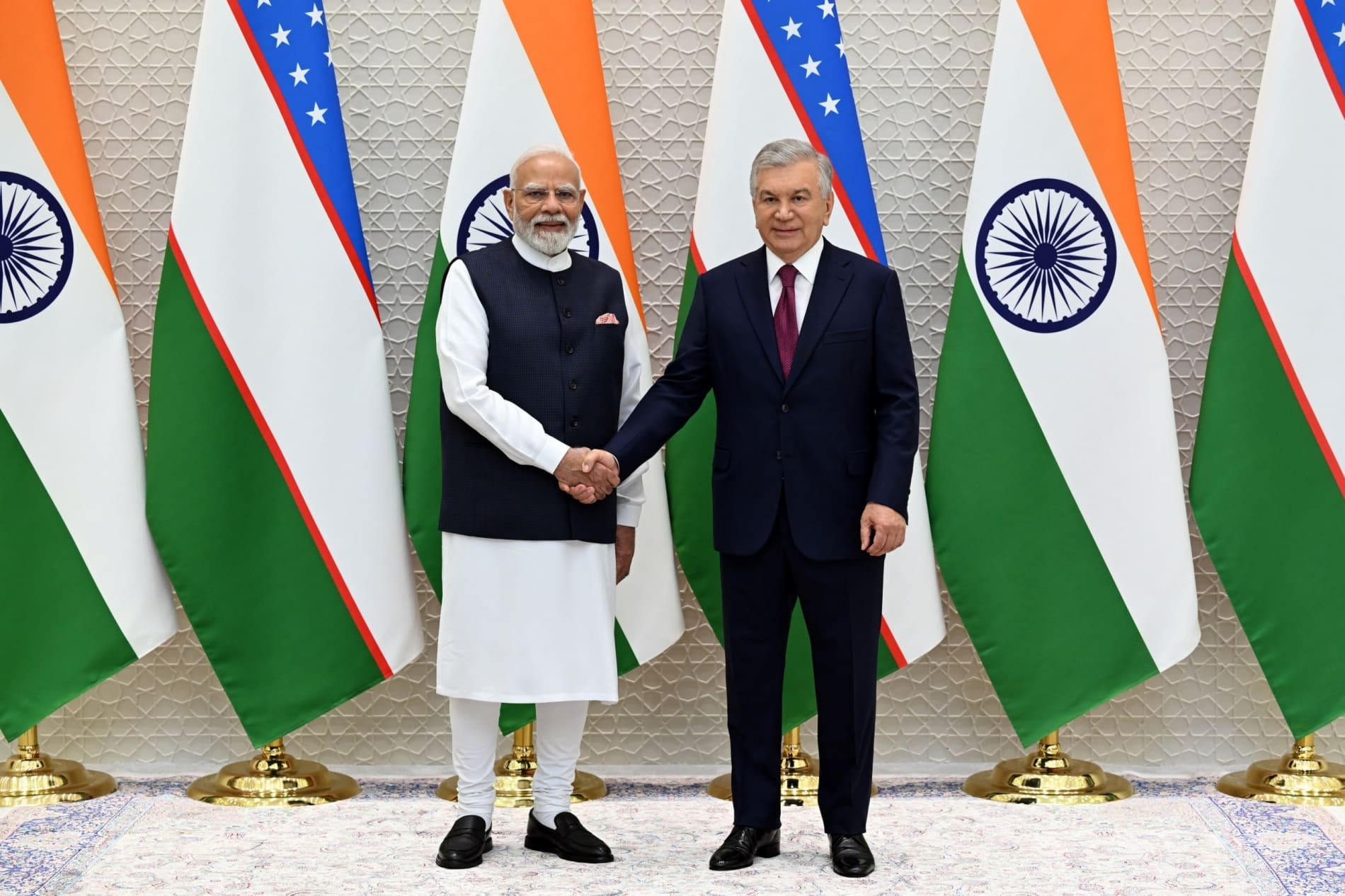
Prime Minister (PM) of India Shri Narendra Modi paid a two-day state visit to Uzbekistan on 29-30 August 2026, at the invitation of President Mr. Shavkat Mirziyoyev. The visit marked an important milestone in India-Uzbekistan relations, with the two countries elevating their existing Strategic Partnership to a Comprehensive Strategic Partnership. PM Modi arrived in Tashkent on 29 August. At Tashkent-Humo International Airport, he was personally received by President Mirziyoyev. On 30 August, PM Modi was accorded a formal ceremonial welcome at the Kuksaroy Presidential Residence, where the national flags of India and Uzbekistan were raised and the two leaders inspected the guard of honour before the onset of high-level talks.
PM Modi was conferred with Uzbekistan’s highest state honour for foreign leaders, the “Oliy Darajali Doʻstlik” (Order of Highest Friendship) for his efforts in strengthening bilateral ties. PM Modi dedicated the honour to the people of India and described it as a symbol of the enduring friendship and deep-rooted civilizational ties shared by the two nations.
During their talks, the two leaders reviewed bilateral cooperation across multiple sectors encompassing trade, economy and investment, transport connectivity, digital transformation, energy transition, critical minerals, food security, healthcare, pharmaceuticals, and education. The countries intend to increase bilateral trade to US$5 billion.
The visit resulted in 16 outcomes covering cultural exchanges for 2026-30, Ayurveda and traditional medicine, higher education and scientific research, environmental protection, archaeological research at Fayaz Tepa and Kara Tepa, economic and financial dialogue, tourism cooperation for 2026-28, geology and mineral resources, archival cooperation, foreign-service training, and partnership between Gujarat and the Samarkand region. A Letter of Intent was also concluded for restoration of Buddhist heritage sites, while an ICCR Sanskrit Chair at Tashkent State University of Oriental Studies was agreed upon.
People-to-people ties also received a significant boost. Uzbekistan announced a 30-day visa-free regime for Indian citizens, alongside the existing network of 14 weekly flights between the two countries. The measure is expected to facilitate tourism, business, and wider people-to-people exchanges.
India also announced a US$1 million grant for environmental rehabilitation and afforestation in the Aral Sea region, linking Uzbekistan’s “Yashil Makon” initiative with India’s “Ek Ped Maa Ke Naam” campaign. The two leaders jointly planted a tree at the presidential palace garden. Other announcements included 100 Lal Bahadur Shastri Scholarships for Hindi, cooperation on digital payments to enable Indian UPI applications to scan Uzbekistan’s national UZQR, and expanded cooperation in agriculture, and healthcare, traditional medicine, education, and youth exchanges.
The visit concluded with the two leaders adopting a Joint Statement and reaffirming their commitment to deepen political, economic, cultural, and strategic cooperation. PM Modi also invited President Mirziyoyev to undertake a return visit to India. Ranging from an upgraded Comprehensive Strategic Partnership and expanded economic agenda to easier travel and stronger cultural and educational links, the visit expanded the sphere of India-Uzbekistan cooperation across multiple sectors.