The parliamentary elections were held in Hungary on 12 April 2026, which marked a significant democratic event in Central Europe. The elections were conducted to elect 199 members of the National Assembly of Hungary. The elections recorded 79.5% voting turnout, reflecting strong civic engagement in the country. This is the highest turnout recorded in the country.
The election result was defined by the emergence of Péter Magyar, leader of the Tisza Party, which emerged as a consolidated political force. Magyar’s party secured a decisive mandate, winning 138 seats, which lead to a two-thirds majority in the parliament. The Tisza party won 53.62 percent of the vote. These elections also marked the end of Prime Minister Viktor Orbán tenure, which has spanned for sixteen years. The electoral process featured a multi-party competition in which many political formations participated, such as the ruling coalition of the Fidesz – KDNP alliance and other political parties. According to the official results, the Fidesz – KDNP alliance obtained 55 seats while other political parties gained representation in the National Assembly.
After the results were declared, the transition of the government proceeded through the constitutional framework. The President of Hungary will convene the newly elected National Assembly within the next few days, after which the leader of the majority party will be nominated as the Prime Minister by the assembly. This government transition demonstrates adherence to constitutional norms.
The incoming administration has promised to prioritise policy areas like administrative reforms, economic transition and regional engagement with European partners. The new government will reset Hungary’s global relationships.
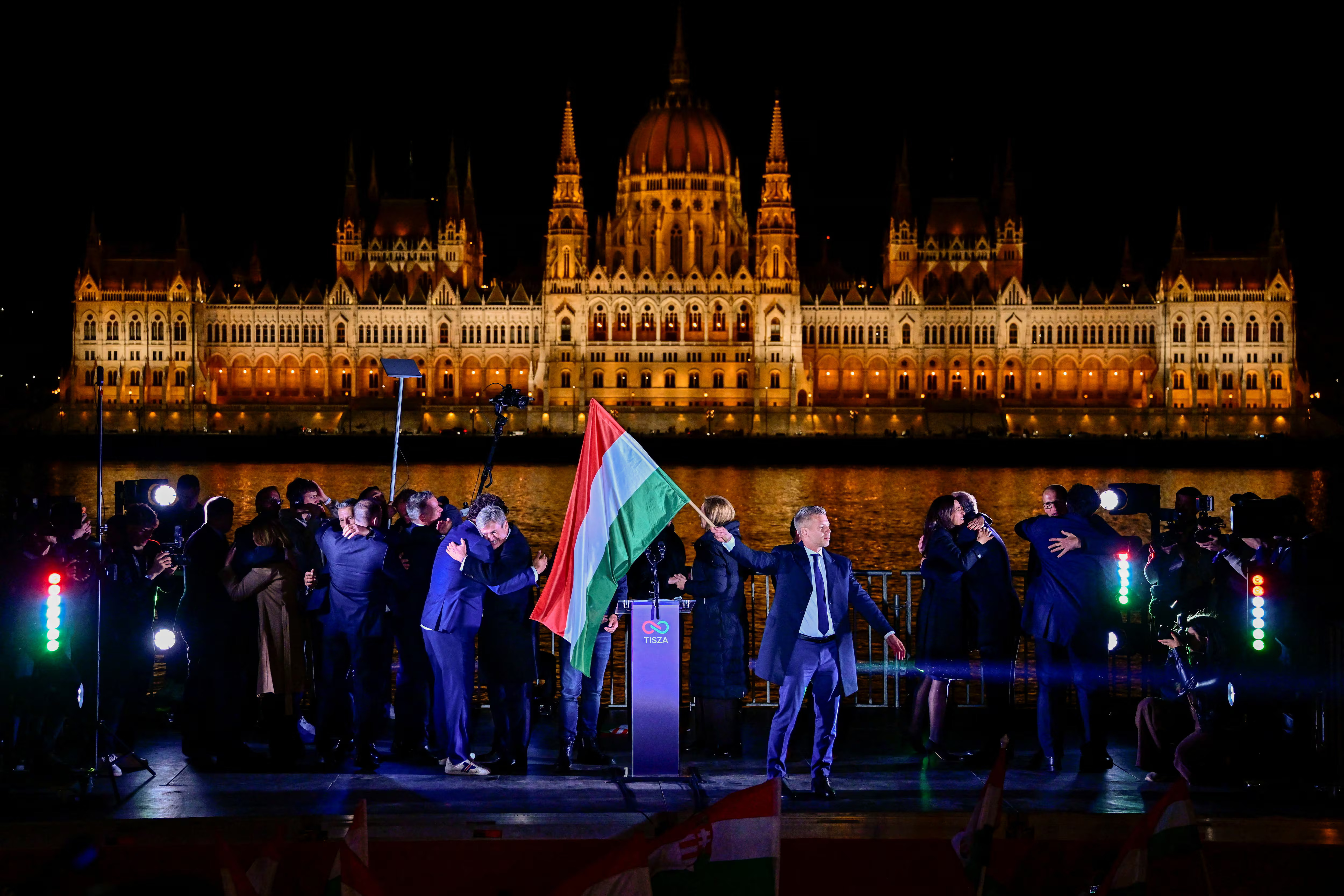
During his election campaign, Mr Magyar took his political movement around villages and cities of Hungary, promoting his election manifesto. When the results were declared, his supporters gathered in the square on the Buda side of the Danube, and they cherished the moment of joy by hugging each other. Women supporters were seen waving Hungarian flags from open sunroofs of their cars. Mr Magyar was also congratulated by the current Prime Minister, Mr Viktor Orbán, in a telephonic conversation. Mr Magyar has promised to bring reforms in the sectors like education, health, and institutional reforms.
Many prominent leaders across the globe, including the Honourable Prime Minister of India, Shri Narendra Modi, conveyed their wishes on the recent victory of Péter Magyar, reflecting the broader international attention and significance attached to the electoral outcome.
The parliamentary elections in Hungary represented a notable moment in the country’s democratic trajectory. As the new administration takes charge in Hungary, the country will witness policy reforms and continued regional and international engagement.