Scotland’s world-renowned Hogmanay celebrations returned in spectacular fashion this year, transforming Edinburgh into a fiery spectacle of torches, music, and cultural pride as the nation prepared to welcome 2026. The four-day festival, running from 29 December 2025 to 1 January 2026, showcased why Scotland’s New Year festivities have become an international attraction, blending centuries-old traditions with contemporary cultural expression.
‘Hogmanay’ is the Scottish word for the last day of the year. Its origin dates back to the celebration of the winter solstice among the Vikings, who held wild parties in late December. Long before the arrival of Christianity, Scots celebrated the arrival of a new year around the time of the winter solstice, which technically falls on 21-22 December; however, the arrival of the Romans changed the calendar. Edinburgh’s Hogmanay Festival dates to 1993 and has evolved into one of the greatest outdoor celebrations of New Year’s Eve in the world.
There are many old Hogmanay rituals and customs still celebrated in Scotland today, believed to bring good luck for the New Year. These include the first footing of a dark-haired male in the house on New Year’s Day, cleaning the house, clearing all debts before entering the new year, and singing Robert Burns’ Auld Lang Syne after midnight.
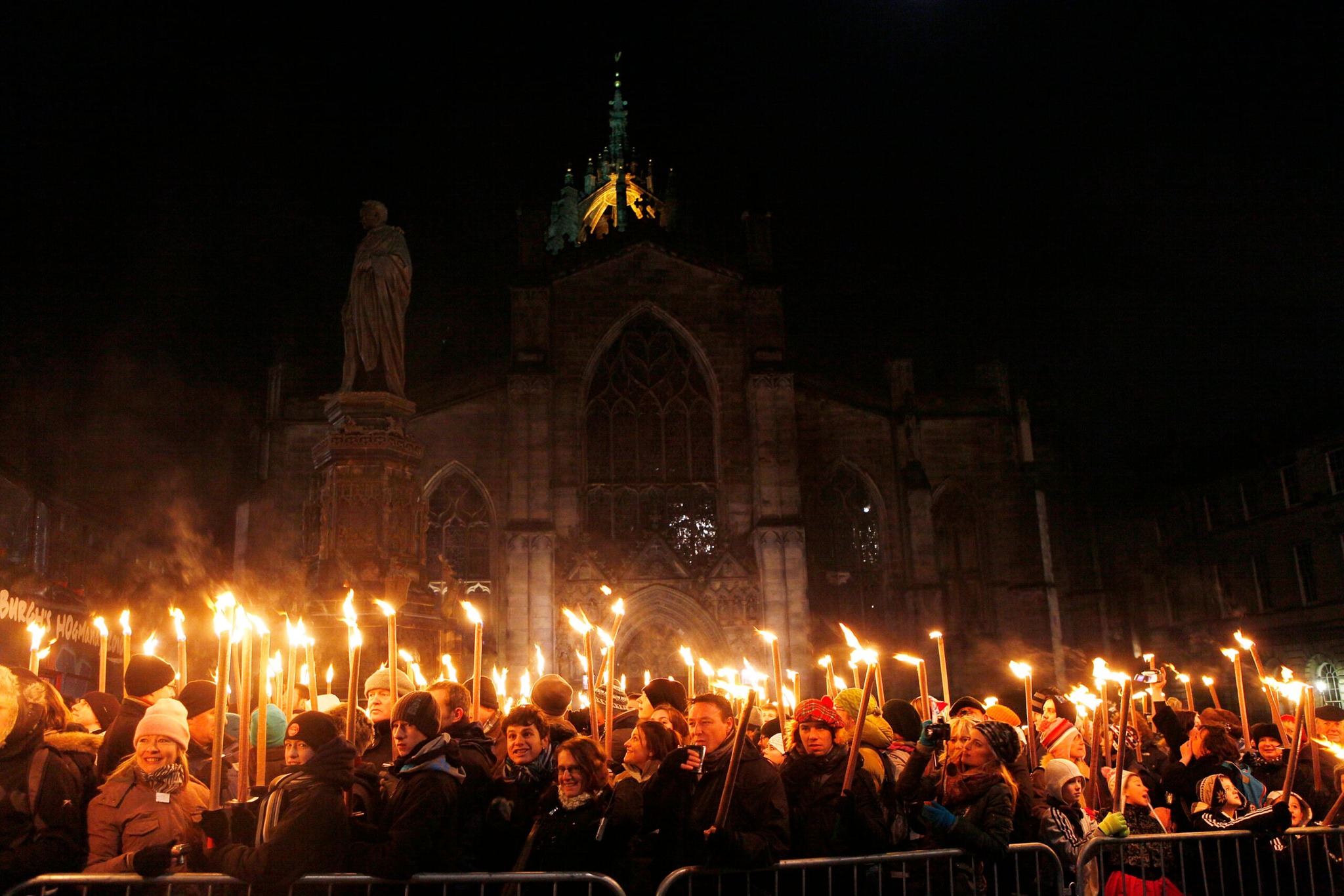
Every year, tens of thousands of people flock to the city for the celebration. This year’s festivities began on 29 December, when over 15,000 people participated in the Torchlight Procession, creating a ‘river of fire’ through the capital. This was followed by the opening event and a musical concert. The next three days were filled with multiple celebrations in the form of concerts and street parties, featuring performances by world-renowned personalities. Fires continue to play a major part in Hogmanay celebrations, with torchlight processions, bonfires, and spectacular fireworks popular throughout Scotland during the festivities. In Northeast Scotland, there is a long-standing tradition of making giant fireballs, which are swung on poles and paraded through the town’s streets. The primary funding for the festival comes from the City of Edinburgh Council and the Scottish Government.
The festival’s impact extends far beyond cultural celebration. Edinburgh’s winter festivals had an economic impact of £198 million in 2024, with Hogmanay celebrations alone contributing £48 million to the local economy. According to 2024 data, 31% of Hogmanay attendees were international visitors, contributing to Scotland’s tourism sector, which supports local businesses and communities across the country.
Beyond economic metrics, Hogmanay serves as a powerful instrument of Scotland’s soft power. The festival projects Scottish culture globally, with Auld Lang Syne listed in the Guinness Book of World Records as one of the most frequently sung songs in English, performed annually in countless English-speaking nations. This cultural export strengthens Scotland’s international profile and reinforces its distinctive identity within the United Kingdom and beyond.