His Majesty Sultan Haitham bin Tarik’s state visit to the United Kingdom from 19 to 22 October 2026 marked an important moment in relations between the two countries, bringing together royal diplomacy, political discussions and new opportunities for economic cooperation. Hosted by His Majesty King Charles III and Her Majesty Queen Camilla, the visit highlighted a relationship shaped by centuries of maritime connections, defence cooperation, trade and diplomatic engagement. The visit was particularly significant because it was the first state visit to the United Kingdom by an Omani sultan since March 1982, when Queen Elizabeth II welcomed the late Sultan Qaboos bin Said. More than four decades later, the programme reflected both the historical depth of the relationship and the shared ambition to develop cooperation in emerging sectors, including technology, renewable energy, education and space.
His Majesty Sultan Haitham bin Tarik arrived in the United Kingdom on 19 October. The following day, the official reception took place in Windsor, where His Majesty King Charles III and Her Majesty Queen Camilla welcomed the Omani sovereign. Their Royal Highnesses the Prince and Princess of Wales also attended the ceremony. The welcome included a Royal Salute, the playing of Oman’s national anthem and a carriage procession through Windsor to Windsor Castle. A Guard of Honour was mounted by members of the British Army, while ceremonial military displays included a march past by the King’s Troop Royal Horse Artillery and the Sovereign’s Escort.
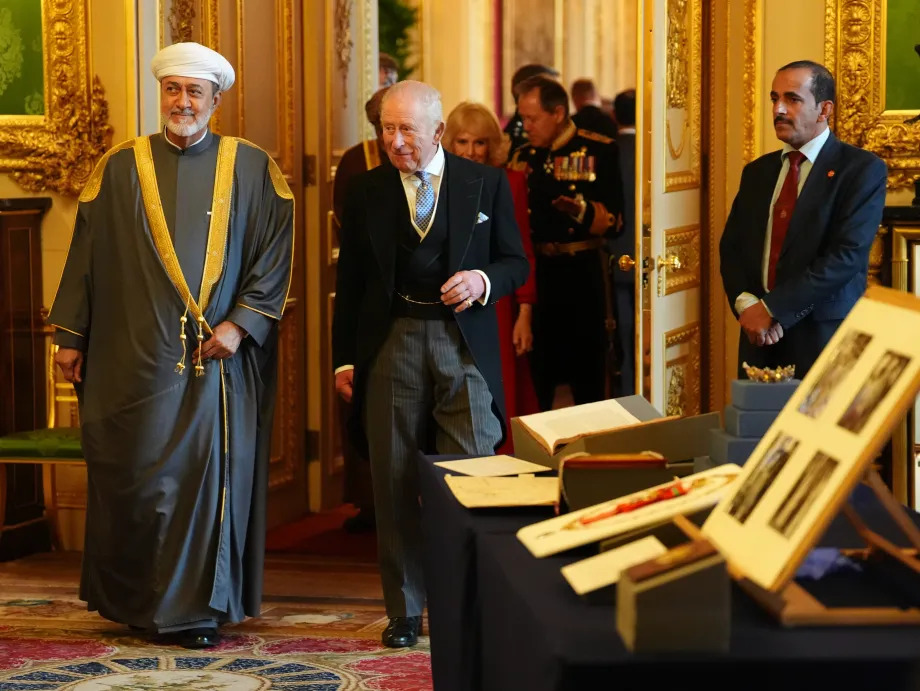
His Majesty the Sultan and His Majesty the King subsequently inspected the Guard of Honour before proceeding into the castle for a private lunch. The royal hosts also arranged an exhibition of items from the Royal Collection connected with Oman. Among the objects displayed were a historic book presented to Queen Victoria in 1875 and two watercolour paintings of Oman produced by King Charles during his visit to the country in 1995. The exhibition offered a personal dimension to the state visit, reflecting the British monarch’s longstanding interest in Oman and the historical connections between the two royal households.
One of the central events of the visit was the state banquet hosted by Their Majesties King Charles III and Queen Camilla at Windsor Castle on the evening of 20 October. The gathering brought together members of the British Royal Family, senior officials and members of the Sultan’s accompanying delegation. The banquet provided an opportunity to recognise the history of relations between Britain and Oman while addressing the importance of maintaining that partnership in a changing international environment. In his address, His Majesty King Charles III described Oman as one of Britain’s oldest allies and reflected on the maritime links that helped establish relations between the two countries. He recalled how Omani seafarers and British ships had contributed to centuries of commercial and diplomatic exchanges. The King also highlighted the development of bilateral relations over time, from maritime contacts and early treaties to modern cooperation in defence, diplomacy and trade.
Particular attention was given to Oman’s role in regional diplomacy. His Majesty the King praised the Sultanate’s commitment to dialogue and its efforts to help maintain the security of important shipping routes, including the Strait of Hormuz. The waterway remains vital to international commerce and the movement of energy supplies. King Charles also acknowledged Oman’s Vision 2040 programme, which aims to diversify the country’s economy and reduce its dependence on hydrocarbons. He highlighted the importance of education, skills development and opportunities for younger generations.
In his response, His Majesty Sultan Haitham bin Tarik expressed his appreciation for the welcome and hospitality extended to him and his delegation. He described the relationship between Oman and Britain as one built on mutual respect and a shared history. The Sultan recalled the treaty concluded between the two countries in 1800, which expressed the hope that their friendship would remain unshaken. He said that the relationship continued to develop despite changing international circumstances. His Majesty also emphasised the importance of military cooperation, educational exchanges and trade. Omani officers have trained at British military institutions, while British personnel have served in Oman, creating longstanding professional links between the two countries.
Education was another important theme in his address. The Sultan noted that young Omanis continue to pursue studies in British institutions, helping to strengthen connections between the two societies. He also welcomed the development of cultural and educational ties, including the prospect of expanding British educational opportunities in Oman. His Majesty further welcomed the decision of His Royal Highness the Prince of Wales to serve alongside His Highness Sayyid Theyazin bin Haitham Al Said as a patron of the British Omani Society. The banquet incorporated elements inspired by Omani hospitality. Special teas reflecting the flavours associated with kahwa, the traditional spiced coffee, were served to guests. Options included blends featuring cardamom, rose, mint and dates, combining Omani influences with Britain’s established tea tradition. The Duchess of Edinburgh’s String Orchestra performed during the dinner.
On 21 October, His Majesty Sultan Haitham bin Tarik met the United Kingdom’s Prime Minister, Andy Burnham, at 10 Downing Street. The meeting reviewed bilateral relations and considered ways to expand cooperation in areas of shared interest. Economic ties, defence, security and regional developments featured prominently in the discussions. Prime Minister Burnham highlighted the benefits generated by trade between the two countries and expressed appreciation for Oman’s diplomatic role in the Middle East. Both leaders discussed the importance of keeping the Strait of Hormuz open to international shipping, recognising the consequences that disruption could have for global supply chains and households.
The discussions also reaffirmed the importance of continued cooperation to protect citizens and strengthen existing security and defence arrangements. Oman’s diplomatic approach has long emphasised dialogue and engagement with different parties. Its geographical position near the Strait of Hormuz gives it particular importance in discussions concerning maritime security and regional stability. The meeting demonstrated that the state visit was not solely a ceremonial occasion. It also provided an opportunity for the two governments to discuss immediate international challenges and identify practical areas for continued cooperation.
Economic cooperation was one of the most prominent elements of the visit. The UK Government announced plans to strengthen investment ties, with more than £1 billion in investment associated with new opportunities involving the two countries. The initiatives are intended to build on the UK-Oman Sovereign Investment Partnership, established in 2022. According to the British Government, Oman had invested £1.7 billion in the United Kingdom through the partnership since its creation. The sectors identified for closer investment cooperation include renewable energy, technology, critical minerals, space, healthcare and financial services. These areas reflect the wider effort to diversify economic activity and encourage investment beyond traditional industries.
UK Export Finance also announced that it would increase its financing capacity for UK exports to Oman to as much as £7 billion. The measure is intended to help British companies pursue opportunities in the Omani market and support the development of commercial links between the countries. A major proposed project involves Yamna, a UK-founded infrastructure development and investment company backed by British investment funds. The company is set to work with Oman on a large-scale artificial intelligence data centre in Salalah. The first phase is expected to exceed £1 billion in investment and is projected to create more than 100 highly skilled jobs across the United Kingdom through the export of British expertise and investment returns. The project reflects the growing importance of digital infrastructure and artificial intelligence to economic development. It also illustrates how investment in Oman could generate opportunities for British businesses and skilled workers.
The British Government also outlined a wider package of cooperation covering education, maritime security, space and diplomatic training. The Chevening educational scholarship programme is set to return to Oman, with applications expected to open in August 2027. The programme will give Omani students opportunities to study at British institutions and develop professional relationships that can endure beyond their academic careers. Further cooperation is planned in education through agreements concerning the responsible use of artificial intelligence in classrooms. The work is intended to support English-language learning and help teachers use AI safely and effectively.
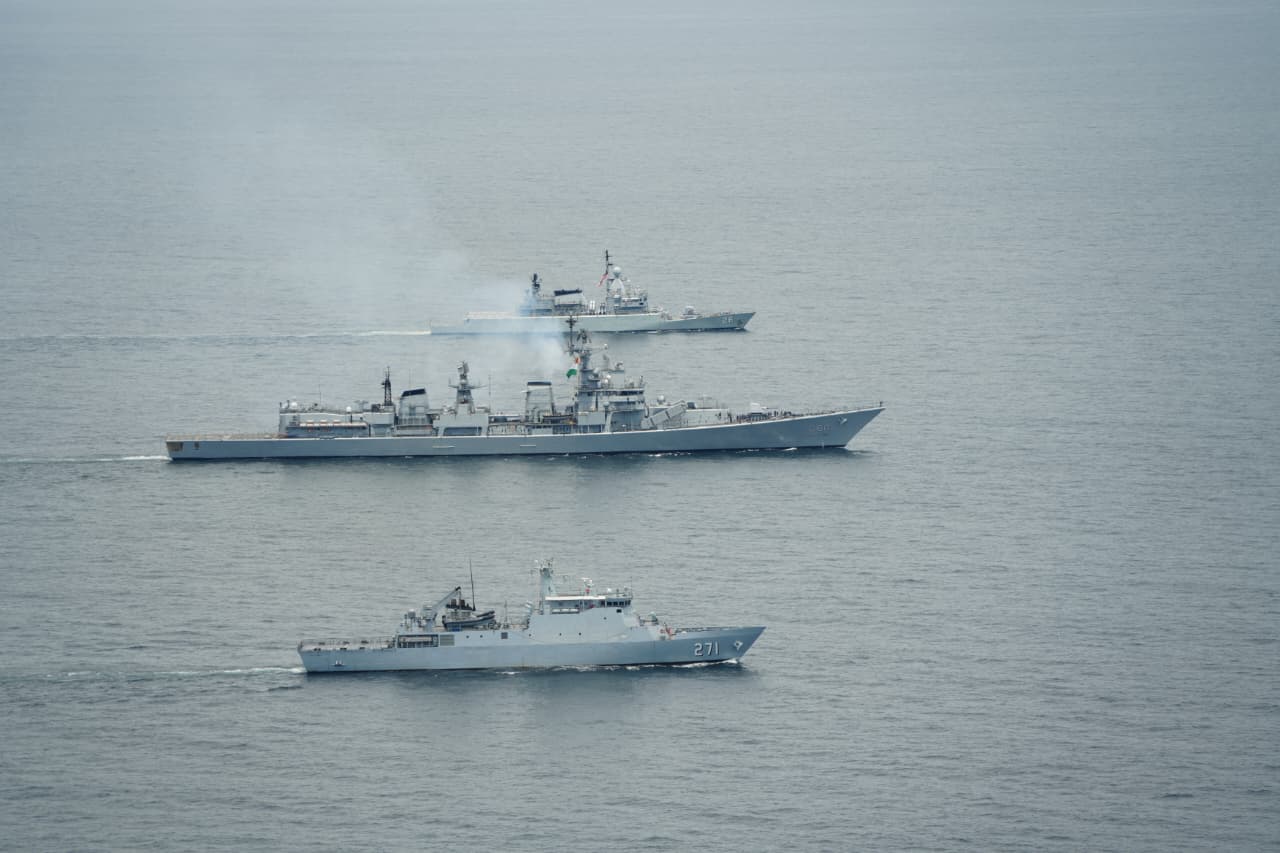
Maritime security was another priority. The two countries planned a memorandum of understanding to strengthen cooperation with Oman’s Maritime Security Centre, including through information-sharing and the exchange of knowledge. The initiative reflects their shared interest in safe maritime routes and the uninterrupted movement of international trade. The countries also planned closer cooperation in space. This includes exchanges of expertise on space policy, scientific research and innovation between the UK Space Agency and the Omani Government. A new diplomatic partnership pathway between the UK’s Diplomatic Service College and the Omani Diplomatic Academy was also announced. It is intended to enable diplomats from both countries to exchange experience, develop professional skills and work together on shared international challenges.
The programme continued on 21 October with an engagement at Guildhall, where the Lord Mayor and the City of London Corporation hosted His Majesty Sultan Haitham bin Tarik at a banquet. The Sultan received an Address of Welcome from the City. The event highlighted the commercial and financial dimension of the relationship. The City of London has longstanding links with international trade, banking, insurance and investment, making it a natural setting for discussions about expanding economic cooperation. The gathering also complemented the investment announcements made during the visit. With both governments seeking to encourage two-way investment, the City’s financial institutions and businesses have an important potential role in supporting future projects.
His Majesty Sultan Haitham bin Tarik’s visit brought together ceremonial diplomacy, political dialogue and a series of economic and institutional initiatives. The reception at Windsor Castle and the state banquet celebrated the historical relationship between the two countries, while the Downing Street meeting and investment announcements addressed contemporary priorities. The relationship rests on more than its long history. Defence cooperation, educational exchanges, trade and Oman’s diplomatic engagement in the region continue to provide practical reasons for both countries to work closely together.The initiatives announced during the visit offer opportunities to develop that partnership in areas that will shape future economic growth, including artificial intelligence, clean energy, space and advanced education. Their ultimate impact will depend on implementation, investment decisions and sustained cooperation between governments, businesses and institutions. For the United Kingdom and Oman, the state visit was an opportunity to reaffirm a longstanding friendship while setting out a broader agenda for the years ahead. Its significance will be measured not only by the ceremonies that marked the occasion, but also by the progress made in translating shared commitments into lasting results for both countries.