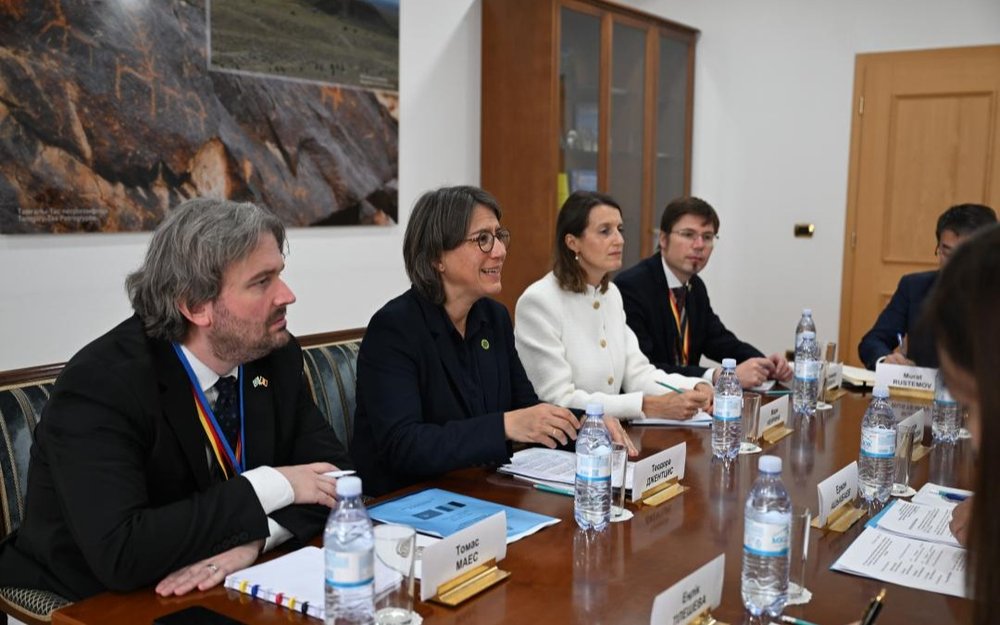
Kazakhstan and Belgium have signed a Cooperation Roadmap for 2027–2029, setting out plans to strengthen political dialogue, improve coordination between their foreign ministries and advance joint initiatives across areas of mutual interest. The agreement was signed in Astana on 12 October 2026, during the state visit of His Majesty King Philippe of the Belgians to Kazakhstan. The document was signed following a meeting between Mr Yerzhan Ashikbayev, First Deputy Minister of Foreign Affairs of the Republic of Kazakhstan, and Ms Theodora Gentzis, Chair of the Management Committee of Belgium’s Federal Public Service Foreign Affairs, Foreign Trade and Development Cooperation. According to Kazakhstan’s Ministry of Foreign Affairs, the roadmap is intended to provide a framework for more regular consultations, closer interdepartmental contacts and the practical implementation of agreed priorities. The signing comes at an important moment in relations between the two countries, which will mark the 35th anniversary of the establishment of diplomatic relations in 2027. It also forms part of broader efforts to strengthen Kazakhstan’s engagement with European partners and expand Belgium’s cooperation with Central Asia.
A central objective of the roadmap is to establish a more consistent pattern of engagement between the two countries’ foreign ministries. Regular consultations and stronger institutional contacts are expected to help officials exchange views on bilateral matters, coordinate positions where appropriate and identify opportunities for cooperation. Although Kazakhstan and Belgium have maintained diplomatic relations for decades, the new document provides an opportunity to give their political partnership greater continuity over the three-year period. Regular communication between officials can help both sides address emerging issues, review existing commitments and develop initiatives that reflect their respective foreign policy priorities.The agreement also signals a shared interest in translating diplomatic discussions into practical outcomes. Rather than relying solely on high-level meetings, the two countries intend to strengthen the working-level contacts needed to sustain cooperation between official visits.
His Majesty King Philippe’s visit to Kazakhstan from 11 to 14 October 2026 is particularly notable because it is his first state visit to the country as Belgium’s head of state. The visit provides an opportunity to reinforce political ties while bringing together representatives from government, business and academia.
Beyond direct bilateral relations, the two officials discussed Kazakhstan’s cooperation with the European Union, including the prospects for agreements on visa facilitation and readmission. These issues form part of the wider relationship between Kazakhstan and the European Union, which extends beyond individual member states. Visa facilitation could make certain travel procedures easier, depending on the scope and terms of any eventual agreement. A readmission agreement, meanwhile, would establish arrangements for the return of people who do not meet the legal requirements to remain in a country, subject to the agreement’s provisions. The officials also considered ways to improve the bilateral legal framework governing cooperation. A stronger and more comprehensive framework can help clarify obligations, support institutional exchanges and provide a more predictable basis for future initiatives. For Kazakhstan, deeper engagement with Belgium offers another channel for strengthening relations with an EU member state. For Belgium, closer ties with Kazakhstan provide an opportunity to develop its presence in Central Asia, a region with growing significance for European economic and diplomatic interests.
The foreign ministries’ roadmap sits within a broader relationship that includes commercial and economic links. Belgium’s Federal Public Service Foreign Affairs has reported that bilateral trade increased from €220 million in 2016 to €765 million in 2025. It has also identified more than 100 Belgian companies operating in Kazakhstan, including businesses active in chemicals, biopharmaceuticals and energy.These figures point to an established commercial relationship, although the foreign ministries’ roadmap itself is principally concerned with diplomatic cooperation. Its immediate objectives are political dialogue, regular consultations and stronger institutional contacts rather than the announcement of a specific trade package.
During the state visit, economic engagement has featured alongside political discussions. The Belgian government has highlighted opportunities in the Trans-Caspian International Transport Route, critical minerals and technological innovation. Kazakhstan’s geographic position makes it an important participant in efforts to improve transport connections between Asia and Europe, while Belgium brings experience in industrial processing, logistics and research.
The meeting between Mr Ashikbayev and Ms Gentzis also addressed international and regional developments, including cooperation within the United Nations, international security and multilateral initiatives. Both countries participate in international institutions and have an interest in maintaining channels of communication on issues that cross national borders. Regular diplomatic consultations can offer a platform for discussing security concerns, international law and shared challenges, even where their national positions may differ. The United Nations was among the areas specifically mentioned in the Kazakh Foreign Ministry’s account of the meeting. The discussion reflects the importance both sides attach to multilateral diplomacy as part of their broader international engagement.
The 2027–2029 roadmap gives the two foreign ministries a framework for carrying that relationship forward. Its effectiveness will ultimately depend on the frequency and substance of consultations, the progress made on outstanding issues and the extent to which agreed initiatives are implemented. The signing also forms part of a wider state visit that has highlighted opportunities in business, education, science and other fields. As Kazakhstan and Belgium approach the anniversary of their diplomatic ties, the three-year framework offers an opportunity to build on existing relations, maintain dialogue on international issues and develop practical cooperation where their interests align.