The Republic of Indonesia, the largest archipelagic state in Southeast Asia, marks its 81st year of independence in 2026. Comprising 17,504 islands and inhabited by more than 270 million people, Indonesia is the world’s fourth most populous country and is home to a diverse linguistic, ethnic, cultural, and ecological heritage. It houses stunning volcanic landscapes, and rich biodiversity coexist. As Indonesia marks 80 years since its declaration of independence in 1945 and its rise as Southeast Asia’s largest economy, its national journey stands as a remarkable example.
Political Trajectory
On August 17, 1945, nationalist leaders Sukarno and Mohammad Hatta proclaimed Indonesia’s independence, subsequently appointing Sukarno as President and Hatta as Vice President by the Central Indonesian National Committee (KNIP), establishing the foundations of the new republic.
The early years of government saw the conception and promotion of Pancasila, the five foundational principles of the state, which comprise Nationalism, Internationalism, Democracy, Social Justice, and Belief in one supreme god. At this stage, the intention was to unite the diverse community across the thousands of islands. In 1955, the first free and fair elections were held, giving the then-president a clear mandate. In 1959, the provisional 1945 Constitution was revived, and the system of “Guided Democracy” was introduced, in which members were appointed rather than elected and political opposition was absent.
In 1967, following a change in leadership, the then-president introduced the ‘New Order,’ which aimed to establish political stability and promote national development through economic growth.
From 1998 onwards, the beginning of a new era, known as the Reformasi (Reformation) era, marked Indonesia’s peaceful transition into one of the world’s vibrant democracies. The then-serving Presidents made the most fundamental changes through a series of four constitutional amendments passed between 1999 and 2002. The first free and fair legislative elections since 1955 were held in June 1999, ushering in a dynamic multi-party system. A limit of two five-year terms was imposed for the President. The central piece of the Reformation era was decentralisation. A landmark law passed in 1999 transferred a significant share of revenues from the central government to regional districts.
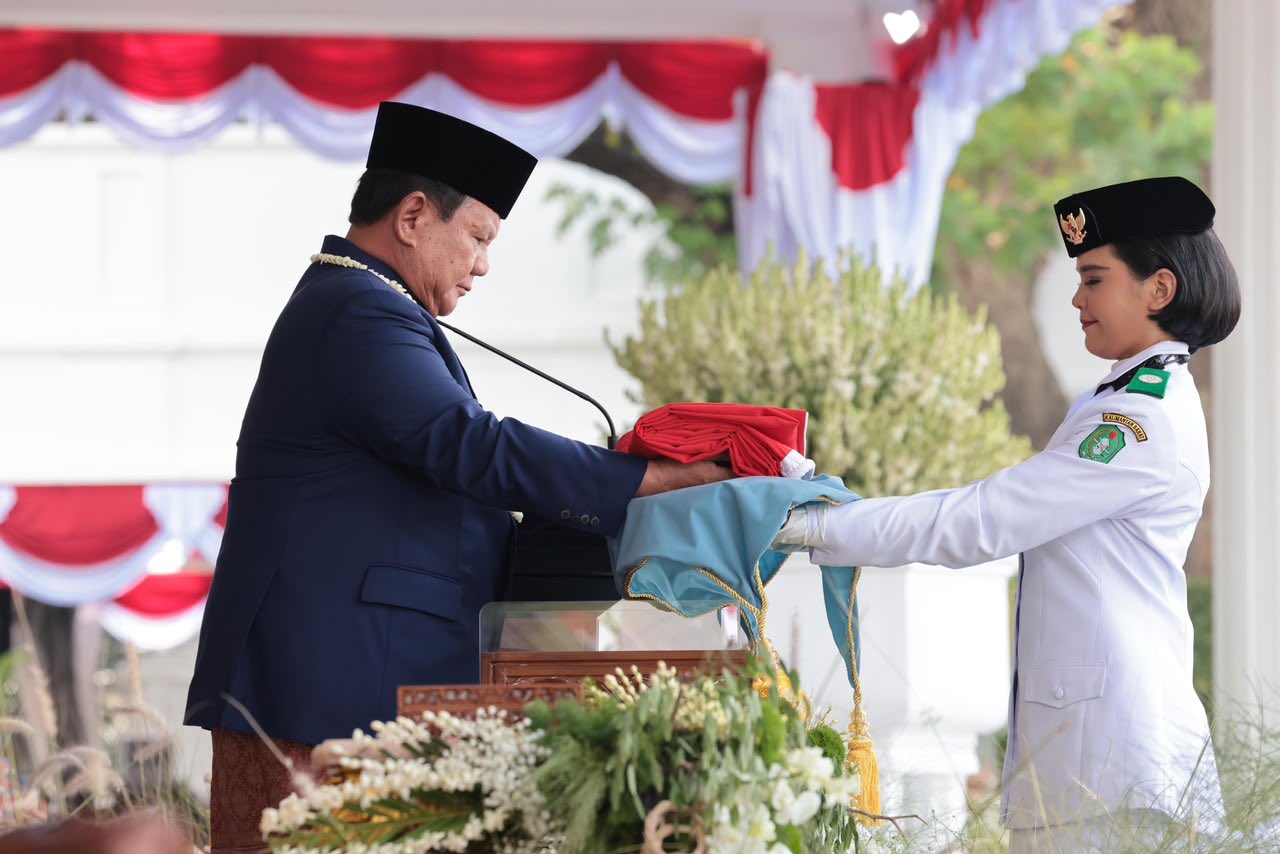
In 2001, Megawati Sukarnoputri became the first female president who oversaw constitutional amendments and established the Corruption Eradication Commission (KPK). In 2005, the historic Aceh Peace Deal was signed leading to stability and progress. Over the next two decades, successive governments prioritized infrastructure development and social welfare initiatives. President Prabowo is currently serving as president, focusing on social welfare programs, budget reforms, anti-corruption measures, and civic engagement.
Economic Growth and Development
Indonesia became Southeast Asia’s largest economy through strategic planning, sound policy, and a focus on development. In 1967, upon taking power, President Suharto introduced the ‘New Order’. He delegated economic policy to a group of highly skilled, US-educated Indonesian technocrats, known as the “Berkeley Mafia”. This team re-integrated Indonesia into the global economy by rejoining the World Bank and the International Monetary Fund (IMF), which opened the door to vital aid and investment. Hyperinflation was controlled through disciplined fiscal and monetary policy, stabilising the rupiah. The Foreign Investment Law of 1967 spurred a surge of new investments.
In the 1970s, there was a massive global oil boom. As a member of the Organisation of the Petroleum Exporting Countries (OPEC), Indonesia reaped great benefits from export revenues. There was sustainable economic growth averaging 7% annually between 1968 and 1981. This enabled the state to make substantial public investments in infrastructure, regional development, education, and healthcare.
The 1980s saw the decline of global oil prices, which led the government to implement new reforms. The devaluation of the rupiah, increased export competitiveness, and deregulation of the financial sector successfully reoriented the economy. These reforms attracted a new flood of foreign investment, and from 1989 to 1997, the economy once again grew by an average of over 7% per year.
Post-1998 reforms, along with democratic governments and institutional restructuring, gave Indonesia long-term price stability. The economy saw growth accelerating to 4-6% throughout the 2000s. This new resilience was evident during the 2008 global financial crisis where Indonesia thrived with positive growth.
Currently, Indonesia, being the largest economy in Southeast Asia, is a major player in the global economy, an upper-middle-income country, and a member of the G20 group of major economies. Indonesia successfully led the G20 presidency in 2022.
Social and Human Development
Indonesia, guided by its national motto Bhinneka Tunggal Ika (“Unity in Diversity”), has made remarkable achievements in human development, education, healthcare, and women’s rights. As the world’s fourth most populous country, its growing and youthful population is a significant demographic asset. To promote equitable development, the state implemented the Transmigrasi (Transmigration) programme. The aim of the programme was to move millions of people from the inner islands to the less populated outer islands, alleviate poverty by providing land and new opportunities for the poor, and develop the natural resources of the outer islands for the benefit of the entire nation. The programme has been successful in restructuring population distribution, placing over seven million people as of 2023.
The expansion of the number of schools and colleges led to a significant improvement in literacy rates, which rose to over 90% by the 2000s.
The health sector, too, has seen similar progress. Life expectancy has risen from just 53.25 years in 1970 to over 72.5 years in 2024. The establishment of community health centres, Puskesmas and the launching of the universal National Health Insurance Program, Jaminan Kesehatan Nasional, in 2014 contributed to the improvement of the health sector.
Foreign Relations and Role in Global Politics
The doctrine of bebas-aktif (“free and active”) guides Indonesia’s foreign policy and its engagement with the world. Bebas signifies a commitment to non-alignment, while the aktif component asserts that Indonesia will actively work to promote world peace and pursue its national interests. From its earliest days, Indonesia has demonstrated tremendous leadership. The Bandung Conference of 1955 is one of the greatest examples of this, being the first large-scale gathering of 29 newly independent nations where the “Ten Principles of Bandung” were established. The spirit of Bandung materialised into the Non-Aligned Movement (NAM), which was formally established in 1961. Indonesia was a founding member and has consistently been a prominent voice.
Indonesia was also one of the founding members of the Association of Southeast Asian Nations (ASEAN) in 1967, which has played a central role in its foreign policy. As the bloc’s largest country, it has played a crucial role in shaping the organisation’s norms and has been a key driver of regional integration, including the successful finalisation of the Regional Comprehensive Economic Partnership (RCEP) free trade agreement. Indonesia also shares a Comprehensive Strategic Partnership with Australia, Japan, India, China, Vietnam, and the United States.
The Contemporary Era
Since 2014, the administration has focused on improving infrastructure aimed at enhancing connectivity across the vast archipelago and reducing high logistical costs. The programme encompasses the construction of new roads, ports, airports, and power plants, with a focus on National Strategic Projects (PSN). This emphasis on infrastructure has also created new opportunities for investment, with the government actively promoting Public-Private Partnerships (PPPs) to help finance these projects.
Apart from physical infrastructure, Indonesia has cultivated two new sectors that have contributed to economic growth. First, by expanding the digital economy with the help of government strategies like the “Making Indonesia 4.0” roadmap. The sector’s Gross Merchandise Value (GMV) is projected to exceed USD 130 billion by 2025, with some projections reaching as high as USD 360 billion by 2030. This growth is dominated by a thriving e-commerce sector but is also rapidly expanding in areas like financial technology (fintech), where Indonesia is home to 20% of all fintech companies in ASEAN, and artificial intelligence (AI), supported by major investments in data centres and talent development. The creative economy is another sector on the rise. Between 2013 and 2024, employment in the creative sector surged by an astounding 89%, from 14 million to 26.47 million workers, which is 13% of the total workforce. Over the same period, the sector’s added value to the economy jumped by 119%, reaching Rp 1,532 trillion (approximately USD 93.6 billion). The creative economy contributes 10% to Indonesia’s total exports. Currently, Indonesia is leading not only within ASEAN nations but also among the largest economies of the G20, with GDP growth of 5.12%.
Conclusion
Indonesia’s current political, economic, and social landscape reflects its eighty-year developmental trajectory. From its early days as a newly independent nation, it has grown into a stable democracy, guided by the unifying values of Pancasila. The economy has transformed from its post-colonial beginnings into Southeast Asia’s largest economy and, globally, a member of the G20 group of the largest economies. The nation’s focus is now firmly fixed on its next great ambition: the “Golden Indonesia 2045” Vision, a comprehensive strategy to achieve developed-country status by the 100th anniversary of its independence.