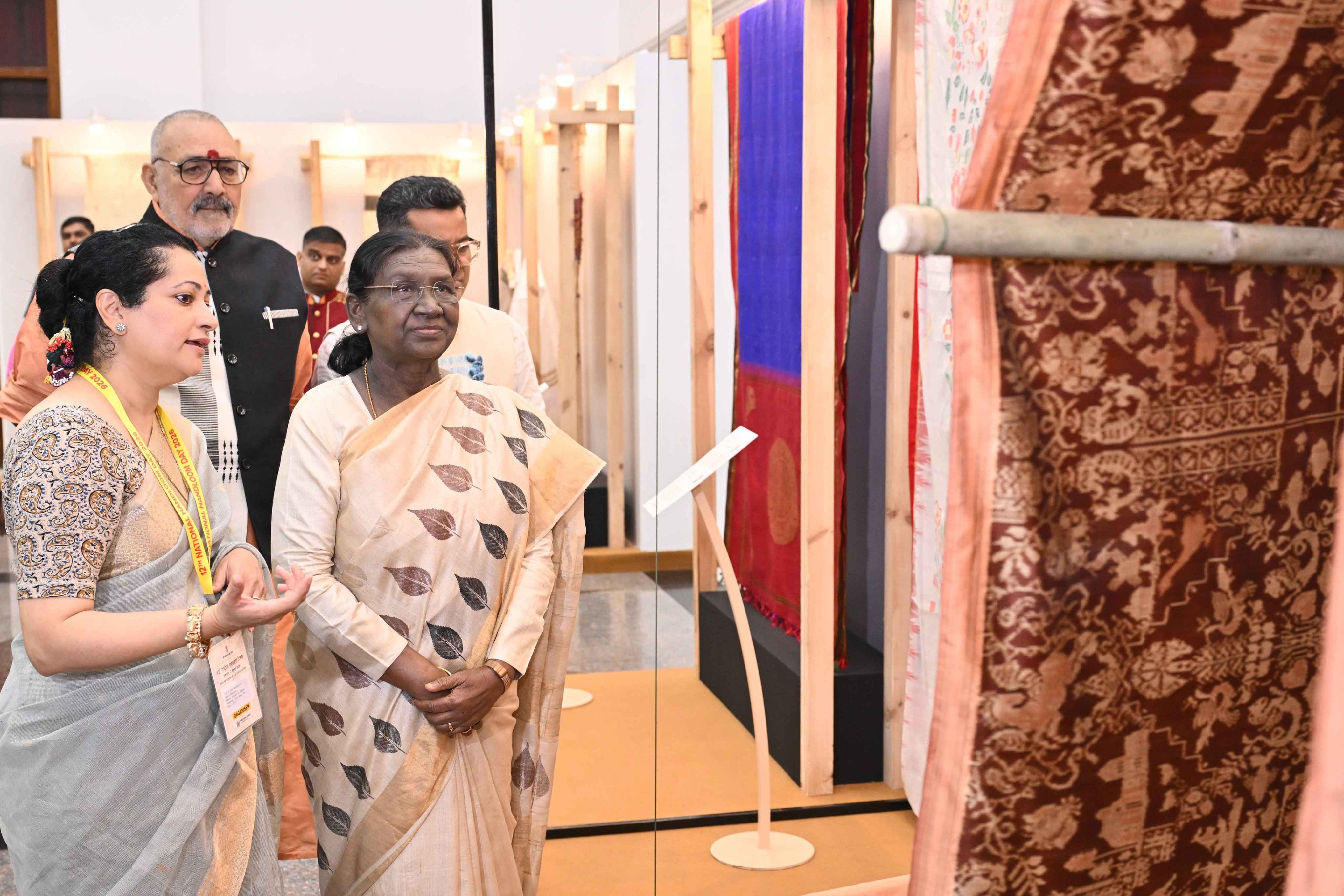
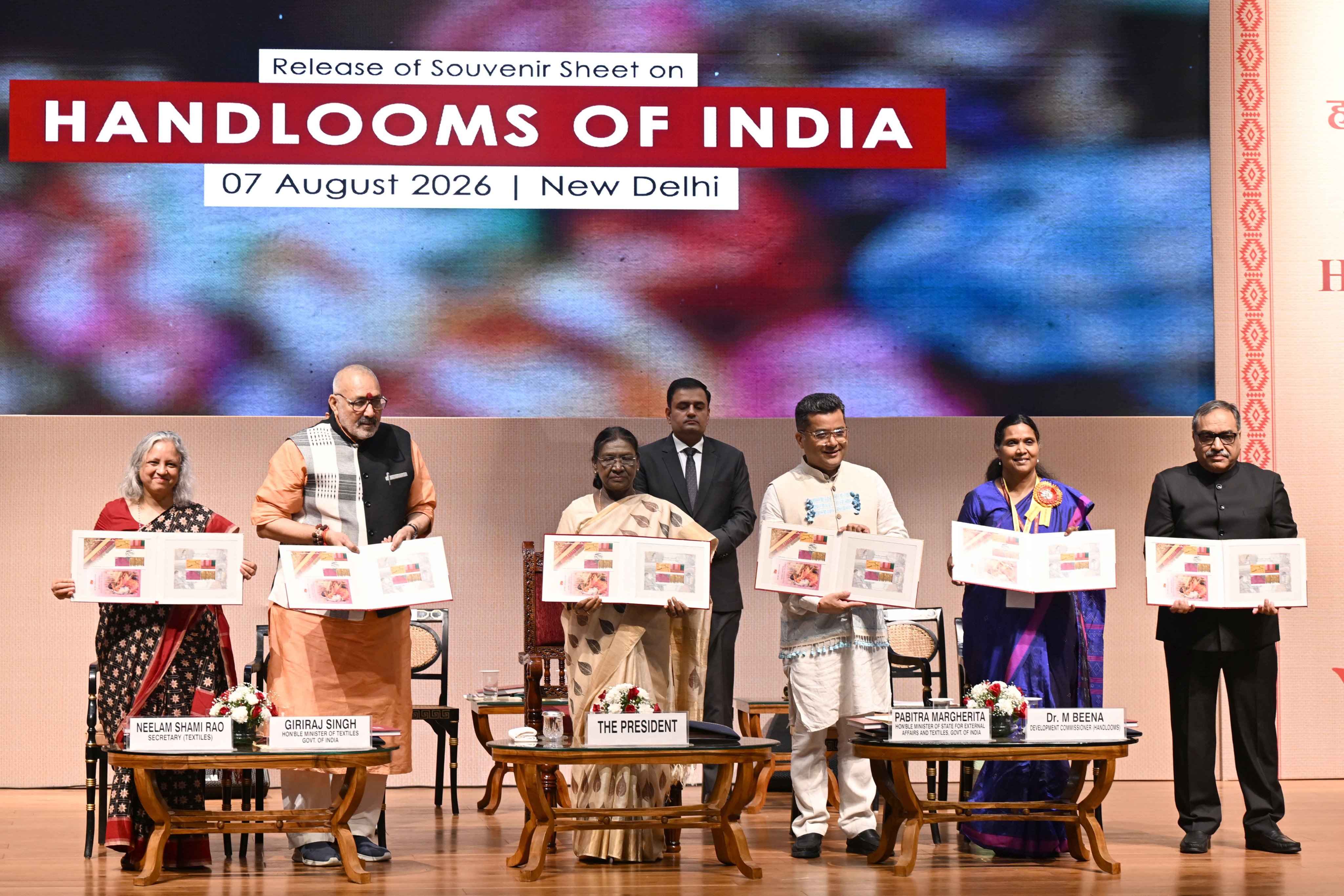
The National Handloom Day has been celebrated in India since 2015 to celebrate India’s handloom and textile wealth and more than 32 lakh talented artisans that are the backbone of these crafts. The date, 7 August, was chosen to commemorate the launch of the Swadeshi Movement the same day in 1905. The movement aimed to make India self-reliant and reinvigorate the pride Indians held for their indigenous textiles and crafts. As the 12th National Handloom Day is observed in 2026, India recognises the immense responsibility of preserving and promoting this legacy.
India’s handlooms are the guardians of traditional knowledge and crafts that have contributed to the country’s economic, cultural and artistic wealth. Spanning the length and breadth of India, textile production is diverse, characterised by myriads of fabrics, embroidery techniques, appliqué styles, and dyeing and printing techniques. Each of these innumerable crafts is historical, unique and exquisite.
The history of the handloom crafts in India is a long-standing one. Evidence has been found of clothes made after weaving and dyeing cotton in the Indus Valley Civilisation from 3000 BC, along with silk moth species which may contributed to the production of the silk fabric. In Sanskrit literature, the Mahabharata mentions silks, while Kautilya’s works refer to cottons and linens of India. The Harshacharita by Bana mentions the Indian tie-dye technique of dyeing, the ‘bandhyamana’. There are mentions in the Greek text The Periplus of the Erythrean Sea of ancient trade routes used to export Indian muslin.
A range of weaving techniques are found in India, often used to produce stunning sarees. Each of these styles is famous and distinct. The white Paat, golden Mugu and insulating Eri silks are found in Assam. West Bengal is the hub of Jamdani cotton and Baluchari silk weaves. The Bomkai and Sambalpuri styles of Ikat weaving are found in Odisha. Maharashtra produces silk fabrics with the Minakari or Paithani weave and the Himru weave. Kanchipuram silk and Koorainadu cotton-silk from Tamil Nadu utilise unique weaving styles. The Banarasi silk fabric from the city of Varanasi in Uttar Pradesh uses the Kimkhab weaving technique. Patola and Mashru weaves are found in Gujarat. Kota Doria from Rajasthan, Ilkal weave from Karnataka, Panja weave from Haryana, and Lepcha weave from Sikkim are also popular. Tangliya, Kani and Kinnauri weaves are used to make beautiful shawls in several states.
The dyeing, painting, and printing techniques of Indian handlooms are complex, distinctive and famed for their beauty. Some of these include the Ajrakh, Kalamkari, Bagh, Ikat, Madhubani and Bandhej. Batik or block printing is practiced throughout India for many types of cotton fabrics. Often, the vibrant hues come from natural dyes derived from indigo, turmeric, castor seeds, madder roots, henna plant et cetera. Kantha, Zardozi, Phulkari, Soof, Aari and Gota-Patti are styles of embroidery and appliqué that define the textiles of several regions across India.
The 12th National Handloom Day recognises the artisans that have shaped India’s handlooms. The Rashtrapati Bhavan Cultural Centre (RBCC) is hosting the 2026 celebrations for the event, where the President of India, Smt. Droupadi Murmu has conferred the Sant Kabir Handloom Awards and the National Handloom Awards 2025 to twenty-two recipients for contributing to the preservation of India’s handloom heritage. The delegates in attendance included India’s Union Minister for Textiles, Mr. Giriraj Singh; Minister of State for Textiles, Mr. Pabitra Margherita; Secretary, Ministry of Textiles, Ms. Neelam Shami Rao; and Development Commissioner (Handlooms), Dr. M. Beena.