Every year, as the calendar turns to January 1st, the Republic of Cuba marks one of the most significant dates in its national history: Liberation Day, officially known as the Triunfo de la Revolución (Triumph of the Revolution). For the rest of the world, this date signifies the beginning of a new year, but for Cuba, it is a profound symbol of national identity, sovereignty, and the enduring spirit of the Cuban people.
This year, Cuba celebrates the 67th anniversary of the Triumph of the Revolution. This year’s observances are particularly special as they coincide with the 100th birth anniversary of their revolutionary leader, Fidel Castro Ruz. The year 2026 has been officially declared the “Year of the Centenary of the Commander in Chief”.
Origins of Revolutionary Movement
The Cuban revolutionary movement was rooted in nationalist thought, social reformism, and anti-imperialism. In the first half of the twentieth century, Cuba’s urban centres experienced growth, while rural regions faced poverty and limited access to education and healthcare. These conditions generated widespread demands for reform, social justice, and genuine national independence. A pivotal moment came with the Moncada Barracks incident on 26 July 1953, a confrontation led by Fidel Castro. Castro’s courtroom defence, History Will Absolve Me, was a four-hour speech that articulated a reformist vision emphasising land redistribution, education, healthcare, and national sovereignty.
By late 1958, the revolutionary forces had achieved decisive momentum. At dawn on 1 January 1959, Fidel Castro officially proclaimed the victory of the revolution.
The revolutionary leadership quickly implemented agrarian reforms, a massive literacy campaign, and the socialisation of healthcare, ensuring that the fruits of national labour were redirected toward the welfare of the historically marginalised majority in the following years.
Annual Traditions and the Ritual of Liberation Day
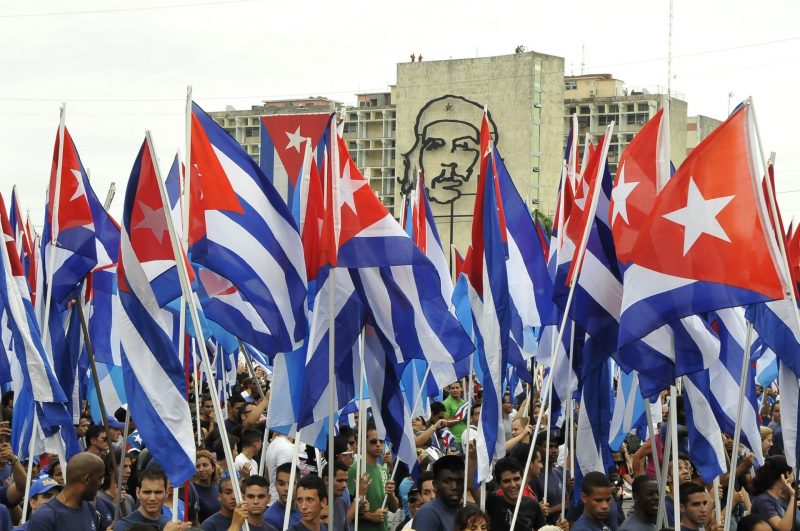
The commemoration of Liberation Day is characterised by a harmonious blend of formal state ceremonies and expansive community celebrations.
Official commemorations typically commence with the ceremonial raising of the Cuban flag in public squares and government buildings. This ritual serves as a poignant reminder of the nation’s hard-won sovereignty. In the capital, Havana, the iconic Plaza de la Revolución often hosts grand military parades.
Beyond the political sphere, the anniversary is celebrated in every neighbourhood through community fairs and cultural galas, including agricultural fairs. Cultural institutions also play a prominent role, often performing special programmes in honour of the Revolution.
67th Liberation Day Commemoration
The celebrations will span from late December 2025 into early January 2026, with decentralised events across provinces to foster local participation. The focal point of the 2026 celebrations will be Santiago de Cuba, where the triumph was originally proclaimed to the world on January 1, 1959. Specific preparations are underway to revitalise the city’s historic centre, particularly Céspedes Park and the surrounding heritage buildings, such as the old City Hall. At midnight on December 31st, 21 artillery salutes will be fired from the San Carlos de la Cabaña fortress as part of the celebration.
While Santiago de Cuba will host the central events, the spirit of commemoration will extend across all provinces. The Cuban government and the Communist Party (PCC) have emphasised that the 67th anniversary should catalyse efforts to recover the economy and strengthen social projects. The PCC uses the anniversary to recognise the provinces and municipalities that have demonstrated exceptional performance in economic and social indicators. For the 67th anniversary, various territories have been selected to host provincial events, highlighting their specific contributions to national welfare.
Liberation Day serves as a constant reminder for Cubans to adhere to the principles on which the nation is constructed. The official social media page of the PCC quotes Fidel Castro’s ideals: “In the year of the Centenary of the Commander in Chief, let us honour his memory with a permanent exercise of criticism and self-criticism, not for the faults, but as a spur for transformative action.”