India is strengthening its digital tourism ecosystem, with the government seeking to make travel more accessible, convenient and inclusive through technology, artificial intelligence (AI) and closer cooperation with private-sector businesses. The launch of the National Digital Tourism Stack in September 2026 marks an important step towards connecting tourism services, improving the visibility of lesser-known destinations and creating new opportunities for local enterprises. Tourism remains an important contributor to India’s economy, supporting employment, small businesses and communities across the country. According to the Ministry of Tourism, the sector contributed 5.22 per cent of India’s gross domestic product and supported approximately 8.46 crore jobs in 2023–24. The scale of domestic travel also highlights the importance of modernising tourism services, while digital platforms offer opportunities to improve the experience of international visitors.
The challenge is to connect India’s diverse tourism offerings through a more coordinated system. Travellers may currently need to use different websites and applications to discover destinations, arrange accommodation, book transport and make payments. A more integrated digital ecosystem could reduce these difficulties while helping tourism businesses reach a wider audience.The Ministry of Tourism’s latest initiatives reflect an effort to bring government infrastructure, technology companies and tourism operators closer together.
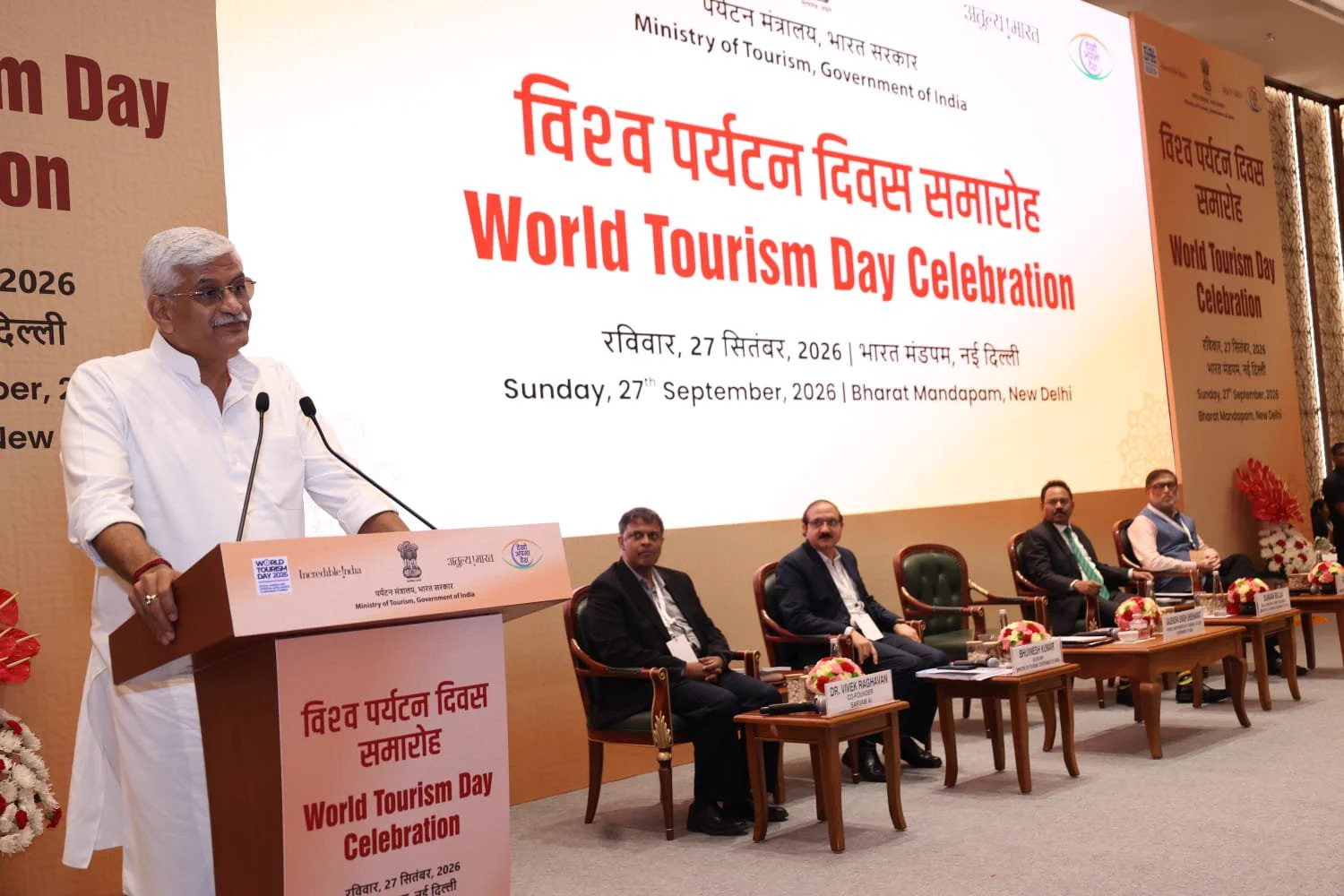
On 27 September 2026, Union Minister for Tourism and Culture Shri Gajendra Singh Shekhawat launched the National Digital Tourism Stack at an event marking World Tourism Day at Bharat Mandapam in New Delhi. The initiative is being developed in collaboration with the Open Network for Digital Commerce (ONDC), with support from the International Centre for DPI Innovation and Advancement. The platform aims to make India’s tourism offerings more discoverable, accessible and trustworthy. Its proposed capabilities include verified identities and supplier credentials, search and discovery tools, digital payments, ratings and grievance redressal.
The initiative is envisaged as shared digital infrastructure involving the central government, state governments, Union Territories and industry partners. Rather than requiring every tourism business to build its own digital systems, the approach seeks to enable participating providers to make their services available through multiple platforms.According to the Ministry of Tourism, implementation will take place in phases, with a pilot planned for January 2027. This phased approach will be important in assessing how effectively the system connects tourism providers and translates digital access into actual bookings.The initiative builds on the wider digital transformation of India’s economy, where common digital infrastructure has helped businesses and consumers access services through interconnected systems.
A major feature of the government’s approach is the involvement of businesses that already operate in travel, accommodation, transport and digital communications. On 27 September, the Ministry of Tourism exchanged five memoranda of understanding with Airbnb India, FlixBus India, Glance Digital Experience, Eicher Group Foundation and MakeMyTrip. The agreements cover different aspects of the visitor experience. Airbnb’s collaboration focuses on homestay development and host training, while FlixBus will support destination promotion and responsible travel through intercity mobility. Glance will contribute digital tourism content and responsible visitor messaging. Eicher Group Foundation will support community-led heritage tourism in the Himalayan region, while MakeMyTrip will help promote unexplored villages, local shopping and government-identified tourism initiatives.
The Ministry has stated that these agreements are non-commercial, non-financial, non-binding and non-exclusive. Their significance lies in bringing together public-sector priorities and private-sector capabilities to improve tourism promotion and community participation. For smaller businesses, stronger online visibility could help attract customers beyond their immediate region. Homestay owners, independent guides, artisans and local food businesses may benefit if digital promotion leads to genuine bookings and increased visitor spending.
Digital tourism is also intended to address the concentration of visitors at India’s best-known attractions. The National Mission for Alternative Destinations, launched alongside the National Digital Tourism Stack under the Dekho Apna Desh 2.0 campaign, seeks to encourage travel to lesser-known destinations that have the infrastructure and capacity to welcome more visitors. The initial focus includes mountain and hill destinations, coastal areas, heritage towns and regional pilgrimage centres. State governments and Union Territories will work with industry partners to develop bookable itineraries combining accommodation, transport, meals and local experiences. Digital campaigns, particularly through social media, are expected to help these destinations reach prospective travellers. Visitor data and feedback will also inform destination management, including efforts to monitor tourist numbers against assessed carrying capacity.
This approach could create opportunities for communities that have historically received less tourism income. However, successful implementation will depend on reliable transport, adequate accommodation, trained local workers and the protection of natural and cultural heritage.
India’s digital tourism strategy extends beyond the new initiative. The government’s Incredible India Digital Platform provides information and virtual experiences covering cultural heritage, adventure, food, wellness, arts, crafts and rural tourism. Its AI-enabled features are intended to personalise travel discovery and connect visitors with relevant services. The NIDHI+ platform, meanwhile, supports the registration, recognition and classification of tourism service providers. According to the Ministry of Tourism, it listed 63,740 accommodation units and 15,531 tourism service providers as of 23 September 2026. Artificial intelligence could further improve destination recommendations, itinerary planning and multilingual visitor assistance. Yet these benefits depend on accurate, regularly updated information and responsible handling of travellers’ data. Smaller operators will also need appropriate digital skills and support to participate effectively.
India’s digital tourism ambitions come at a time of strong travel demand. The Ministry of Tourism reported 428.55 crore domestic tourist visits and 2.53 crore foreign tourist visits in 2025. These figures underline the scale of the opportunity, while also highlighting the need to manage visitor flows and improve services across a geographically diverse country. The National Digital Tourism Stack offers a framework for connecting discovery, service providers and digital transactions. Its success, however, will depend on effective coordination between central and state authorities, technology providers and local tourism businesses. The next phase will be measured not simply by the number of platforms introduced, but by whether travellers can plan and complete journeys more easily and whether the benefits reach communities beyond established tourism centres. If public infrastructure and private-sector expertise work together effectively, digital tourism could become an important contributor to India’s employment, enterprise development and sustainable economic growth.