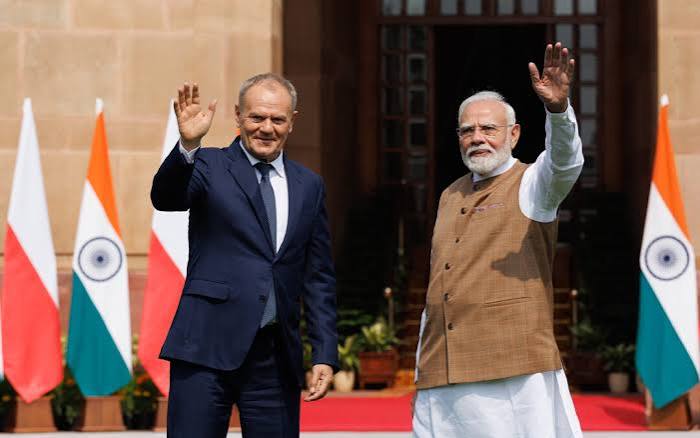
India and Poland have set an ambitious target to double bilateral trade by 2030, reflecting their shared commitment to expanding economic cooperation and strengthening their strategic partnership. The goal was highlighted during Polish Prime Minister Donald Tusk’s official visit to India from 21 to 23 October 2026, when he held talks with Indian Prime Minister Narendra Modi in New Delhi. The visit brought renewed attention to the economic opportunities between the two countries, with discussions covering trade, investment, technology, industrial cooperation and supply chains. Both leaders emphasised the importance of translating closer political relations into practical benefits for businesses and their economies.
According to figures published by the Embassy of India in Warsaw, bilateral trade reached approximately US$6.36 billion in 2025, compared with US$1.95 billion in 2013. Indian exports to Poland accounted for US$4.83 billion, while imports from Poland stood at US$1.53 billion. These figures demonstrate the substantial expansion of commercial relations over the past decade. The new target aims to build on this progress by encouraging businesses to explore additional markets, establish partnerships and increase investment. Poland is an important economic partner for India in Central and Eastern Europe. Its industrial capabilities and access to European markets offer opportunities for Indian companies seeking to expand their presence in Europe. India, meanwhile, provides Polish businesses with access to a large consumer market, a skilled workforce and an expanding manufacturing sector.
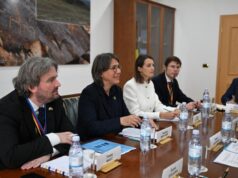
Around 100 business leaders and industry representatives accompanied Prime Minister Tusk during the visit. Their participation reflected the importance both governments attach to business-led growth and closer commercial engagement. Prime Minister Modi encouraged Polish companies to explore investment opportunities in India, while Prime Minister Tusk highlighted Poland’s potential as a destination for Indian investment and a gateway to European markets. The two countries identified several areas for stronger cooperation, including industrial machinery, pharmaceuticals, infrastructure, defence, mining, critical minerals, energy and information technology. Small and medium-sized enterprises are also expected to play an important role. Greater contact between businesses, industry associations and government institutions could help companies identify partners and overcome barriers to entering unfamiliar markets.
Technology and innovation featured prominently in discussions. India and Poland expressed interest in encouraging cooperation in artificial intelligence, semiconductors and quantum technologies, alongside partnerships involving research institutions, start-ups and businesses. Both governments also highlighted the importance of resilient supply chains. Cooperation in mining, critical minerals and battery recycling could create opportunities in advanced manufacturing and energy-related industries. The leaders discussed strengthening agricultural cooperation as well. Renewed activity within the bilateral working group on agriculture is intended to support engagement and identify opportunities for trade and collaboration. The broader India–European Union economic relationship may also create favourable conditions for commercial expansion. Following the conclusion of India–EU free trade agreement negotiations in January 2026, the two leaders expressed support for the agreement’s early signing, ratification and implementation.
India and Poland elevated their relationship to a Strategic Partnership during Prime Minister Modi’s visit to Poland in August 2024. Their Action Plan for 2024–2028 provides a framework for cooperation across economic, political, technological and security-related areas. During the October 2026 visit, the leaders reviewed progress under the plan and reaffirmed their intention to strengthen bilateral engagement. Prime Minister Tusk also indicated that trade could potentially triple by 2030. However, the jointly announced target remains to double bilateral trade, while the higher figure reflects his assessment of the relationship’s further potential.
Achieving the trade target will depend on sustained business engagement, stronger investment links, improved market access and the development of new commercial partnerships. Government agreements can provide direction, but companies will ultimately determine how quickly trade expands. With bilateral commerce already growing and cooperation extending into emerging technologies and industrial sectors, India and Poland have established a foundation for further economic progress. The coming years will show whether their strengthened partnership can translate into the ambitious trade growth both governments are seeking.