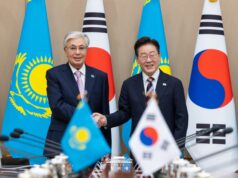
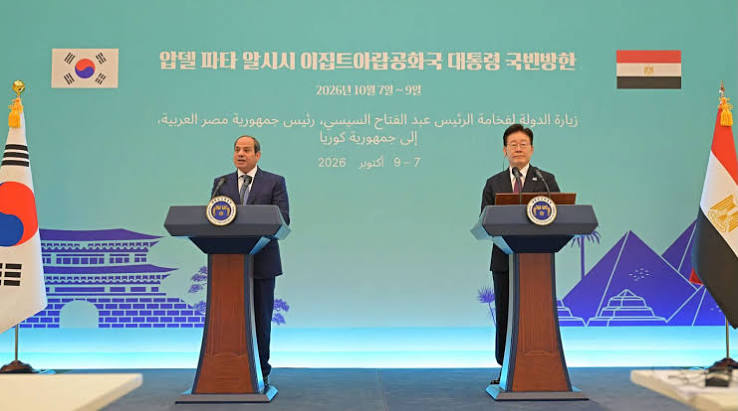
South Korea and Egypt have taken a significant step towards closer economic and diplomatic relations, agreeing to establish a strategic partnership and launch negotiations for a Comprehensive Economic Partnership Agreement (CEPA). The announcements, made during Egyptian President Abdel Fattah El-Sisi’s visit to Seoul in October 2026, signal a shared interest in expanding trade, attracting investment and strengthening cooperation across several industries. The discussions between His Excellency Lee Jae Myung, President of the Republic of Korea, and His Excellency Abdel Fattah El-Sisi, President of the Arab Republic of Egypt, reflect the growing importance both countries attach to their relationship. The two leaders discussed economic development, manufacturing, energy, infrastructure, technology and regional security, while setting out priorities for future cooperation.
The decision to begin negotiations for a Comprehensive Economic Partnership Agreement is one of the most important economic developments arising from the summit. The proposed agreement is intended to create a framework for closer trade and investment relations. Its terms will be determined through negotiations, which may address market access, commercial cooperation and other arrangements affecting businesses in both countries. For Egypt, stronger economic ties with South Korea could support efforts to attract foreign investment, expand manufacturing and create employment. For South Korea, closer access to the Egyptian market could offer opportunities for companies looking to strengthen their presence in the Middle East and Africa.
However, the launch of negotiations is only the beginning of the process. The two governments will need to agree on the substance of the proposed arrangement before its potential benefits can be assessed. No tariff reductions or new trading rights should be assumed to be in force simply because negotiations have begun. The initiative also follows earlier discussions between officials from both countries. In June 2026, Egyptian and South Korean representatives discussed investment promotion and progress towards the proposed economic agreement. The October announcement therefore marks a further step in an economic process that was already under way.
Manufacturing is expected to be a major area of cooperation under the new strategic partnership. South Korea has developed internationally competitive industries in electronics, automotive production, engineering and advanced manufacturing. Egypt, meanwhile, has been seeking investment that can expand its industrial base and increase the contribution of domestic production to economic growth. Closer cooperation could bring South Korean businesses into contact with Egyptian manufacturers, suppliers and potential investment partners. Depending on future agreements and commercial decisions, this could lead to opportunities in industrial production, technical training and the development of local supply chains. The emphasis on localisation is particularly relevant. Rather than focusing exclusively on the import of finished products, both countries have an interest in exploring ways to build industrial capabilities and develop skilled workforces.
Shipbuilding and electric vehicles have been identified as specific priorities for cooperation.South Korea is one of the world’s leading shipbuilding nations, with considerable experience in designing and producing commercial vessels and other advanced maritime equipment. Egypt’s position beside the Mediterranean and Red Sea, together with its role in international shipping, gives maritime industries considerable economic relevance. Cooperation in this sector could involve industrial investment, technical expertise and the development of supporting services. Any specific projects, however, would depend on further negotiations and decisions by the companies concerned. Electric vehicles offer another potential area of collaboration. As the automotive industry changes in response to new technologies and demand for cleaner transport, countries are looking for ways to strengthen production capabilities and develop related supply chains. South Korean expertise could provide opportunities for Egyptian industrial development, particularly where investment is accompanied by technical training and the development of local suppliers. The announcement does not establish that new vehicle factories or manufacturing contracts have already been approved.
Energy and infrastructure are also central to the countries’ plans for closer cooperation. The two governments have expressed interest in expanding engagement in these areas, alongside advanced technology, artificial intelligence and smart-city development. Egypt’s infrastructure requirements and development ambitions create potential opportunities for foreign partners. South Korean experience in engineering, digital technology and industrial systems could be relevant to future projects involving transport, urban services and modern infrastructure.
Artificial intelligence may offer further opportunities, including industrial applications, digital services and workforce training. Smart-city initiatives could also encourage exchanges of expertise in urban planning, connectivity and public-service management. Energy cooperation forms part of the same broader agenda. Both governments intend to explore additional opportunities, although individual projects and their financing arrangements will need to be established separately. The importance of these commitments lies in the range of areas they open for discussion. Their eventual impact will depend on whether the two countries can develop viable projects and put the necessary agreements into practice.
Egypt’s strategic position and the Suez Canal Economic Zone
Egypt’s geography is an important consideration in its relationship with South Korea. The country connects Africa and Asia and lies along some of the world’s most important maritime trading routes. The Suez Canal Economic Zone has therefore emerged as a significant area for potential cooperation. Designed to attract investment and support industrial and commercial activity, the zone could provide opportunities for South Korean companies interested in establishing production or distribution operations in Egypt.
For Egypt, investment from South Korea could help strengthen industrial capacity and create opportunities for local businesses. For South Korean companies, Egypt may provide a useful base from which to investigate markets across Africa and the Middle East. The two governments have also expressed interest in trilateral cooperation involving African countries. Such initiatives could bring together South Korean technical expertise, Egypt’s regional connections and the development priorities of partner countries.The practical value of this approach will depend on the projects developed and the participation of governments, businesses and institutions.
The strategic partnership also includes defence industry cooperation and discussions on maritime security. Both governments have expressed an intention to build on existing defence engagement. The announcement reflects a broader commitment to cooperation, but should not be interpreted as confirmation of a new arms purchase or military contract unless a separate official announcement establishes those details. Maritime security is an important shared concern. Egypt’s location near the Suez Canal and the Red Sea gives it a direct interest in the safety of international shipping. South Korea, whose economy depends heavily on international trade, also has a strong interest in secure maritime routes.
The relationship is not limited to government negotiations and business opportunities. Both countries have also identified education, training and cultural engagement as areas where closer cooperation would be valuable. A notable announcement was the designation of 2027 as the Year of Cultural Exchanges between South Korea and Egypt. The initiative is intended to encourage greater interaction between their populations and provide opportunities to showcase their respective cultures.
South Korea’s contemporary cultural industries and Egypt’s rich historical heritage offer different foundations for cultural engagement. Exchanges could help strengthen public understanding and encourage new connections between educational and cultural institutions. The two governments have also highlighted scholarships, Korean-language instruction, youth training and technical and vocational education. These initiatives could support skills development and create opportunities for students and young professionals to learn from each other.
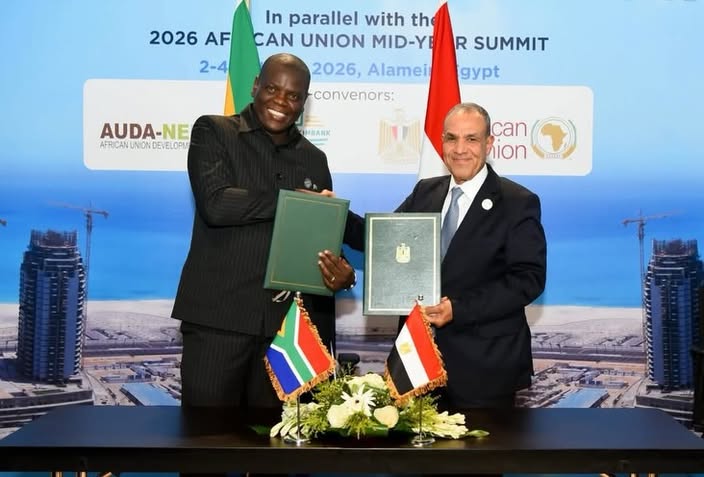
The summit was accompanied by the signing of agreements and memoranda intended to support cooperation across several sectors. According to the South Korean presidential briefing, six documents were signed in the presence of the two leaders following their meeting. These included a social security agreement, memoranda concerning information and communications technology, clean energy, shipbuilding and maritime cooperation, and a joint declaration launching negotiations for the proposed economic partnership agreement. The South Korean government also reported a total of 12 documents when agreements and memoranda signed or revised in connection with President El-Sisi’s visit were included.
These arrangements provide a foundation for future work, but their value will ultimately be measured by implementation. Government agencies will need to coordinate their efforts, while businesses and institutions will have to identify opportunities that can be sustained commercially. For South Korea, the strategic partnership offers a route to strengthen engagement with the Middle East and Africa. For Egypt, it provides an opportunity to deepen ties with an established Asian industrial economy and pursue investment across manufacturing, energy and technology.