Cyprus is a small island nation strategically positioned in the eastern Mediterranean, yet it occupies a position of considerable geopolitical importance. Cyprus and India enjoy a warm and historically significant relationship founded on mutual trust, shared democratic values, collaboration in international forums, and increasing economic and strategic partnerships. The rapport between the two nations has remained stable and friendly since the establishment of diplomatic relations in 1962. Over the years, Cyprus and India have worked closely together in various fields. The Cyprus-India relationship holds significance not only due to bilateral cooperation but also because Cyprus acts as a gateway connecting Europe, West Asia, and the Mediterranean region. Likewise, India is regarded by Cyprus as an emerging global power with increasing economic and geopolitical significance.
Historical Background
Cyprus and India established diplomatic relations shortly after Cyprus achieved independence in 1960. Cypriot leader Archbishop Makarios, who was the first President of Cyprus, shared a close friendship with the then Indian Prime Minister and this personal connection served as the basis for amicable bilateral relations. The relationship flourished in a time when numerous newly independent nations in Asia and Africa sought solidarity through platforms like the Non-Aligned Movement (NAM). Both Cyprus and India were active members of the NAM and were united in their commitment to anti-colonialism, peaceful coexistence, and respect for sovereignty. India advocated for the independence and territorial integrity of Cyprus in international forums. In reciprocation, Cyprus consistently supported India on significant matters. India has steadfastly supported the sovereignty, unity, and territorial integrity of the Republic of Cyprus and has promoted a peaceful resolution to the Cyprus issue in accordance with United Nations resolutions.
Political and Diplomatic Relations
The two nations engage in regular diplomatic discussions and provide mutual support within various international organisations. High-level visits constitute a vital aspect of their diplomatic relationship, and visits have significantly contributed to the enhancement of bilateral relations. Over the years, numerous leaders from both nations have exchanged visits. Some notable visits include: 1. President Makarios’ trip to India during the 1960s. 2. Prime Minister Indira Gandhi in October 1982. 3. Prime Minister Rajiv Gandhi in June 1988. 4. Indian President R. Venkataraman in November 1992. 5. Prime Minister P. V. Narasimha Rao in November 1994. 6. President Shankar Dayal Sharma in November 1997. 7. President K.R. Narayanan in May 2000. 8. Prime Minister Atal Bihari Vajpayee in November 2002. 9. Prime Minister Manmohan Singh in September 2006. 10. President A.P.J. Abdul Kalam in June 2007. 11. President Pratibha Patil in May 2010. 12. President Pranab Mukherjee in December 2012. 13. President Ram Nath Kovind in April 2018. 14. Prime Minister Narendra Modi’s visit to Cyprus in June 2023. 15. Prime Minister Narendra Modi’s landmark visit to Cyprus in 2025. The Cyprus President Nicos Anastasiades visited India in 2017. These exchanges have fostered greater cooperation in areas such as trade, investment, security, maritime affairs, and technology.
India has placed greater emphasis on bolstering relationships with Mediterranean nations due to the geopolitical importance of the region. Cyprus aligns with India’s overarching strategy to improve connections with Europe and the Eastern Mediterranean. The rising significance of energy security, maritime commerce, and geopolitical aspects has rendered Cyprus strategically important for India.
Cyprus and India have mutual concerns about terrorism and extremism. Cyprus has endorsed India’s stance on addressing cross-border terrorism. Both nations have highlighted the importance of global collaboration in the fight against terrorism through: 1. Sharing intelligence; 2. Monitoring finances; 3. Legal collaboration; 4. Enhancing international agreements.
Support in International Forums
Assistance in global forums is undoubtedly a crucial foundation for a robust bilateral relationship between the two countries. Cyprus and India mutually support one another in international organisations, which include: 1. United Nations (UN) 2. Commonwealth of Nations 3. Non-Aligned Movement (NAM) and 4.World Trade Organization (WTO). Cyprus has consistently endorsed India’s bid for permanent membership in a reformed United Nations Security Council (UNSC). In return, India has backed Cyprus regarding its reunification and territorial sovereignty concerns. Both nations also collaborate on matters pertaining to climate change, sustainable development, peacekeeping, and international law.
Economic and Trade Relations
Economic cooperation constitutes a significant foundation of the relations between Cyprus and India. The economic and commercial connections between these two nations have experienced consistent growth, bolstered by a mutual dedication to improving bilateral trade and investment. The trade dynamics between Cyprus and India have exhibited a favourable trend, with notable Indian exports to Cyprus comprising pharmaceuticals, textiles, iron and steel, ceramic products, machinery, and chemicals. In return, Cyprus exports pharmaceuticals, beverages, and manufactured goods to India. While the volume of bilateral trade remains relatively modest in comparison to India’s trade with larger European nations, the economic relationship has steadily strengthened over the years.
Cyprus holds significance for India as an investment and financial centre. For many years, it has been a key source of Foreign Direct Investment (FDI) into India. Indian enterprises in sectors such as information technology, pharmaceuticals, renewable energy, and shipping have expressed interest in Cyprus. Cypriot businesses also regard India as a vast market with significant opportunities in infrastructure, tourism, education, fintech, and digital technology. The bilateral trade between the two nations amounted to USD 140.47 million for the period of April 2024 to March 2025. In 2016, Cyprus and India entered into a revised tax treaty aimed at enhancing transparency and information sharing. The revision bolstered investor confidence and reinforced financial collaboration.
Cultural and Academic Relations
Cultural and educational exchanges have played a significant role in fostering closer interpersonal relations between Cyprus and India. A small yet vibrant Indian community exists in Cyprus. Numerous Indians are employed in various sectors, including: 1. Information technology; 2. Healthcare; 3. Hospitality; 4. Education; and 5. Business services. Additionally, Indian students seek higher education opportunities in Cyprus, especially in disciplines such as medicine, management, and hospitality.
The culture of India is well-regarded in Cyprus through various avenues: 1. Yoga; 2. Bollywood cinema; 3. Indian culinary traditions; 4. Both classical and contemporary dance; 5. Cultural festivals. Events facilitated by the Indian High Commission in Cyprus play a significant role in promoting Indian heritage and enhancing cultural comprehension. In a similar vein, the culture, history and traditions of Cyprus are valued in India through academic and diplomatic interactions.
Indian Diaspora
The Indian diaspora in Cyprus, although relatively small in size, plays a crucial role in fortifying the bilateral relations between Cyprus and India. Indians residing in Cyprus primarily work in sectors such as education, information technology, shipping, tourism, trade, and professional services. A significant number of Indian students also seek higher education in Cypriot universities, thereby contributing to academic and cultural exchanges between the two nations.
The Indian community in Cyprus has effectively integrated into the local society while maintaining its cultural traditions and heritage. Festivals such as Diwali and Holi are celebrated with great enthusiasm, fostering cultural diversity and mutual understanding. Indian restaurants, yoga centres, and cultural associations have further enhanced the awareness of Indian culture among Cypriots. The diaspora serves as a vital bridge between the two countries by promoting economic cooperation, tourism, and interpersonal connections. Indian professionals and entrepreneurs play a significant role in the Cypriot economy and assist in strengthening business relations with India. The High Commission of India in Nicosia actively interacts with the diaspora through cultural initiatives and community events. To be precise, the Indian diaspora in Cyprus acts as an essential link that promotes friendship, cultural understanding and collaboration between Cyprus and India.
Recent Developments
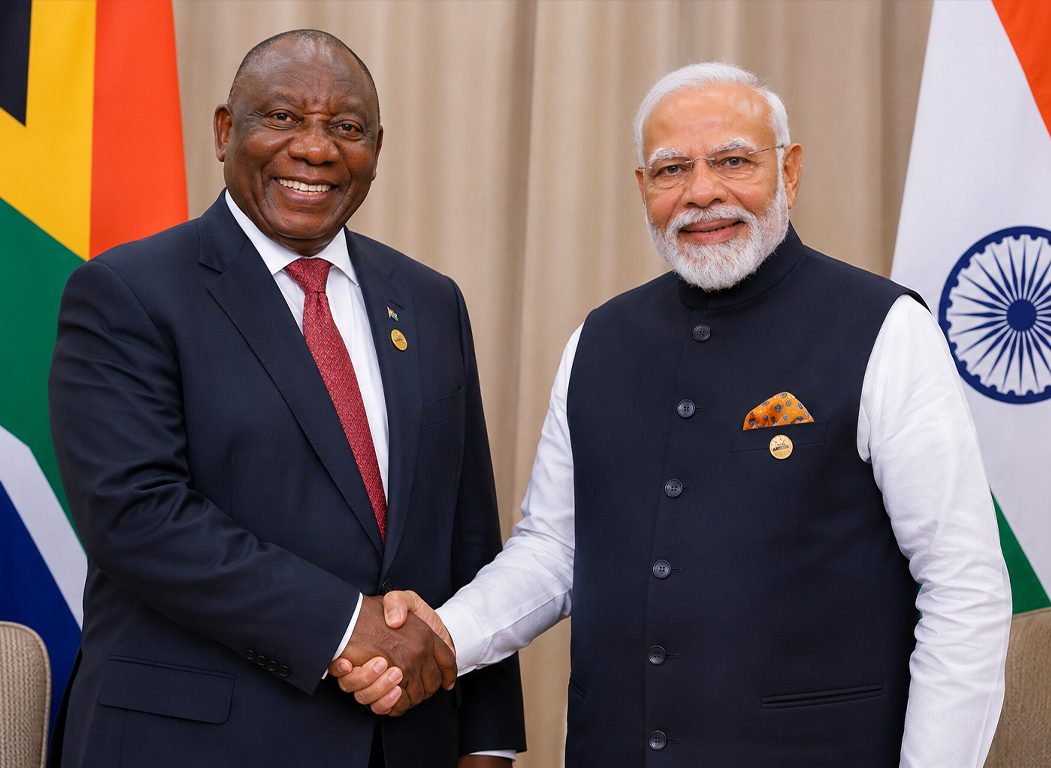
The visit of Prime Minister Narendra Modi to Cyprus in 2025 represented a significant diplomatic achievement. This visit underscored India’s increasing interest in Europe and the Eastern Mediterranean. In turn, Cyprus has shown its support for enhancing India–European Union relations and fostering collaboration in sectors such as renewable energy, digital transformation, and climate action.
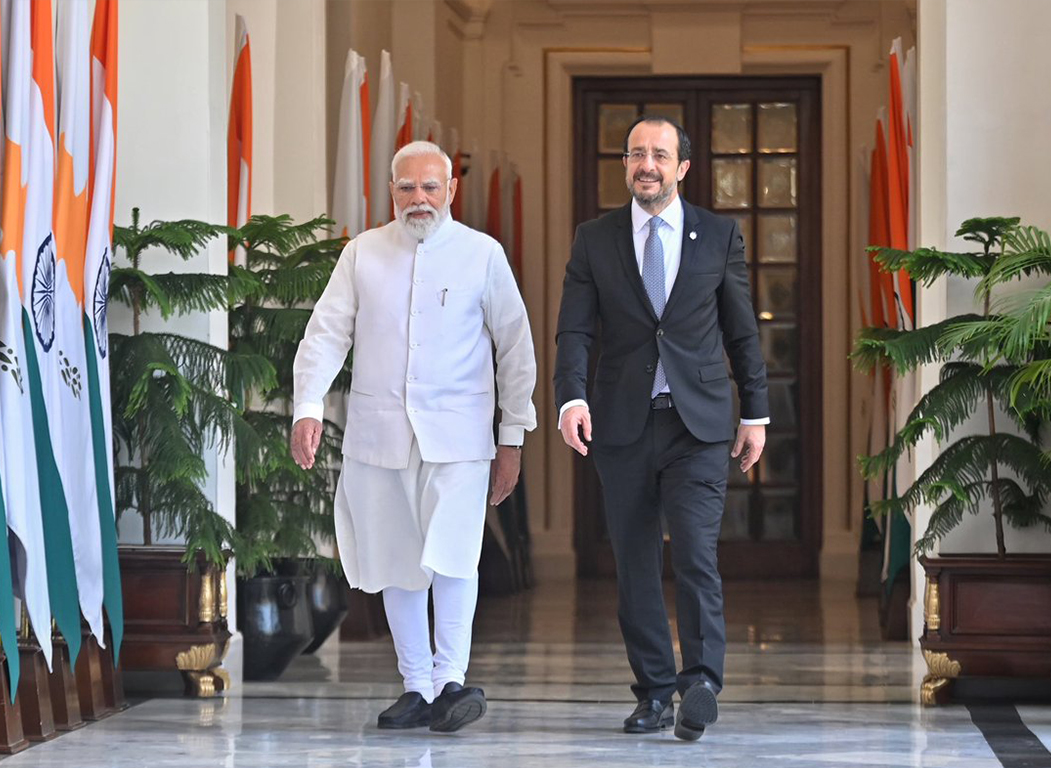
In May 2026, Cypriot President Nikos Christodoulides undertook a four-day State Visit to India, following an invitation from Prime Minister Narendra Modi. This visit served as a reciprocal gesture to PM Modi’s landmark visit to Cyprus in 2025. Cyprus and India have agreed to upgrade their bilateral relationship to a Strategic Partnership and introduced a five-year roadmap for defence cooperation (2026–2031). They are also committed to establishing a cyber security dialogue whilst also enhancing collaboration in maritime transport, space, and health. These outcomes were agreed during the meeting between Prime Minister Narendra Modi and President Nikos Christodoulides of Cyprus.
Conclusion
Over the last sixty years, the bond between the two nations has been strengthened, particularly in the realms of economy and trade. The potential for further enhancing bilateral relations appears promising in the forthcoming years. Cyprus and India share a relationship defined by friendship, trust, and mutual respect sovereignty and territorial integrity. The upgrading of bilateral ties to a Strategic Partnership in 2026, with agreements on defence cooperation, counter-terrorism, and connectivity, marks a new and consequential chapter in the relations. As an EU member since 2004, Cyprus serves as a crucial gateway for India’s engagement with the European Union, and this partnership is set to deepen further in the years ahead.