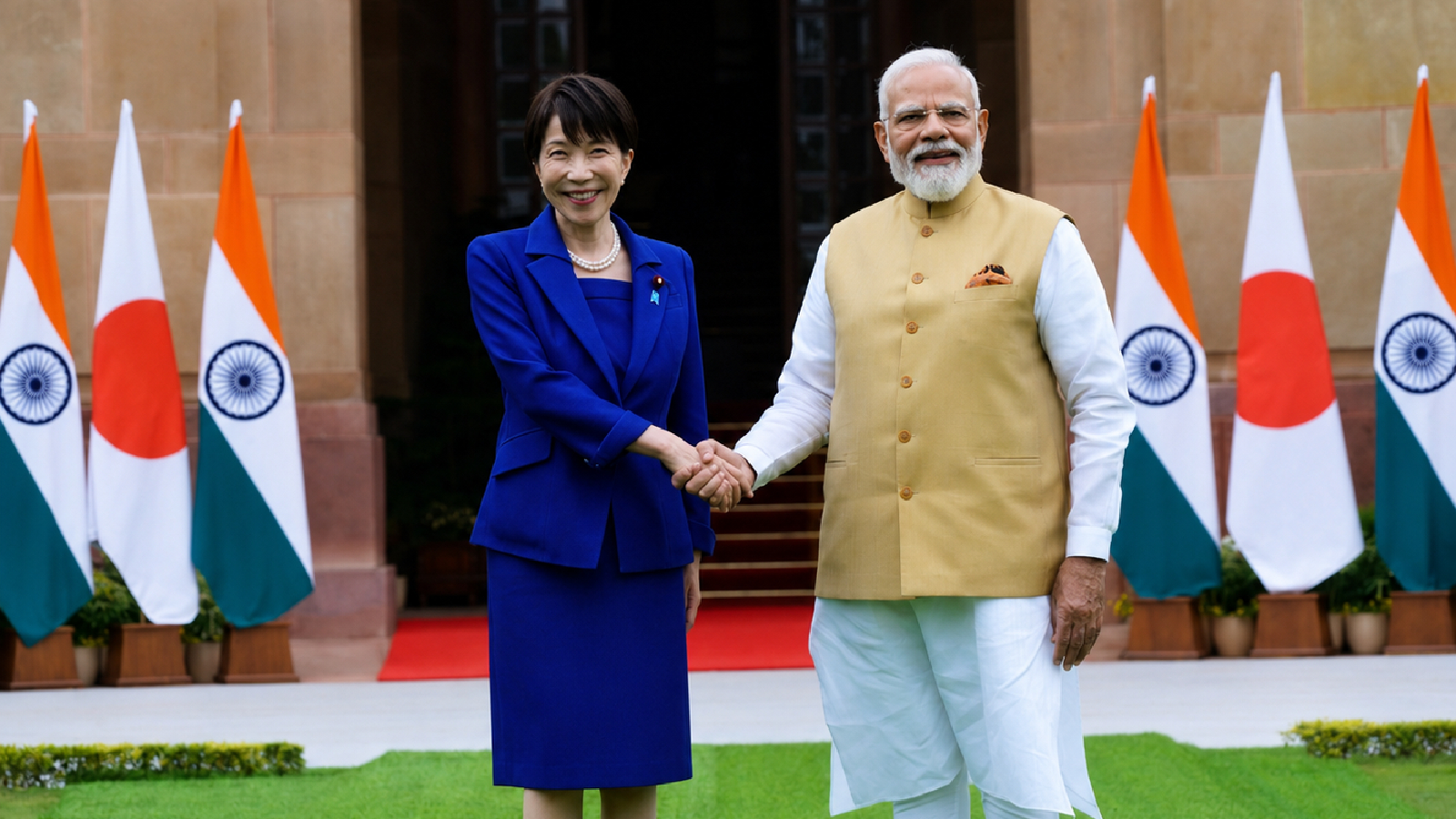
Japanese Prime Minister (PM) Sanae Takaichi arrived in New Delhi on July 1 for a three-day official visit to India to participate in the 16th India-Japan Annual Summit and hold bilateral discussions with PM Narendra Modi. The visit, scheduled from July 1 to July 3, is focused on reviewing the progress of the India-Japan Special Strategic and Global Partnership and expanding cooperation across key sectors.
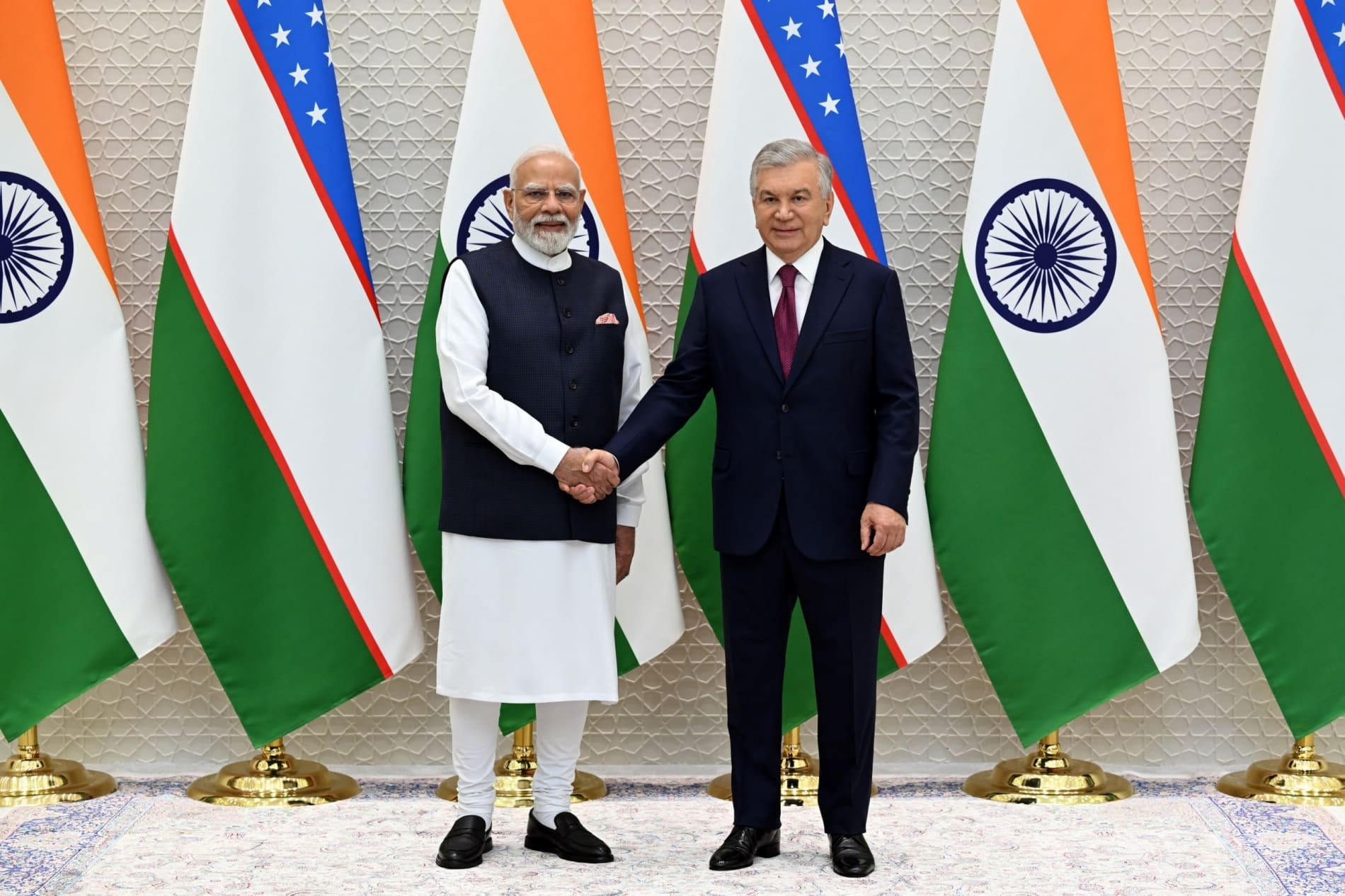
PM Takaichi was accorded a ceremonial welcome at the forecourt of Rashtrapati Bhavan in the presence of Prime Minister Modi on July 2. The day included the India-Japan Summit Meeting, delegation-level talks, and PM Takaichi’s participation in the India-Japan Business Forum alongside senior executives from both countries.
The summit meeting is expected to review progress under the “Japan-India Joint Vision for the Next Decade,” announced during PM Modi’s visit to Japan in August last year. Discussions will cover bilateral cooperation in economic security, trade, investment, innovation, energy and defence, along with measures to strengthen the Special Strategic and Global Partnership. During the joint press conference, Prime Minister Narendra Modi and Japanese Prime Minister Sanae Takaichi reaffirmed their commitment to expanding the India–Japan Special Strategic and Global Partnership.
The two leaders reviewed cooperation in trade, semiconductors, digital technologies, clean energy and resilient supply chains, while announcing plans to strengthen defence ties through greater collaboration in defence equipment, technology transfer, joint research and co-development projects. PM Takaichi also highlighted that India’s MAHASAGAR (Mutual and Holistic Advancement for Security and Growth Across Regions) vision aligns well with Japan’s Free and Open Indo-Pacific policy, calling for enhanced maritime cooperation, secure sea lanes and a rules-based Indo-Pacific in partnership with like-minded countries. The summit also marked a significant step forward in defence ties. PM Modi announced that India and Japan have signed an agreement for their first defence co-development project that involves the Naval Radio Antenna “Unicorn”.
A key proposal expected to be discussed is the creation of a local-currency settlement framework to facilitate direct transactions between the Indian rupee and the Japanese yen. The proposed mechanism would enable Japanese non-residents to open accounts with Indian banks, allowing financial institutions in both countries to settle cross-border payments directly in local currencies without routing transactions through the US dollar. If incorporated into the joint statement, it would be the first time currency cooperation is formally included in a leaders’ declaration between India and Japan.
Economic cooperation remains a significant pillar of the bilateral relationship. Bilateral trade reached approximately US$27.5 billion during the 2025-26 fiscal year, while Japanese investment in India totalled US$3.2 billion between April and December 2025. Japan continues to support major infrastructure projects in India, including the Mumbai-Ahmedabad High-Speed Rail Corridor, and Japanese companies have expanded investments in the country’s financial sector.
During PM Modi’s visit to Tokyo last year, Japan pledged to more than double its investment in India to over US$61 billion (roughly ¥10 trillion) over the next decade. The leaders also jointly inaugurated Maruti Suzuki’s manufacturing facility at Kharkhoda, Haryana, built with an investment of around ₹35,000 crore. Once fully operational, the facility will have an annual production capacity of one million vehicles and is expected to generate nearly 21,000 direct jobs, further reinforcing Japanese investment in India’s manufacturing sector and the ‘Make in India’ initiative.
The leaders are also expected to review progress in priority sectors identified under the India-Japan Economic Security Dialogue. The two sides are expected to announce a joint declaration on economic security cooperation and a separate joint statement advancing the India-Japan Artificial Intelligence Cooperation Initiative, covering joint development of AI applications in manufacturing, healthcare and mobility. The agenda also includes discussions on regional and global developments, cooperation under the Quad framework and efforts to advance the shared vision of a Free and Open Indo-Pacific.
The visit follows continued high-level engagement between the two countries, including interactions between the two leaders on the sidelines of the G7 Summit in June 2026 and the G20 Leaders’ Summit in November 2025. The annual summit remains the principal platform for reviewing bilateral cooperation and setting priorities for future engagement. A joint statement outlining the outcomes of the summit is expected at the conclusion of the discussions before Prime Minister Takaichi departs India on July 3.