Canadian Prime Minister Mark Carney is on a four-day official visit to India at the invitation of Prime Minister Narendra Modi. The visit focuses on strengthening cooperation in trade, energy, technology, artificial intelligence (AI), education, innovation, and people-to-people ties between the two countries.
Arrival and Key Engagements in Mumbai
Prime Minister Carney arrived in India on February 27 in Mumbai, where he was welcomed by senior Indian officials, including Maharashtra’s Minister of Protocol and Marketing, Jaykumar Rawal. He met with leading business figures, including Natarajan Chandrasekaran, Chairman of the Tata Group, to discuss partnerships in areas such as energy, technology, and AI aimed at enhancing economic security and prosperity.
To strengthen the Canadian economy and take advantage of India’s expanding demand for energy, technology, and services, Carney, accompanied by Canadian premiers, ministers, and a “Team Canada” delegation, focused on exploring ways to double trade, establish energy partnerships, and draw in significant new investments.
A major outcome of this visit turned out to be the Canada-India Talent and Innovation Strategy on 28 February in Mumbai. A Memorandum of Understanding was signed between the University of Waterloo and Tata Consultancy Services, leading to 13 new collaborative initiatives to enhance people-to-people ties through research and student exchanges, hybrid campuses, an AI Centre of Excellence, and the inclusion of Canadian expertise in India’s priority sectors such as health, clean technology, and digital innovation.
“We have a wealth of human capital, with teachers and students already working closely together on cutting-edge research,” said Minister Anand. “Through possibilities for researchers and students, this agreement will strengthen cooperation, spur economic expansion, and strengthen the close human links that bind our two nations.”
Arrival in New Delhi and Bilateral Meetings at Hyderabad House
Prime Minister Carney arrived in New Delhi on March 1. He stated:
“Arrived in New Delhi to meet with Prime Minister Modi. Canada and India are two confident and ambitious nations that want to build boldly together. We’re forging new partnerships in energy, talent and innovation, and AI — to create greater security and prosperity for our peoples.”
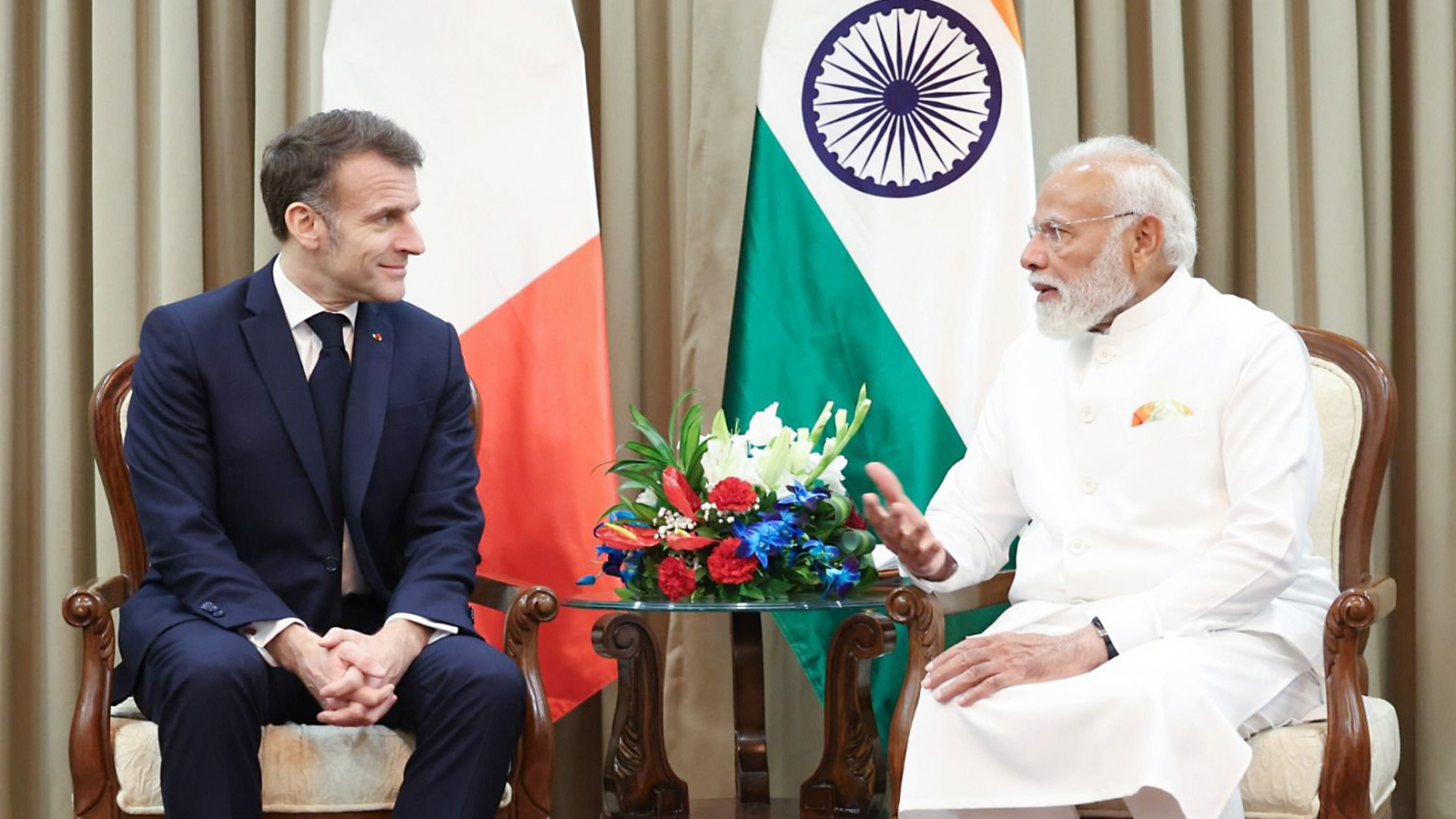
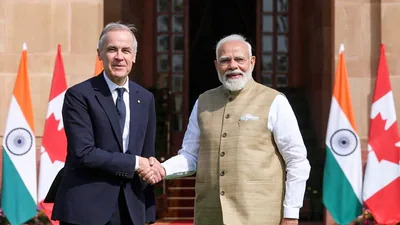
On March 2, the visit reached its high point with delegation-level talks and a joint press meet between Prime Minister Narendra Modi and Prime Minister Mark Carney at Hyderabad House in New Delhi. This was described in official statements as a key step in reviewing and advancing the India-Canada Strategic Partnership, building on prior meetings.
In his official press statement, PM Modi welcomed PM Carney on his first official visit to India as Prime Minister, calling it an important milestone that has brought new energy, mutual trust, and positivity to bilateral relations. He emphasised shared democratic values, celebration of diversity, and a common vision for humanity’s well-being, describing the evolving relationship as a “next- level partnership.”
The key outcomes of this visit include a strong commitment to advance negotiations towards finalising the Comprehensive Economic Partnership Agreement (CEPA), following meetings between the chief negotiators on the Terms of Reference. The two sides have set a target of increasing bilateral trade to US$50 billion by 2030, with the aim of generating new investment and employment opportunities. Cooperation in technology and innovation was enhanced through deeper collaboration in AI, quantum computing, supercomputing and semiconductors, with appreciation to Canada for participating in the AI Impact Summit and joint efforts to transform ideas into global solutions.
A Memorandum of Understanding on critical minerals was also signed to enhance resilient supply chains. In the energy sector, the India-Canada partnership will encompass hydrocarbons, renewables, green hydrogen, and energy storage. India welcomed Canada’s joining the International Solar Alliance and the Global Biofuel Alliance and proposed holding an India-Canada Renewable Energy and Storage Summit later this year.
A long-term uranium supply agreement for civil nuclear energy was finalised, complemented by collaboration on Small Modular Reactors and advanced reactors. Agriculture ties also received emphasis, particularly in value addition, agri-technology, and food security, including the proposed establishment of an India-Canada Pulse Protein Centre of Excellence in India.
In the area of defence and security, growing cooperation reflects mutual trust and encompasses enhanced collaboration between defence industries, maritime domain awareness initiatives, expanded military exchanges. Both sides also decided to establish an India-Canada Defence Dialogue and agreed that terrorism, extremism, and radicalisation are serious shared challenges requiring close cooperation to ensure global peace and stability.
People-to-people and cultural ties were enhanced through new university partnerships in AI, healthcare, agriculture, and innovation, as well as agreements for cultural exchanges with a dedicated MoU focused on Indigenous and tribal communities.
In the Indo-Pacific and global context, Canada is welcomed as a key partner, including its expressed interest in becoming a Dialogue Partner in the Indian Ocean Rim Association (IORA).
Five Memorandums of Understanding (MoUs) were signed across areas such as critical minerals, renewable energy, technology and AI, talent and culture, and defence cooperation. The leaders released a joint statement outlining these initiatives, framing the partnership as ambitious and forward-aimed at promoting mutual prosperity, clean energy, and global stability.
This visit has infused renewed momentum into bilateral cooperation and marks a significant step towards deeper strategic and economic ties between India and Canada.