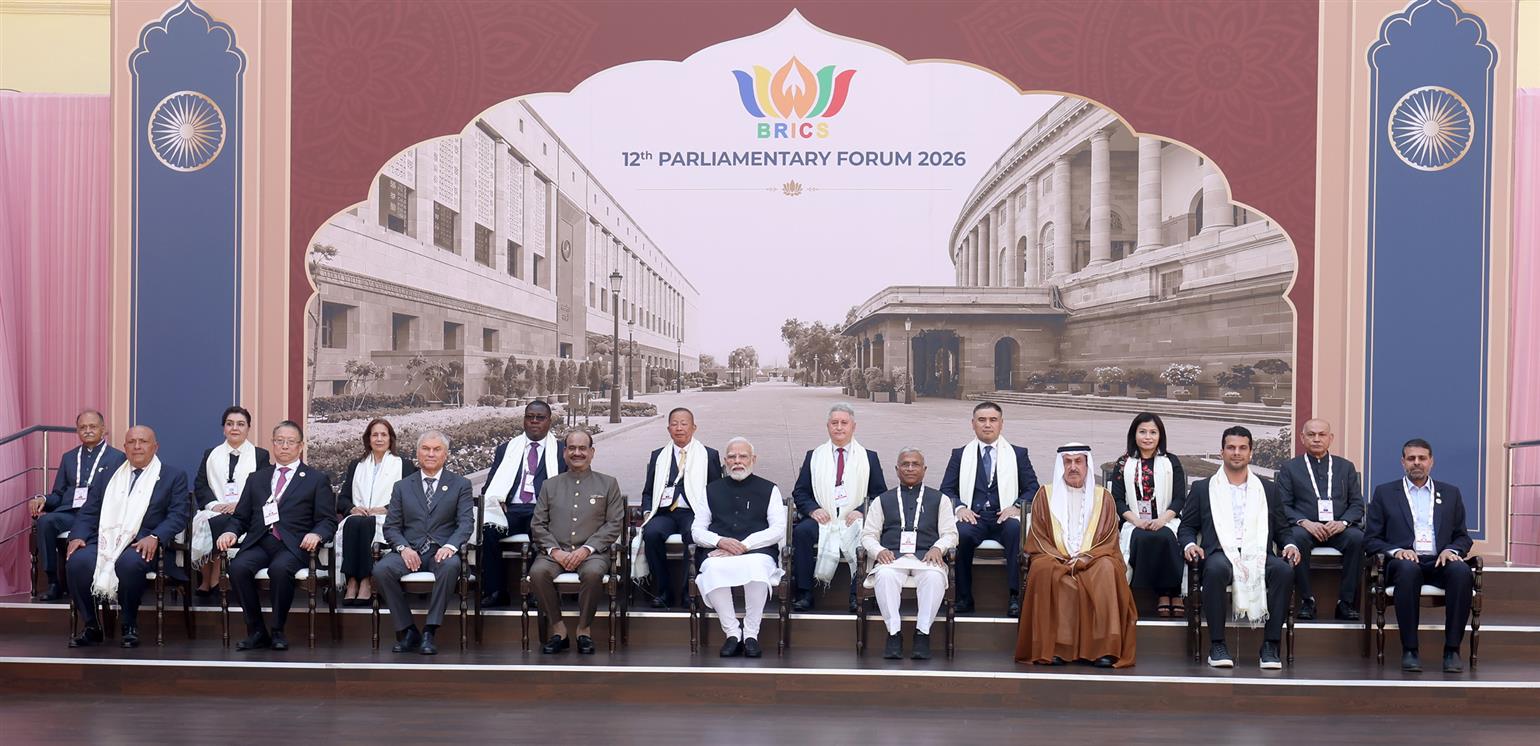
India is hosting the 12th BRICS Parliamentary Forum in New Delhi on 26 and 27 October, bringing together parliamentary leaders and representatives from member and partner countries to discuss international cooperation, democratic institutions and sustainable development. The forum, organised by the Parliament of India, is being held at Samvidhan Sadan in the Parliament House Complex under the theme “Fostering Parliaments for People-Centric Development”. Lok Sabha Speaker Shri Om Birla inaugurated the gathering on Monday, emphasising the importance of parliamentary cooperation in addressing shared global challenges and ensuring that development policies remain focused on people’s needs. Prime Minister Shri Narendra Modi also interacted with members of parliament from BRICS countries, exchanging views on a range of issues during India’s 2026 BRICS chairship.
The gathering provides an opportunity for participating legislatures to strengthen dialogue, share institutional experience and explore ways to make parliamentary systems more responsive to citizens. Its central theme reflects India’s emphasis on connecting international cooperation with practical improvements in people’s lives, while strengthening accountability, inclusive growth and democratic governance. In his inaugural address, Lok Sabha Speaker Shri Om Birla welcomed the visiting delegations and highlighted the value of bringing together countries with different histories, cultures, political experiences and development priorities. He emphasised that such diversity can become a source of strength when countries work through dialogue, mutual respect and a willingness to identify common ground. The Speaker underlined the important role of parliaments in maintaining democratic accountability, scrutinising government policies and ensuring that public concerns receive appropriate attention. He also stressed that parliamentary institutions must continue to evolve in response to changing circumstances, including technological advances, economic uncertainty and emerging international challenges.
The effectiveness of parliamentary cooperation, he indicated, depends on its ability to produce meaningful outcomes rather than remain limited to formal discussions. Stronger institutional relationships can help countries exchange legislative experience, improve governance practices and develop responses to issues that cross national borders. Rajya Sabha Deputy Chairman Shri Harivansh also addressed the inaugural session, highlighting BRICS as an important platform for cooperation on international and regional matters. He referred to the grouping’s substantial share of the global population, which gives its collective discussions considerable significance in debates about development and international governance. His remarks reinforced the importance of India’s people-centred approach to its BRICS chairship, with particular attention to resilience, innovation, cooperation and sustainability. These priorities reflect the growing need for legislative institutions to consider both immediate public concerns and the long-term consequences of economic, technological and environmental change.
The forum’s programme is organised around four principal themes. The first examines how parliaments can strengthen institutional resilience and prepare for future challenges. Discussions are intended to consider the importance of effective oversight, transparency and accountability, particularly during periods of uncertainty when public institutions face additional demands. The second theme focuses on innovation, including the responsible use of artificial intelligence and digital technologies. As governments increasingly introduce digital public services and explore new technological applications, parliamentarians face the task of examining the opportunities these developments create alongside questions of accountability, transparency and public welfare. Legislative institutions have an important role in ensuring that technological progress serves citizens and is supported by appropriate safeguards. International cooperation and the reform of global governance form the third area of discussion. Participating parliamentarians have an opportunity to exchange perspectives on strengthening multilateral institutions and ensuring that developing countries receive meaningful representation in international decision-making. These questions remain important for countries seeking greater cooperation on economic development, climate change, international security and other shared concerns. The fourth theme addresses sustainability and the contribution of parliaments to building an inclusive and environmentally responsible future. Legislative decisions on economic development, infrastructure, energy and environmental protection can have lasting consequences for communities. The discussions therefore provide a platform to consider how countries can pursue growth while taking account of environmental responsibilities and the needs of future generations.
A special meeting of chairpersons of the International Affairs Committees of BRICS member and partner country parliaments is also included in the programme. The meeting focuses on parliamentary diplomacy, institutional capacity-building and the exchange of best practices. Such engagement can strengthen communication between legislatures and help representatives better understand developments affecting their countries’ international relationships. Alongside the formal sessions, the programme provides opportunities for bilateral exchanges, cultural engagement and visits to institutions in New Delhi. These activities are intended to complement the main discussions by encouraging closer contact between parliamentary delegations and promoting greater understanding of the participating countries’ experiences and perspectives.
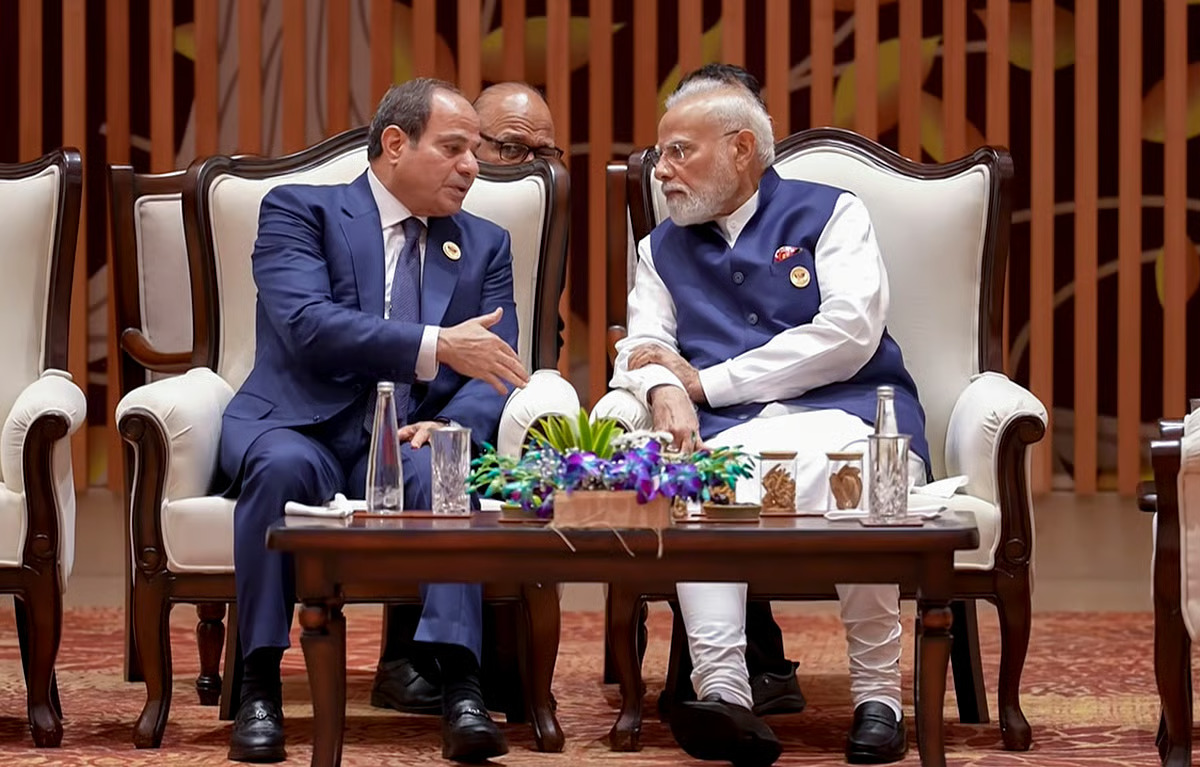
Prime Minister Shri Narendra Modi’s interaction with visiting parliamentarians added a further dimension to the gathering. According to the official announcement issued by the Prime Minister’s Office on 26 October, the interaction involved an exchange of views on a range of issues. It also highlighted the importance India attaches to parliamentary engagement as part of its wider international relationships. For India, the forum represents an opportunity to advance its priorities during the 2026 BRICS chairship and strengthen connections among participating legislatures. Parliamentary diplomacy can complement government-to-government engagement by providing elected representatives with opportunities to discuss public accountability, legislative practices and common development challenges.
The forum is scheduled to conclude on 27 October. The programme announced by the Lok Sabha Secretariat includes a joint statement, a valedictory address by Lok Sabha Speaker Shri Om Birla and the handover of the forum’s chairmanship to China. The final text of the joint statement will be important in establishing the participating delegations’ agreed priorities and any commitments emerging from the discussions. As the 12th BRICS Parliamentary Forum continues in New Delhi, its central message is that legislatures have a significant role in connecting international cooperation with the everyday concerns of citizens. Through dialogue and the exchange of experience, the participating countries are seeking to strengthen parliamentary relationships and promote development that is inclusive, accountable and responsive to the people it is intended to serve.