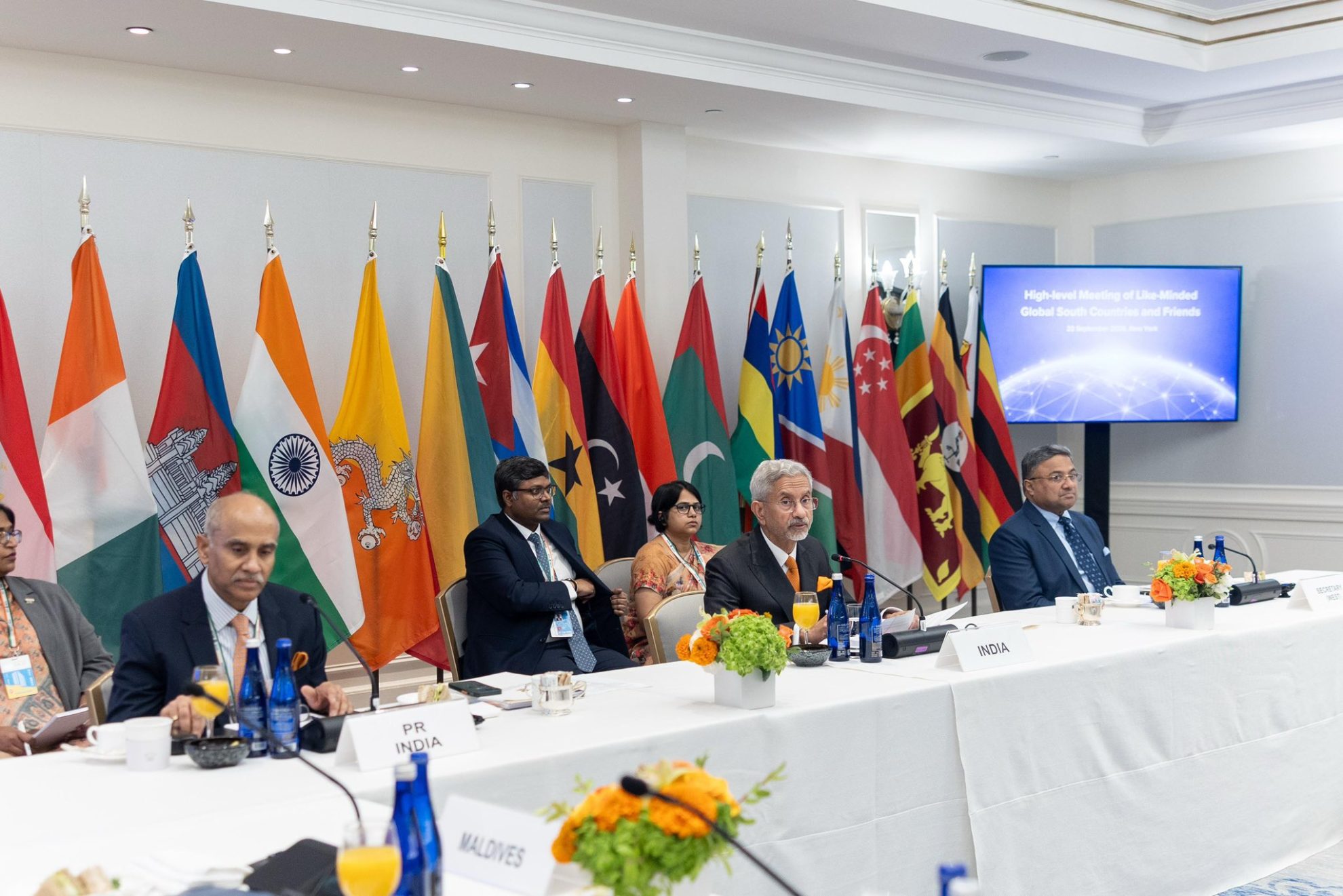
External Affairs Minister Dr. S. Jaishankar has held a series of bilateral meetings with foreign ministers, senior officials and international leaders on the sidelines of the 81st session of the United Nations General Assembly (UNGA) in New York, reviewing India’s bilateral partnerships, regional developments and cooperation on issues of international concern. The meetings, held during the high-level week of the General Assembly, have brought together representatives from Europe, Asia, the Middle East, Africa, the Caribbean and Latin America. Discussions have covered political and economic cooperation, security concerns, trade and investment, technology, energy, climate change and the changing international situation.
Dr. Jaishankar is leading the Indian delegation at the 81st UNGA, with his address to the General Debate scheduled for September 26. His engagements in New York have included individual meetings with counterparts as well as multilateral discussions involving India and its international partners. The meetings form part of India’s wider diplomatic engagement at the United Nations, where governments are addressing regional conflicts, economic uncertainty and questions concerning the future of international cooperation.
Discussions with European counterparts
European affairs have featured prominently in Dr. Jaishankar’s meetings, with discussions focusing on bilateral relations, regional security and economic cooperation. On September 24, the External Affairs Minister met Netherlands Foreign Minister Tom Berendsen. According to the Indian public broadcaster Akashvani, the two ministers discussed the Ukraine conflict and followed up on commitments arising from Prime Minister Narendra Modi’s visit to the Netherlands earlier in 2026. The meeting provided an opportunity to review the progress of the India-Netherlands partnership and consider the next steps in implementing understandings reached during the Prime Minister’s visit. Dr. Jaishankar also held talks with Finland’s Foreign Minister Elina Valtonen. Their discussions covered geopolitical and technological challenges, alongside cooperation between India and the European Union.
Technology has become an increasingly important part of India’s engagement with European countries, particularly in areas connected with industrial development, digital systems and emerging technologies. The discussions in New York reflected the importance both sides attach to maintaining dialogue on these subjects while addressing wider international developments. In another meeting, Dr. Jaishankar met Slovenia’s Foreign Minister Tomaž Kajzer. The two sides discussed trade and investment opportunities in the context of the proposed India-European Union free trade agreement.
Their discussions also covered energy, manufacturing, digital connectivity, defence and multilateral cooperation. The proposed trade agreement has provided an important setting for discussions on expanding commercial links between India and European partners. For India and Slovenia, the subjects raised during the meeting offered an opportunity to examine cooperation across several sectors rather than confining the relationship to conventional diplomatic engagement. Earlier in the week, Dr. Jaishankar met French Foreign Minister Jean-Noël Barrot. The two ministers reviewed regional and international developments, with particular attention to the Ukraine conflict and the Gulf crisis. The Indian External Affairs Minister described regular meetings and telephone conversations between the two sides as important for maintaining momentum in the India-France Special Global Strategic Partnership. The talks took place against the backdrop of continuing security concerns in Europe and West Asia, matters that have featured in India’s consultations with several international partners during the General Assembly.
West Asia, Middle East and regional security
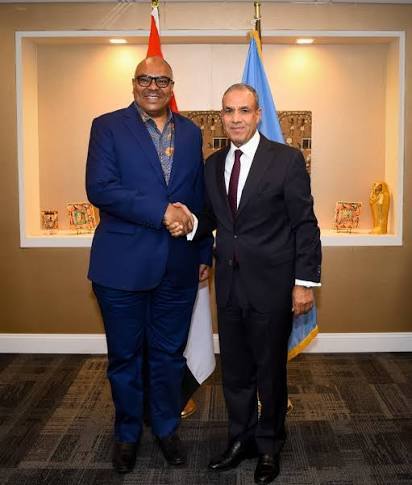
Developments in West Asia have been another significant part of the External Affairs Minister’s discussions, reflecting India’s continuing diplomatic engagement with countries across the region. Dr. Jaishankar met Egyptian Foreign Minister Badr Abdelatty and Jordanian Foreign Minister Ayman Safadi on September 24. The meetings focused on developments in West Asia and the wider Middle East. India maintains diplomatic and economic relationships across the region, and the continuing security situation has implications for energy supplies, trade routes, regional stability and the safety of Indian nationals. The discussions with the Egyptian and Jordanian foreign ministers formed part of the consultations taking place among governments during the UNGA session. Dr. Jaishankar also participated in the India-UAE-France trilateral meeting with Sheikh Abdullah bin Zayed Al Nahyan, Deputy Prime Minister and Minister of Foreign Affairs of the United Arab Emirates, and French Foreign Minister Jean-Noël Barrot.
The three ministers reviewed progress in their trilateral cooperation, covering artificial intelligence, space, health sciences, energy, culture and heritage. According to the Indian Ministry of External Affairs, the ministers also exchanged views on the situation in West Asia and emphasised the need to strengthen and expand cooperation in areas of shared interest. The trilateral format brings together three countries with established bilateral relationships and complementary interests in technology, energy, innovation and international affairs. The New York meeting provided an opportunity to review ongoing work and consider further areas of cooperation.
Engagement with the United Kingdom and Australia
The External Affairs Minister also met United Kingdom Foreign Secretary Ed Miliband during the General Assembly engagements. The two ministers discussed India-UK bilateral relations and global challenges, including food and energy security amid ongoing conflicts. Food and energy security have remained important subjects in international discussions, particularly as geopolitical tensions affect supply chains, commodity markets and the movement of essential goods. The meeting reflected the continuing engagement between New Delhi and London on bilateral cooperation and issues with implications beyond their immediate relationship. Dr. Jaishankar also held discussions with Australian Senator Penny Wong, Australia’s Foreign Minister.
The engagement was part of the broader series of consultations between India and its international partners during the UNGA high-level week. India and Australia have developed cooperation across several areas, including economic relations, regional security and multilateral engagement. Their discussions in New York took place alongside the Indian minister’s other meetings with counterparts from the Indo-Pacific and European regions. The minister’s programme also included a meeting with Singapore’s Foreign Minister Vivian Balakrishnan, adding to India’s diplomatic engagement with partners in Southeast Asia. These meetings provided opportunities for exchanges on bilateral relations and wider developments affecting the international community.
Central Asia and the Indo-Pacific
Regional cooperation and bilateral relations with Central Asian countries were also addressed during the meetings. Dr. Jaishankar met Tajikistan Foreign Minister Sirojiddin Muhriddin to discuss regional developments and bilateral cooperation. India and Tajikistan maintain diplomatic engagement on regional issues, with Central Asian stability and connectivity forming part of the broader context of their relationship. The meeting in New York allowed both sides to exchange views on current developments and review cooperation between their countries.
The External Affairs Minister also met Maldives Foreign Minister Iruthisham Adam. Their discussions focused on bilateral ties and multilateral cooperation. The Maldives is an important partner for India in the Indian Ocean region, where maritime security, regional stability and development cooperation are significant areas of engagement. The meeting formed part of India’s ongoing diplomatic contacts with neighbouring countries and regional partners during the United Nations session. Dr. Jaishankar’s programme further included talks with Ghanaian Foreign Minister Samuel Okudzeto Ablakwa. The two ministers discussed bilateral relations and multilateral cooperation. The engagement reflected India’s diplomatic outreach to African partners, including cooperation in international forums and the strengthening of bilateral ties.
Engagement with Africa, the Caribbean and Latin America
The minister’s discussions extended beyond India’s immediate neighbourhood, with meetings involving leaders and representatives from the Caribbean, Africa and Latin America. Dr. Jaishankar met Antigua and Barbuda Prime Minister Gaston Browne. Their discussions covered India’s development partnership, capacity-building initiatives and cooperation on climate change. The two sides also discussed India’s commitment to the successful conduct of the Commonwealth Heads of Government Meeting. Development cooperation and climate change remain important subjects for small island states, many of which face challenges relating to environmental vulnerability, infrastructure and access to finance. The meeting provided a platform to discuss these concerns alongside the bilateral relationship.
The External Affairs Minister also met Uruguayan President Yamandú Orsi. The meeting was among the engagements with Latin American and Caribbean representatives during the high-level week.In another engagement, Dr. Jaishankar met Estonian Foreign Minister Margus Tsahkna. Their discussions included the Ukraine conflict and its wider implications. The meeting brought European security concerns into the broader set of international issues discussed during the Indian minister’s New York visit. Together, the engagements with representatives from these regions reflected the geographical reach of India’s diplomatic programme during the General Assembly session.
Cooperation with the United Nations
Dr. Jaishankar also met Jorge Moreira da Silva, Executive Director of the United Nations Office for Project Services (UNOPS). During the meeting, the External Affairs Minister appreciated the organisation’s role in providing logistical support during challenging situations. UNOPS supports the implementation of projects and operational activities for the United Nations and its partners. Its work includes infrastructure, procurement and project management in development and humanitarian settings. The meeting formed part of India’s engagement with international organisations during the UNGA high-level week, alongside the minister’s bilateral consultations with national governments.
Global South cooperation and multilateral priorities
Beyond individual bilateral meetings, Dr. Jaishankar participated in a meeting of Global South countries on the sidelines of the 81st UNGA. Addressing the gathering on September 22, the External Affairs Minister called for greater cooperation among developing countries to respond to geopolitical tensions, economic pressures, climate-related challenges and difficulties facing the multilateral system.
He referred to the effects of conflicts on supply chains and trade, fragmented investment flows, rising debt vulnerabilities and inadequate development finance.Dr. Jaishankar called for coordinated efforts to address supply chain, finance and connectivity bottlenecks. He also highlighted the importance of protecting food security by addressing difficulties concerning grain and fertiliser supplies, preventing the manipulation of energy availability and prices, and promoting fair economic and trade practices.
The discussions reflected India’s continuing emphasis on cooperation among developing countries and the need to ensure that their economic and development concerns receive attention in international decision-making. These multilateral engagements have taken place alongside India’s bilateral consultations, giving the delegation opportunities to address both country-specific priorities and broader questions concerning international cooperation.
Dr. Jaishankar to address the General Debate
Dr. Jaishankar is scheduled to deliver India’s national statement at the General Debate of the 81st United Nations General Assembly on September 26. His address will follow several days of diplomatic engagements with foreign ministers, heads of government and international officials.
The General Debate provides member states with an opportunity to present their positions on international developments, outline diplomatic priorities and discuss matters of shared concern. India’s participation comes at a time when the General Assembly is addressing questions involving international peace and security, economic development, climate change and the effectiveness of multilateral institutions.
The External Affairs Minister’s meetings in New York have covered a wide range of these issues, from the Ukraine conflict and the situation in West Asia to trade, technology, energy and development cooperation. As the high-level week continues, the meetings have provided opportunities for India to review existing partnerships, maintain diplomatic contact with international counterparts and discuss areas where bilateral and multilateral cooperation can be expanded.