The historical trajectory of India-Iceland ties began with the formal establishment of diplomatic relations in 1972. The partnership gained further momentum in the new millennium with the opening of resident missions: Iceland established its mission in New Delhi in February 2006, followed by India opening its embassy in Reykjavik in August 2008. This partnership is deeply rooted in a shared commitment to democracy, equality, human rights, and the rule of law. The political trust between the two nations is also evident in Iceland’s consistent support for India’s candidature for permanent membership on the expanded United Nations Security Council.
High-level Engagements
India has seen two presidential visits to Iceland: the first by the then President Dr A.P.J. Abdul Kalam in May 2005, followed by the former President Shri Ram Nath Kovind in September 2019. From Iceland’s side, the then President Dr Olafur Ragnar Grimsson has frequently visited India, with two official state visits in October 2000 and January 2010. During his second visit, he was formally presented with the Jawaharlal Nehru Award for International Understanding (2007). President Grimsson also visited India in 2005, 2007, 2008, and 2013.
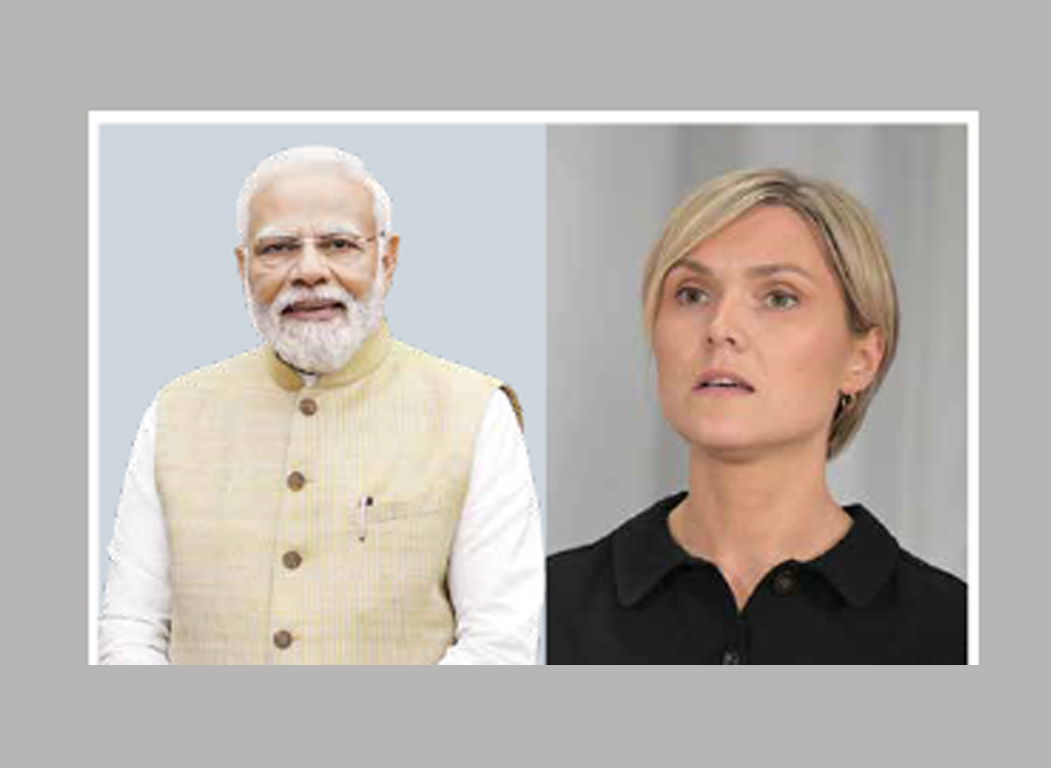
Prime Minister (PM) Narendra Modi has engaged with the then PM Katrin Jakobsdottir of Iceland on the margins of the India-Nordic Summits in April 2018 and May 2022. These discussions focused on key sectors such as geothermal energy, fisheries, Arctic issues, human rights, and strengthening trade.
Ministerial dialogues have been equally active; for instance, Iceland’s then Foreign Minister (FM), Mr Gudlaugur Thordarson, met with the late EAM Smt Sushma Swaraj in New Delhi in December 2018, while his predecessor, Mr Gunnar Sveinsson, met her in April 2016. On both occasions, the visiting ministers also met with the Minister for Tourism and the Minister for New and Renewable Energy and were accompanied by business delegations. To mark the 50th anniversary of diplomatic relations in May 2022, EAM Dr S. Jaishankar held an online meeting with former FM Ms Thordis Kolbrun R. Gylfadottir. More recently, in March 2024, Dr Jaishankar met with former FM Mr Bjarni Benediktsson during the signing of the India-EFTA Trade and Economic Partnership Agreement (TEPA).
Other important visits include a visit by the Speaker of the Parliament of Iceland to New Delhi in 2012 and a delegation from the Supreme Court of Iceland in 2011. From the Indian side, notable visits include the official visit of Smt Meenakashi Lekhi, MoS (External Affairs & Culture), in August 2022; MoS Smt Preneet Kaur in September 2010; a 10-member goodwill parliamentary delegation led by Shri Pawan Kumar Bansal in June 2011; MoS (IT & Shipping) Shri Milind Deora in July 2013; and MoS (Electronics & IT) Shri S. S. Ahluwalia in June 2018.
Institutional Mechanism and Agreements
The institutional and legal frameworks supporting these interactions are extensive. Four rounds of Foreign Office Consultations (FOCs) have been conducted to date, held in New Delhi in 2005, Reykjavik in 2006, New Delhi (2023), and again in Reykjavik in 2026. These are supported by various bilateral mechanisms, including a Joint Sub-Committee Meeting on Renewable Energy and a Joint Working Group on Fisheries.
The second meeting of the India-Iceland Joint Task Force (JTF) on Geothermal Cooperation was held in Reykjavik in May 2024. Discussions spanned joint R&D, technology sharing, investments, and capacity building to tap into India’s vast 10,600 MW geothermal potential.
The legal foundation comprises several Memoranda of Understanding (MoUs) and agreements: the MoU on Foreign Office Consultations, an Agreement on Science and Technology, and a Cultural Agreement, which were signed in 2005. Whereas an MoU on Earthquake Prediction Research, an MoU on Sustainable Fisheries Development, and an MoU on Renewable Energy Cooperation were signed in 2007. In September 2019, an agreement was signed regarding visa exemptions for diplomatic and official passport holders, while in March 2021, an MoU established the Indian Council for Cultural Relations (ICCR) Chair of Indian Studies at the University of Iceland.
Upcoming India-Nordic Summit 2026
The upcoming India-Nordic Summit 2026 in Oslo is expected to be a significant milestone in deepening India’s engagement with the Nordic nations-Denmark, Finland, Iceland, Norway, and Sweden. The summit will provide a platform to enhance cooperation in key areas such as digital transformation, green energy, sustainable development, 6G technology, and artificial intelligence. Discussions are also likely to focus on expanding bilateral trade and investment opportunities following the India-EU Trade Agreement, while addressing shared priorities including climate action, regional security, innovation, and post-pandemic economic recovery.
Trade and Investment
India-Iceland bilateral trade is diversified and marked by private sector investment. India’s imports from Iceland are dominated by fish and fish products, food supplements, cod liver oil, ferrosilicon, medicines, aluminium products, and specialised medical equipment, highlighting Iceland’s strengths in marine resources and niche manufacturing. In return, India’s exports to Iceland mainly comprise organic chemicals, apparel and accessories, textile yarn, static converters and inductors, toilet and kitchen items, linen, heterocyclic compounds, jet fuel, and cereals and cereal products.
Iceland’s investments in India are concentrated in a few specialised and high-technology sectors, primarily in advanced medical and healthcare technologies, particularly in non-invasive orthopaedics, prosthetics, and artificial limbs. Another key area is geothermal energy, where Iceland’s expertise contributes to resource assessment, extraction, and project development.
India and Iceland have signed the Agreement on Bilateral Investment Protection and Promotion (BIPA) and the Double Taxation Avoidance Agreement (DTAA) to strengthen trade ties.
Culture and Diaspora
Cultural ties and the presence of the diaspora provide a vital human dimension to this diplomatic architecture. There are approximately 528 Indian nationals residing in Iceland, forming a small but vibrant community. There is a deep interest among Icelanders in Indian culture, particularly in yoga, for which the Indian Embassy provides free classes as well as classical music, dance, paintings, films, and cuisine. The academic link is formalised through the ICCR Chair of Indian Studies at the University of Iceland in Reykjavik, which encourages intellectual exchange.
Conclusion
The India-Iceland relationship is complementary in nature. The combination of Iceland’s technological expertise in sustainable practices and India’s large market and developmental needs provides a stable platform for continued cooperation and growth. Both nations have focused on collaboration in key areas such as renewable energy, biotechnology and pharmaceuticals, fisheries, and Arctic-related issues.