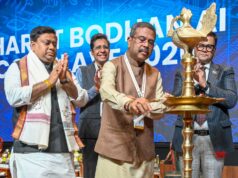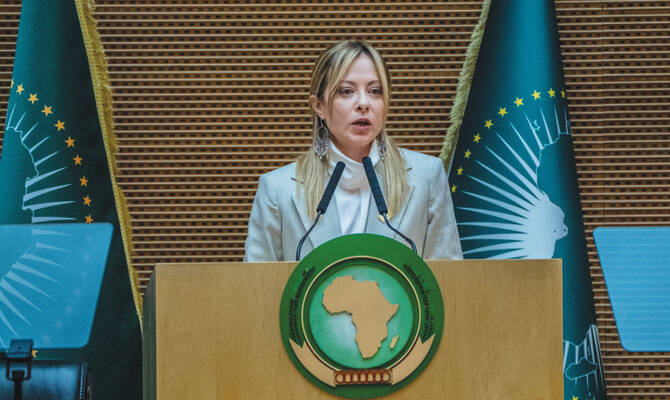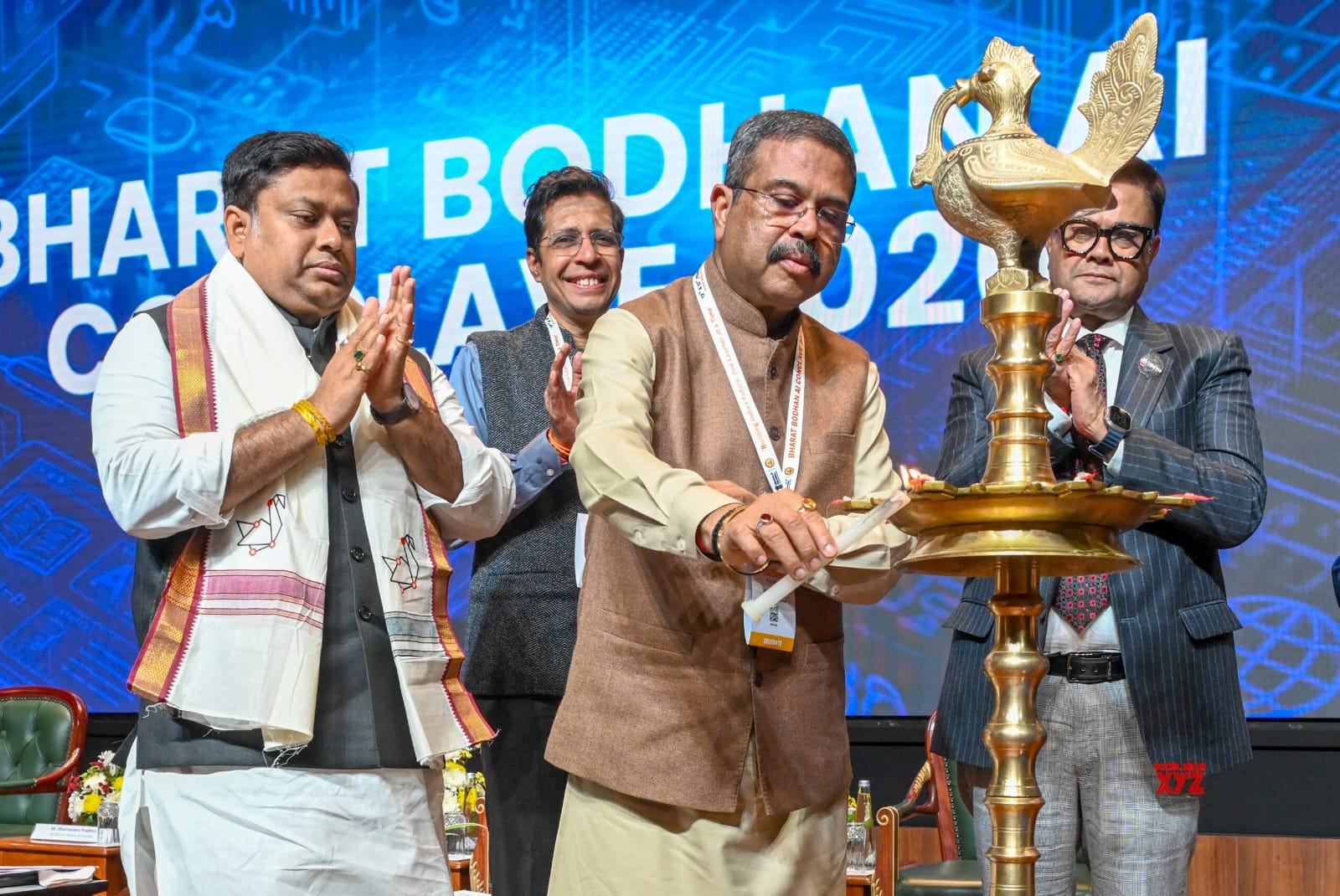
Artificial Intelligence is not the future; it is now. The India AI Impact Summit 2026, held from 16 to 20 February at Bharat Mandapam, New Delhi, was the first-ever global AI summit hosted by a country from the Global South in the series. Organised by the Ministry of Electronics and Information Technology (MeitY) under the IndiaAI Mission, the summit drew over 35,000 registered participants from more than 100 countries. It featured 20 Heads of Government, over 50 international ministers, and more than 40 global CEOs in attendance, making it the largest of the four global AI summits held to date.
The summit was inaugurated on 16 February by Prime Minister Narendra Modi. In his address, the Prime Minister articulated the foundational objective of the proceedings through the theme “Sarvajana Hitaya, Sarvajana Sukhaya” – translated as “Welfare for All, Happiness for All.” This vision serves as the strategic compass for the summit, ensuring that the proliferation of artificial intelligence contributes to universal progress and that AI does not become the property of a handful of wealthy nations and corporations.
Three Sutras, Seven Chakras
The Summit’s thinking was organised around three foundational principles called Sutras — People, Planet, and Progress. People means that AI must respect human dignity, safeguard rights, and reach every corner of society. Planet means that AI development must be energy-efficient and climate-conscious. Progress means that the economic gains from AI must be shared widely, not concentrated at the top.
These principles were then translated into seven working groups called Chakras, each tackling a specific area: Human Capital (skilling the workforce), Inclusion for Social Empowerment (making AI work across languages and cultures), Safe and Trusted AI (governance and accountability), Resilience, Innovation and Efficiency (sustainable and frugal AI), Science (open research), Democratising AI Resources (fair access to infrastructure), and AI for Economic Development and Social Good (real-world impact). Over 100 countries participated in these working groups.
Flagship Initiatives
Alongside the main summit, it features four flagship events that focus on shaping the future of humanity and technology. YUVAi serves as a global youth challenge, inviting students to design AI solutions for real-world problems through applied learning and mentorship, while AI by HER focuses on empowering women technologists to develop solutions for large-scale public challenges. These efforts are complemented by AI for ALL, which identifies and showcases scalable solutions for social impact, and UDAAN, a “Global AI Pitch Fest” that provides high-potential startups with a platform to pitch their innovations to investors, policymakers, and technology leaders.
The summit also features major on-ground events to showcase practical applications and academic research. The AI Impact Expo serves as an experiential showcase featuring international, state, enterprise, and startup pavilions to demonstrate AI applications across critical sectors. Parallel to this, the Research Symposium on AI & its Impact is organised in partnership with IIIT Hyderabad as an interdisciplinary forum.
Governance Structure
To institutionalise the principles, the framework established new national bodies: the AI Governance Group (AIGG), the Technology & Policy Expert Committee (TPEC), and the AI Safety Institute. These institutions are supported by the IndiaAI Mission’s infrastructure backbone, which has successfully onboarded over 38,000 GPUs to ensure sovereign compute capability.
AI for Social Objectives
A primary objective of the summit was the strategic use of artificial intelligence (AI) to bridge service gaps in rural and underserved regions. Union Minister J. P. Nadda led this initiative by launching two major healthcare programmes. The first, SAHI (Strategy for Artificial Intelligence in Healthcare for India), provides a national guidance framework to ensure the ethical and evidence-based adoption of AI across the healthcare system. The second, BODH (Benchmarking Open Data Platform for Health AI), was developed by IIT Kanpur in collaboration with the National Health Authority. In addition, the “AI Evidence Playbook” was launched in partnership with J-PAL and Google.org.
The event fosters global collaboration, with partnerships from organisations like the World Bank and the United Nations.
On the sidelines of the summit, several high-level bilateral discussions will take place, leveraging the presence of over 20 heads of state/government and delegations from more than 100 countries.