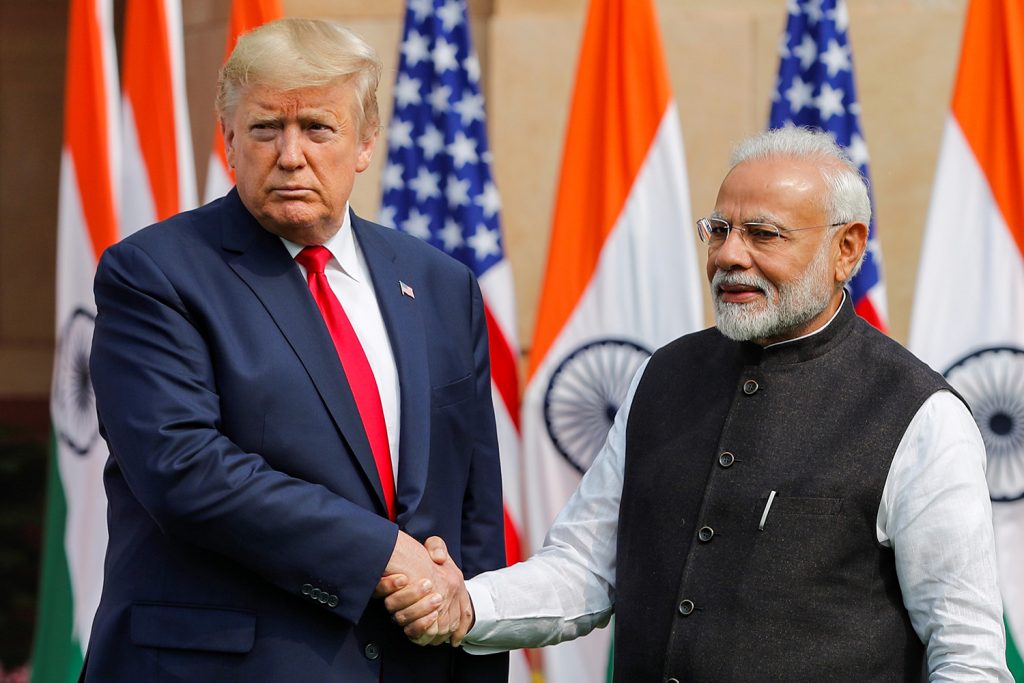
US President Donald Trump’s decision to significantly lower reciprocal tariffs on Indian goods from 50% to 18% has been welcomed across India, signalling a renewed momentum in one of the world’s most important bilateral economic relationships. While the precise contours of the agreement are yet to be formally outlined, the announcement has been widely interpreted as a positive turning point for trade and strategic cooperation between Washington and New Delhi. The revised tariff framework follows a phone conversation between President Trump and Indian Prime Minister Narendra Modi earlier this week. In remarks following the call, President Trump highlighted a shared commitment to strengthening economic engagement, including expanded energy and trade cooperation. Prime Minister Modi responded warmly, thanking the US president on behalf of India’s 1.4 billion citizens and expressing confidence that the partnership could be taken to “unprecedented heights”.
The easing of tariffs comes after a challenging period for exporters, during which higher duties had weighed on shipments from India to the United States, particularly in labour-intensive sectors such as textiles, gems and jewellery, seafood and light manufacturing. Industry leaders say the revised tariff rate restores competitiveness and creates fresh opportunities for growth and job creation.
Indian businesses and trade bodies were quick to welcome the announcement. The Confederation of Indian Textile Industry said the decision would enable exporters to compete more effectively in the US market, which remains the single largest destination for India’s apparel and textile products. Analysts note that the new 18% rate places India broadly in line with other Asian manufacturing hubs, enhancing its attractiveness as a global production base.
Economists also view the development as supportive of India’s longer-term ambition to play a larger role in diversified global supply chains. With its combination of cost-competitive labour, political stability and a large domestic consumer market, India is increasingly seen as a compelling destination for multinational companies seeking resilience and scale. The announcement coincides with India’s broader push to deepen trade engagement worldwide. In recent years, New Delhi has accelerated negotiations with major partners and concluded several free trade agreements, including a landmark pact with the European Union covering the vast majority of goods traded between the two sides. These efforts underscore India’s intent to integrate more closely with the global economy.
From the US perspective, officials have highlighted opportunities for expanded exports, particularly in agriculture, energy and advanced technology. Greater market access is expected to benefit American producers while strengthening commercial ties between the two democracies. Trade experts emphasise that further details are expected to emerge through official channels in the coming weeks, including implementation timelines and sectoral coverage. Both governments have indicated that this step represents the beginning of a phased process, with additional discussions planned.
The US-India Strategic Partnership Forum described the development as an important first step, noting that it reflects shared strategic and economic interests. Observers also point to the broader geopolitical significance of closer cooperation between the two countries at a time when global economic alignments are evolving.
India’s foreign policy has traditionally prioritised strategic autonomy while maintaining strong relationships across regions. The renewed warmth in ties with Washington is being seen as reinforcing India’s role as a key partner for the United States in the Indo-Pacific and beyond. As businesses, investors and policymakers digest the announcement, the prevailing mood in New Delhi is one of cautious optimism. With sustained dialogue and follow-through, many believe the tariff reset could mark the start of a more dynamic and mutually beneficial phase in US-India relations.