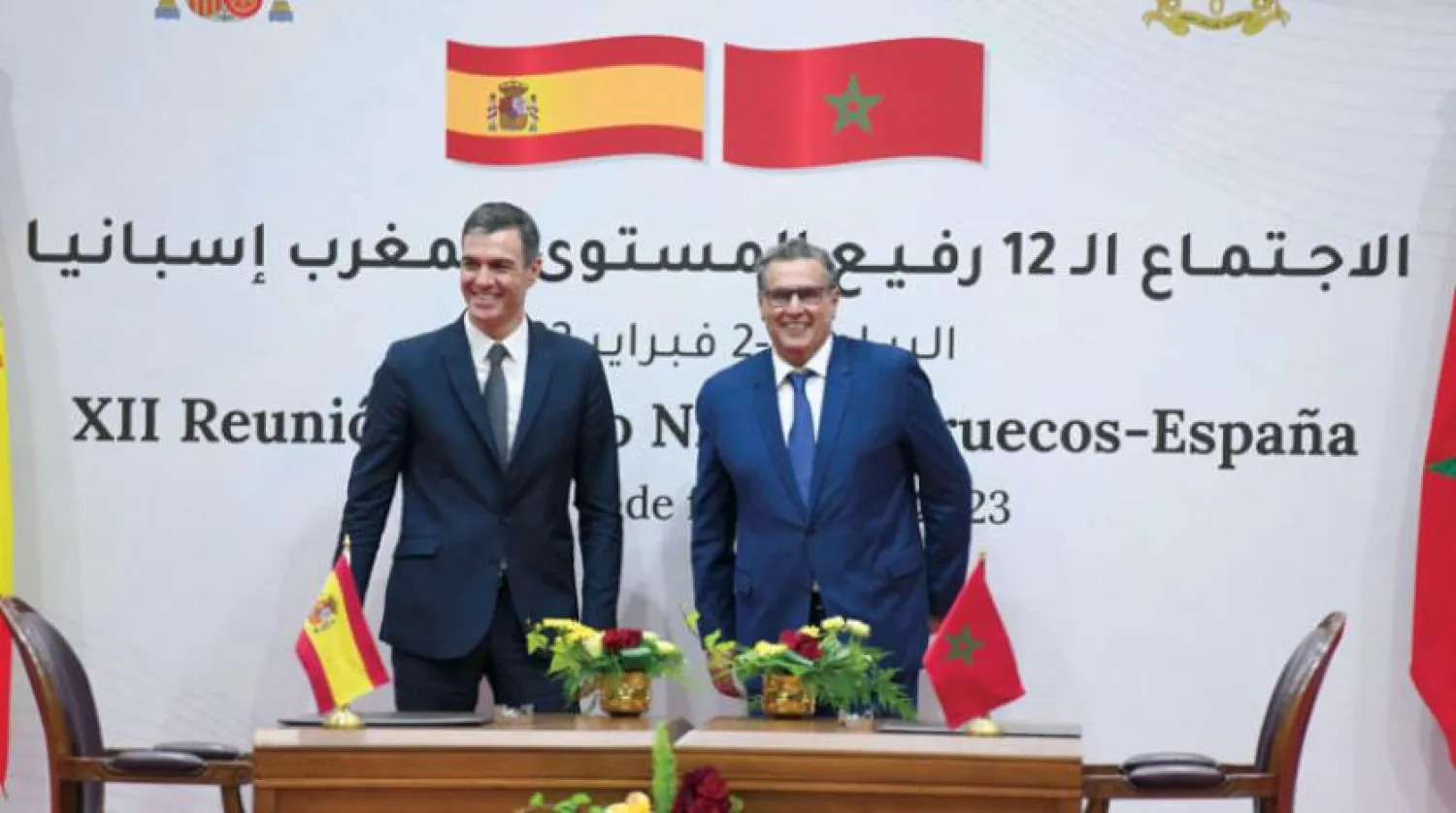
On the eve of the 13th High-Level Meeting between Spain and Morocco, senior representatives from both governments gathered at the headquarters of the Spanish Confederation of Business Organisations (CEOE) in Madrid on 3rd December, 2025. What might, in another era, have been a routine diplomatic engagement has instead marked a significant moment in the evolving relationship between the two neighbouring kingdoms—one that increasingly blends economic ambition with geopolitical calculation.
The Spain–Morocco Business Meeting unfolded against a backdrop of tightening cooperation on migration, expanding trade flows, and shifting regional alliances. With Morocco now widely seen in Europe as a crucial partner in managing irregular migration routes, Spain has recorded a steep decline in arrivals on its shores. At the same time, the United States has quietly reinforced its own ties with Rabat, dispatching a new ambassador ahead of the planned opening of further US consulates in the country. All of these developments lend the Madrid gathering a weight well beyond its ceremonial appearance.
Akhannouch: “A centuries-old hope”
Morocco’s head of government, Aziz Akhannouch, delivered the closing address with a tone that combined diplomacy, sentiment, and a clear projection of economic confidence. He spoke of a “centuries-old hope” for relations across the Strait of Gibraltar—ties that, in his words, have been shaped by “reciprocal cultural influence” and an uninterrupted dialogue that has left deep marks on both societies. Akhannouch did not shy away from identifying the turning point: Spain’s explicit support for Morocco’s autonomy plan for the Sahara. This, he argued, has not only stabilised relations but “further strengthened an already very solid partnership.” The figures underline his point: in 2024, trade between the two countries exceeded €20 billion, a sum that reflects the constant movement of lorries through ports, the presence of Moroccan and Spanish firms on each other’s soil, and the growing industrial and logistics networks that bind the two economies.
Morocco, he insisted, is positioning itself as a regional leader in sectors ranging from digitalisation and export support to administrative efficiency—an offer he extended even to the smallest Spanish SMEs, inviting them to take advantage of tax exemptions and investment incentives. The ambition, he said, is to create a “mutually beneficial partnership” that is open, pragmatic, and firmly future-orientated. Akhannouch concluded with a reminder of the coming decade’s most symbolic project: the 2030 World Cup, jointly organised by Morocco, Spain and Portugal. Far more than a sporting event, he framed it as an unprecedented catalyst for investment and modernisation.
Puente: “Building a wall would be foolish and irresponsible”
Representing the Spanish Government at the closing ceremony, the Minister of Transport and Sustainable Mobility, Óscar Puente, echoed the Moroccan leader’s message of pragmatic cooperation. Thirteen High-Level Meetings, he observed, demonstrate both the longevity and the necessity of the relationship—even when interests diverge.
“Building a wall across the Strait,” he warned, “is both foolish and irresponsible.” Geography and history have created interdependence; it is therefore “economic and cultural common sense” to cultivate it. Puente underscored that transport remains the sector with the greatest potential, pointing to Morocco’s vast infrastructure programmes and the involvement of Spanish companies in major works, from the expansion of high-speed rail to the redevelopment of Rabat airport. Spain, he said, possesses one of the world’s most extensive and cost-effective high-speed networks, a resource he believes can support Morocco’s own ambitions in mobility and connectivity. Perhaps most notably, he emphasised equality—Spain’s insistence, he said, on treating Morocco as a partner on equal footing. This, he argued, distinguishes Spain’s approach from that of other international actors.
A partnership shaped by monarchs and long-term vision
Earlier in the day, the Moroccan Minister of Investment, Convergence and Evaluation of Public Policies, Karim Zidane, opened the session alongside Spain’s Minister of Agriculture, Fisheries and Food, Luis Planas. Zidane emphasised the personal role that King Mohammed VI and King Felipe VI have played in consolidating the deep bilateral relationship. The result, he said, is a partnership resilient enough to withstand global instability and shifting alliances.
Spain is now Morocco’s leading economic partner and one of its key industrial collaborators. Morocco, in turn, has become essential to Spain’s strategic outlook, offering proximity, stability, and a rapidly modernising industrial base. “Our trajectories are converging,” Zidane told participants, describing a new chapter based on co-production, technological exchange, and shared prosperity. Planas, who has participated in several previous High-Level Meetings, recalled Spain’s central role in enabling the EU–Morocco agreement of 2000. This framework continues to shape trade and political dialogue between Morocco and the EU. He announced the signing of new maritime and fisheries protocols, which aim to eliminate illegal and unregulated fishing in the Mediterranean—a challenge harmful to both countries.
Business leaders: water, energy, mobility and the pivot to Africa
The business dimension of the meeting was equally dense. CEOE President Antonio Garamendi opened the day by pointing to opportunities in water management, energy transition, mobility, and the growing potential of Africa and Latin America. Spain, he noted, acts as a gateway to Europe and a connector to Latin America, while Morocco is emerging as a central platform for operations throughout the African continent.Chakib Alj, president of the Moroccan business confederation CGEM, highlighted sectors with immediate potential: renewable energies, green hydrogen, water and climate technologies, the automotive industry, textiles, and circular economy projects.
Likewise, José Luis Bonet, president of the Spanish Chamber of Commerce, stressed that despite international uncertainty, the joint agenda remains rich in opportunity. He reaffirmed the Chamber’s commitment to helping companies—particularly SMEs—expand across both markets. The Secretary of State for Trade, Amparo López Senovilla, called for deeper integration of value chains to ensure sustainable, predictable growth across industries. Spain, she said, links Europe to Latin America, just as Morocco links Europe to Africa; the challenge now is to consolidate Morocco’s attractiveness as a long-term investment destination.
Infrastructure, energy exchange and industrial synergies
A round table on water, energy and mobility brought these ideas into sharper focus. Morocco’s Agency for Investment and Export Development (AMDIE) cited the recent power blackout response as an example of effective cross-border cooperation. Massive desalination projects and new infrastructure programmes, some running through 2030, already rely on Spanish technology and expertise.
Energy collaboration, particularly the 400 MW electrical interconnection between the two nations, was highlighted as a structural asset that is already shaping the region’s energy landscape. Speaker after speaker stressed that Morocco’s rapidly expanding automotive sector—and its shift towards electric mobility—will benefit enormously from Spanish industrial know-how. Spain’s long-standing position as a global leader in hydraulic engineering and desalination also came into focus. With Morocco preparing projects valued at €650 million, Spain’s experience in water reuse and large-scale infrastructure remains a central resource. But Spanish representatives also emphasised that investment depends on a favourable legal environment—something Morocco has been working to strengthen in order to outpace competitors.
The final dialogue of the day broadened the conversation beyond the strait, turning towards Latin America and Africa. Moderated by Adil Rais, the exchange between Narciso Casado of the Ibero-American Business Council and CGEM vice-president Mehdi Tazi underscored Spain’s unusual role as a bridge between continents. Spain’s linguistic, historical and economic ties with Latin America, combined with Morocco’s growing influence in Africa, form a triangle of opportunity that is attracting increasing interest from investors.
As Spain and Morocco prepare for the High-Level Meeting itself, the message from Madrid is clear: the relationship has entered a new phase—one shaped not only by diplomacy but by shared economic strategy, mutual regional ambitions, and a growing recognition that their futures are interlinked. Whether in trade, migration management, energy, or infrastructure, both countries are seeking to redefine their roles within larger geopolitical and economic networks. If the sentiments expressed in Madrid are any indication, the partnership between the two kingdoms is poised to grow deeper, broader and more strategically significant in the years ahead.