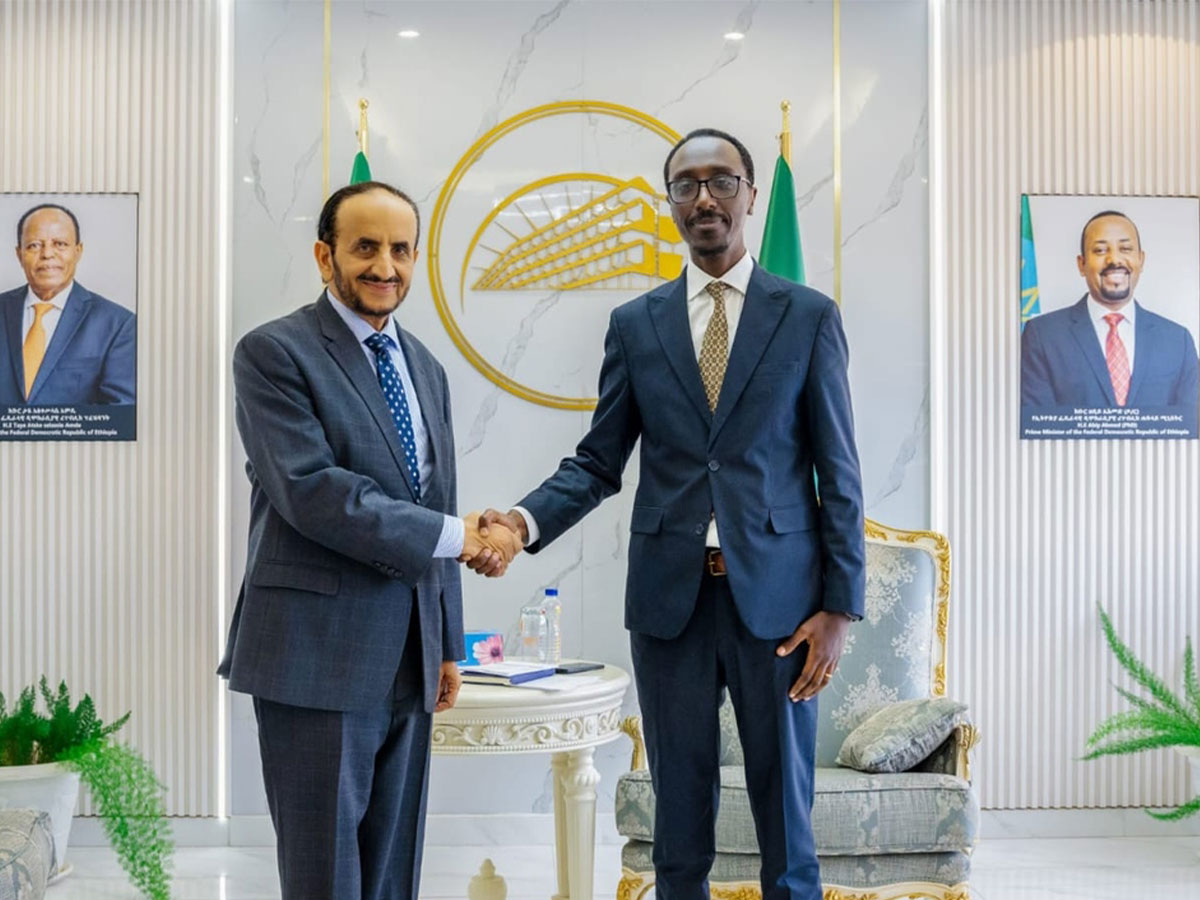
The Sultanate of Oman and the Federal Democratic Republic of Ethiopia have taken a significant step towards strengthening their bilateral relations, following the signing of a Memorandum of Understanding (MoU) and the holding of their first-ever political consultations in the Ethiopian capital on 5th January 2026. The consultations were held in Addis Ababa as part of an official working visit by Oman’s Undersecretary for Diplomatic Affairs at the Ministry of Foreign Affairs, His Excellency Sheikh Khalifa bin Ali Al Harthy. He led the Omani delegation, while the Ethiopian side was chaired by the State Minister of Foreign Affairs, Ambassador Hadera Abera.
According to the Oman News Agency (ONA), the meeting focused on reviewing the state of bilateral relations and exploring ways to enhance cooperation across a wide range of political, economic and social fields. Discussions also addressed regional and international developments, as well as the efforts being undertaken by both countries to navigate evolving global challenges. A key outcome of the visit was the signing of a Memorandum of Understanding aimed at establishing a structured framework for political consultations and deeper cooperation. The MoU was signed by Ambassador Hadera Abera on behalf of Ethiopia and Sheikh Khalifa bin Ali Al Harthy for Oman, underscoring the mutual commitment to institutionalising dialogue between the two foreign ministries.
As part of the visit, Sheikh Khalifa also held talks with Ethiopia’s Minister of Foreign Affairs, Gedion Timothewos. The meeting highlighted the long-standing friendly relations between Ethiopia and Oman, rooted in historical links and mutual respect. Minister Gedion reaffirmed Ethiopia’s commitment to further strengthening ties with the Sultanate and advancing shared interests at both bilateral and multilateral levels. The political consultations placed particular emphasis on enhancing collaboration in political and socio-economic areas. Both sides reviewed existing cooperation and explored opportunities for expansion in trade, investment, regional security and multilateral affairs. Officials noted the potential for increased engagement in areas that could deliver tangible benefits to both countries.
Investment and economic cooperation featured prominently in the discussions. Ambassador Hadera Abera outlined Ethiopia’s ongoing economic reforms and highlighted a range of investment opportunities, encouraging greater Omani involvement in sectors such as agriculture, energy, manufacturing and agro-processing. He also called for stronger trade promotion initiatives and deeper collaboration between the private sectors of the two nations.
For his part, Sheikh Khalifa bin Ali Al Harthy expressed Oman’s interest in expanding cooperation in a number of priority sectors, including banking and finance, pharmaceuticals, education, culture, tourism, legal migration and heritage management. He noted that closer collaboration in these areas would help diversify bilateral relations and support sustainable development goals in both countries. The consultations also addressed regional peace and security, with a particular focus on developments affecting the Horn of Africa and the Gulf region. Both delegations exchanged views on issues of mutual concern and stressed the importance of continued dialogue, coordination and cooperation in contributing to regional stability.
In addition, the two sides highlighted the importance of people-to-people ties as a foundation for stronger bilateral relations. Opportunities to promote tourism, encourage cultural exchange and increase official as well as business visits were discussed as practical steps to bring the two societies closer together. At the conclusion of the meetings, Ethiopia and Oman reaffirmed their shared commitment to sustaining regular political consultations and strengthening bilateral engagement across diplomatic, economic and social sectors. Both governments expressed confidence that the newly signed MoU and the establishment of formal consultation mechanisms would open a new chapter in relations between the two countries, paving the way for deeper cooperation in the years ahead.