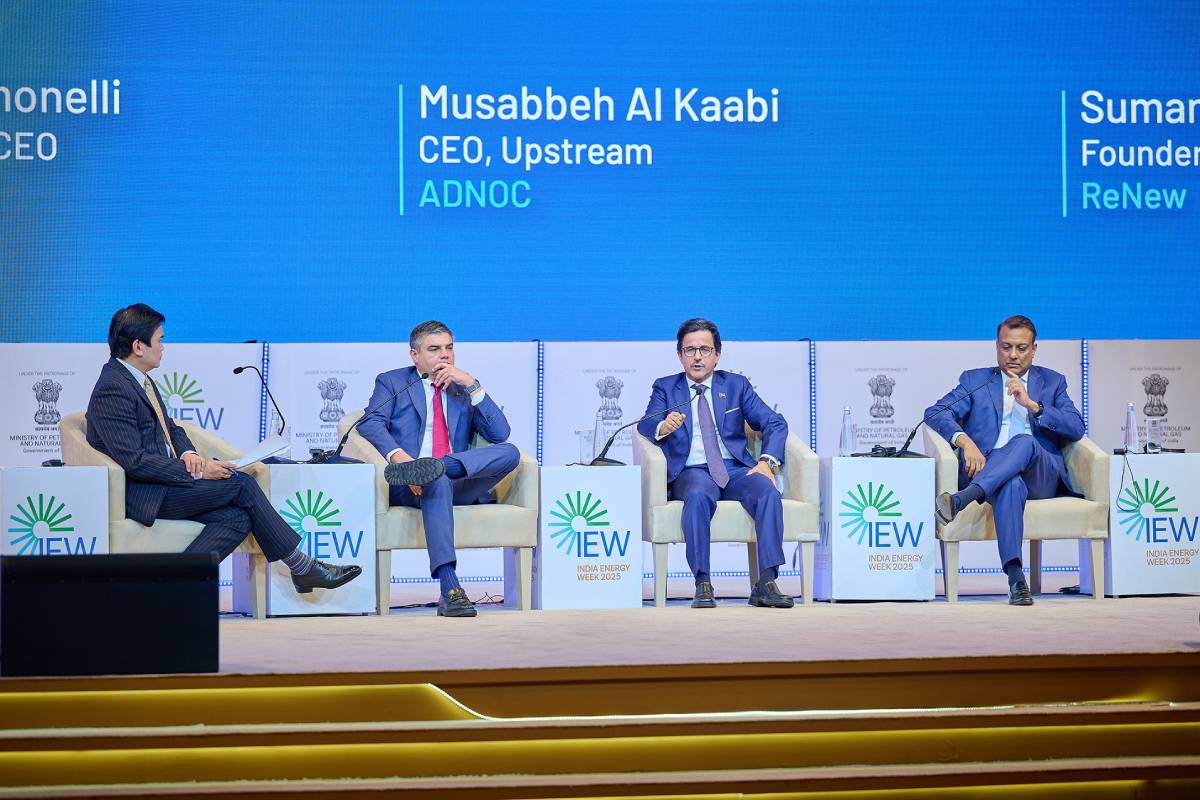
The fourth edition of India Energy Week (IEW) was scheduled to be held from 27 to 30 January 2026 in Goa, bringing together policymakers, industry leaders and experts from across the world to strengthen dialogue, collaboration and innovation spanning the entire energy value chain. The event was positioned as a key platform for shaping conversations around energy security, transition and investment at a time of heightened global uncertainty.
According to Union Minister for Petroleum and Natural Gas Hardeep Singh Puri, IEW had steadily emerged as a globally significant forum reflecting India’s growing role in the international energy landscape. He noted that the event demonstrated the country’s ability to convene stakeholders from traditional and emerging energy sectors, while fostering constructive engagement between producing, consuming and transit nations. At the India Energy Week Strategic Conference, energy was repeatedly highlighted as a central pillar of economic growth, geopolitical stability and long-term sustainability. Indian and international leaders alike stressed the urgency of reform, resilience and cooperation to navigate a volatile global environment shaped by geopolitical tensions, supply disruptions and the pressures of climate transition.
PM Gives Highest Priority to Energy: Puri
On the sidelines of the conference, Hardeep Singh Puri underlined the prominence accorded to the energy sector under the leadership of Prime Minister Narendra Modi, describing the developments of the past decade as transformative. He said energy had consistently remained among the highest priorities for the Prime Minister, resulting in wide-ranging and, in his words, revolutionary reforms. Mr. Puri stated that nuclear energy had been identified as a critical component of India’s long-term energy transition, complementing renewables and conventional sources. Alongside this, he said significant structural reforms had been introduced in the traditional energy sector to improve efficiency and investor confidence.
A key shift highlighted was the move from production-sharing contracts to revenue-sharing models in oil and gas exploration, aimed at enhancing transparency and simplifying regulatory processes. Drawing attention to expanded exploration opportunities, the minister pointed out that large tracts of India’s sedimentary basins had been opened up for exploration. Out of a total 3.5 million square kilometres, around 1 million square kilometres that had previously been designated as no-go areas had been made available, a move intended to attract both domestic and global investment.
Global Call for Resilient Energy Strategies
International perspectives at the conference reinforced the centrality of energy to development and stability. During a panel discussion titled “Charting a course through uncertainty: securing affordable, accessible and sustainable energy in a turbulent world”, H.E. Jassim Al Shirawi, Secretary General of the International Energy Forum (IEF), emphasised that energy remained the backbone of economic development and social progress. He called for resilient and adaptable energy strategies, urging countries to build constructive alliances and maintain agility in the face of an increasingly complex global energy and geopolitical landscape. The discussion highlighted the need to balance affordability and accessibility with sustainability, while ensuring that transitions were orderly and inclusive.
Balancing Growth, Security and Transition
Across sessions, a shared emphasis emerged on balancing economic growth with energy security and environmental responsibility. While global leaders stressed cooperation and resilience, India used the platform to showcase policy reforms designed to expand capacity, modernise infrastructure and attract long-term investment. Prime Minister Narendra Modi, addressing delegates at the conference, said India’s energy infrastructure presented investment opportunities of up to $500 billion as the country pursued its goal of energy independence. He stated that India was moving decisively from a focus on energy security towards energy independence, supported by large-scale infrastructure development.
PM Modi said India was building energy infrastructure to meet rising demand, with a focus on affordable refining and efficient transport options. In the natural gas sector, he noted that the country aimed to manufacture liquefied natural gas (LNG) transportation vessels domestically, strengthening self-reliance across the value chain. He also reiterated India’s ambition to become the world’s number one refining hub. Currently the third-largest consumer of energy and a major importer of crude oil, India was working to expand capacity and reduce vulnerabilities. The Prime Minister said opportunities in oil and gas exploration were expected to rise to $100 billion, supported by efforts to increase the area under exploration to 1 million square kilometres.
Taken together, the discussions at India Energy Week underscored the strategic importance of energy in a changing global order. The event highlighted India’s dual focus on meeting its development needs while contributing to global energy stability, reinforcing its position as an increasingly influential player in shaping the future of the energy sector.