The European Union and India have concluded a landmark free trade agreement that will dismantle billions of euros in tariffs and significantly deepen economic ties between two of the world’s largest markets, as both sides seek to shield themselves from an increasingly fragmented global trading system on 27th January, 2026. Announced in New Delhi on Tuesday, the deal is expected to remove or sharply reduce duties on more than 96 per cent of EU exports to India, cutting costs on products ranging from automobiles and industrial machinery to alcohol and pharmaceuticals. European officials estimate the agreement could eliminate up to €4bn in tariffs and potentially double EU exports to the Indian market over time.
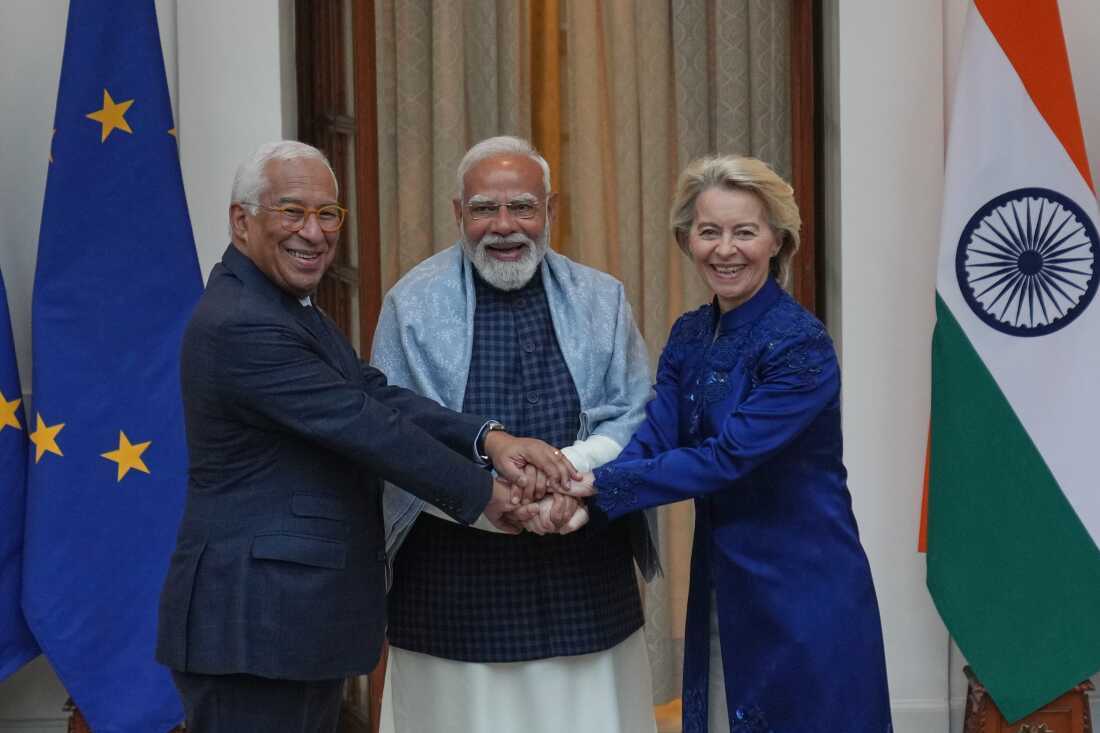
The agreement was signed during a high-profile visit by European Commission president Ursula von der Leyen and European Council president António Costa, who met Indian prime minister Narendra Modi for the formal announcement. Addressing PM Modi at the signing ceremony, von der Leyen described the accord as the most ambitious trade agreement ever concluded by either party, framing it as a strategic alignment between “two economic giants” at a time of heightened geopolitical tension. PM Modi, for his part, said the pact marked the beginning of a “new era” in EU-India relations and would open the European market more widely to Indian farmers, manufacturers and small businesses.
The deal comes against a backdrop of mounting trade pressures from the United States. Both Brussels and New Delhi have been hit by punitive tariffs imposed by US president Donald Trump, including steep levies linked to India’s purchases of Russian oil. European capitals have also faced threats of further US trade action amid diplomatic disputes involving Greenland. Trade analysts say the agreement reflects a shared desire to reduce dependence on Washington and Beijing while reinforcing rules-based commerce. Brahma Chellaney, a professor at New Delhi’s Centre for Policy Research, described the pact as a strategic anchor for the global order, arguing that the two sides had chosen closer alignment over retreat in an era of economic coercion.
For India, the tariff reductions form part of PM Modi’s broader effort to liberalise an economy long criticised for its protectionist instincts. The EU is already India’s largest trading partner, with annual trade in goods and services exceeding €180bn, according to European Commission figures. Indian exporters are expected to gain particular relief from preferential access to the EU market at a time when shipments to the US face steep duties. Alexandra Hermann, lead India economist at Oxford Economics, said the agreement would cushion exporters struggling with a 50 per cent baseline tariff rate in the US, especially in sectors such as textiles. Under the deal, EU duties on Indian textile products will fall from double-digit levels to zero.
European manufacturers will benefit from deep cuts to India’s notoriously high import taxes. Tariffs on EU cars will be reduced gradually from 110 per cent to 10 per cent, subject to an annual quota of 250,000 vehicles. Levies of up to 44 per cent on machinery, 22 per cent on chemicals and 11 per cent on pharmaceuticals will largely be eliminated, while duties on steel and iron products will be phased out over a decade.
Agrifood products will also see substantial changes. Tariffs exceeding 36 per cent on EU food exports will be reduced or removed, with wine duties cut from 150 per cent to 75 per cent initially and eventually to as low as 20 per cent. Olive oil tariffs will fall to zero over five years, while duties on processed foods such as bread and confectionery will be scrapped entirely. In return, more than 99 per cent of Indian exports — worth roughly $75bn — will gain preferential access to the EU, according to India’s commerce ministry. The agreement also includes measures to streamline customs procedures and deepen regulatory co-operation, aimed at reducing non-tariff barriers that have long frustrated businesses on both sides.
The EU has additionally pledged €500mn to help Indian industries decarbonise, responding to concerns in New Delhi over the bloc’s forthcoming carbon border tax on emissions-intensive goods such as steel and chemicals. Not all sectors are covered. Politically sensitive agricultural industries were excluded, with India shielding its dairy sector and the EU carving out products including beef, poultry, rice, sugar and ethanol.
European business groups broadly welcomed the deal. Spirits Europe, representing alcohol producers, called it “transformational”. However, some industry bodies remain cautious. The steel association Eurofer has warned that India’s market remains heavily skewed by protectionist standards and public procurement rules, raising doubts about whether non-tariff barriers will be dismantled in practice.
Before entering into force, the agreement must be approved by the European parliament, EU member states and India’s cabinet — a process likely to attract close scrutiny, particularly after EU lawmakers recently delayed ratification of a separate trade pact with South American nations amid opposition from European farmers. India has accelerated its trade diplomacy in recent years, concluding or negotiating agreements covering more than half of its total trade, according to Barclays economists. The EU-India pact now stands as the most ambitious of these efforts — and a clear signal of both sides’ intent to deepen economic ties despite growing global trade tensions.