There are relationships between nations that feel like they were signed into existence by diplomats in bright rooms filled with flags and formal handshakes. And then there are relationships that were born long before governments existed relationships shaped by wind, salt, waves, wandering merchants, shared stories, and the simple human urge to connect. The cultural partnership between Kenya and India belongs to the second category. It is not a story of one treaty or one moment. It is a story of people moving across the ocean, ideas moving across borders, food and language finding new homes, and communities learning to breathe in rhythm with each other. It is a story etched into the monsoon winds of the Indian Ocean and carried forward by generations who created new meanings out of old traditions. Today, when Kenya and India speak of partnership, culture is not an appendix, it is the core. It is the memory that reminds both nations of how far they have come together, and the imagination that shapes where they can go next.
Long before the age of passports and embassies, the western coast of India and the eastern coast of Africa shared a silent familiarity born of proximity and curiosity. Scholars of the Indian Ocean, note that monsoon winds created a natural maritime rhythm: ships moved from India to Africa carrying beads, spices, and handwoven textiles, and returned with ivory, mangrove timber, gold, and stories. Archaeological evidence along the Swahili coast including imported Indian pottery attests to this early connectivity. The Indian Ocean was not a barrier; it was a bridge. Even today, when you walk through the narrow alleys of Old Town Mombasa or Lamu, the echoes of that ancient exchange can be found in the carved doors, the layout of homes, and the vocabulary of the Swahili language, which absorbed Indian words through centuries of commercial and cultural contact.
The story takes on a new shape in the late 19th and early 20th centuries, when thousands of Indians arrived in East Africa during and after the construction of the Uganda Railway . Many intended to return home, yet a significant number stayed, laying the foundations of what would become one of the most influential diasporic communities in Africa. Historians note that Indian migrants brought with them not only professions carpentry, commerce, clerical work but also rich cultural worlds of food, faith, language, and music. Over time, Indo-Kenyan communities developed a hybrid identity, blending Indian customs with Kenyan warmth, Swahili social norms, and the cosmopolitan rhythms of cities like Nairobi and Mombasa. Their temples, mosques, community halls, and schools became spaces where traditions were preserved even as new cultural expressions blossomed. This diasporic presence became a living bridge, enabling cultural cooperation to develop organically long before it was formally recognised by either state.
When diplomatic relations flourished after Kenya’s independence, both countries began formalising what had existed informally for centuries. Kenya and India signed cultural agreements and facilitated institutional collaborations through bodies like the Indian Council for Cultural Relations (ICCR) and the Swami Vivekananda Cultural Centre in Nairobi. These institutions became the contemporary platforms where Indian classical arts met Kenyan rhythms, where exhibitions exploring African identity were displayed alongside Indian miniature paintings, and where yoga practitioners stretched beside Kenyan athletes. Far from being ceremonial, these interactions nurtured creative partnerships grounded in mutual respect.
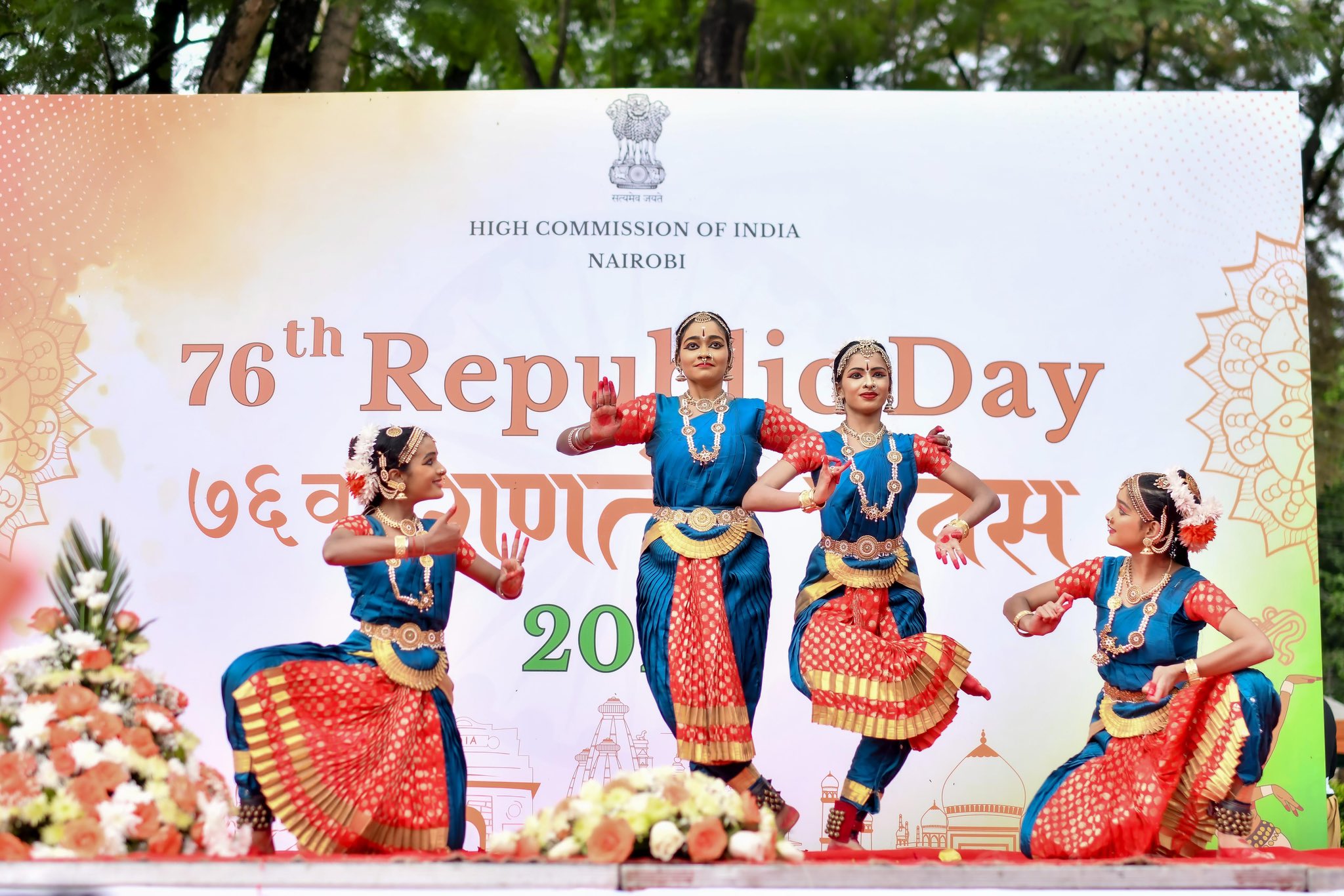
One of the most remarkable dimensions of Indo-Kenyan cultural cooperation lies in dance, music, and the performing arts. Kenyan audiences have long embraced Indian classical arts, while Indian visitors to Kenya are drawn to the power and grace of traditional Kenyan performances. Scholars of African performance culture, argue that Kenya’s dance traditions Maasai, Isukuti, Goma are among the most dynamic in Africa, while Indian classical dance has been admired globally for precision and expressive storytelling. The fusion of these forms in joint productions reflects a shared belief: art does not just cross boundaries; it transforms them.
Literature
Literature adds yet another layer to this cultural mosaic. Writers like M.G. Vassanji, born in Kenya and raised in Tanzania, have explored themes of migration, belonging, and identity among Indians in East Africa. At the same time, Kenyan literature especially postcolonial writing has found a place in Indian academic circles, where scholars examine parallels between African and South Asian experiences under colonial rule . Through novels, essays, and oral traditions, the emotional landscape of Indo-Kenyan connection becomes vividly visible.
Cinema and Bollywood Connections
Cinema, too, plays a powerful role in shaping cross-cultural familiarity. Bollywood’s presence in Kenya, documented in media studies of global cinema has been strong for decades. Hindi film soundtracks echo through Nairobi weddings; older Kenyan generations fondly recall Amitabh Bachchan’s charisma; and Bollywood screenings in Mombasa continue to draw diverse audiences. Meanwhile, Indian filmmakers are increasingly choosing Kenya’s dramatic landscapes and multicultural societies as filming locations. These cinematic interactions have not only built emotional familiarity but also laid the foundation for future collaborations.
Academic Cooperation
The academic cooperation represents another crucial dimension. Since the 1960s, Indian universities have been major destinations for Kenyan students seeking higher education, especially in medicine, ICT, and management. Many Kenyan professionals in government and private sectors today are alumni of Indian institutions a testament to the long-standing academic linkages. In return, Indian researchers and students visiting Kenya engage deeply with African anthropology, wildlife conservation, and community development. These academic exchanges create generational bonds that shape how young Indians and Kenyans perceive each other.
Health and Wellness Diplomacy
In recent decades, India’s wellness diplomacy has also found a meaningful home in Kenya. Yoga is celebrated globally since the declaration of the International Day of Yoga by the United Nations has seen enthusiastic participation in Kenyan cities. Ayurveda and traditional healing practices, rooted in natural and preventive care, resonate strongly with Kenya’s indigenous medical traditions. Scholars of global health diplomacy recognise such exchanges as powerful tools for intercultural trust-building.
Festivals remain one of the most joyful manifestations of Indo-Kenyan cultural ties. Diwali in Kenya, documented in diaspora studies, is an iconic annual celebration that brings together Indians, Africans, and other communities. Holi has evolved into a multicultural colour festival drawing thousands. Navratri nights often feature a lively blend of Indian garba with Kenyan percussion. Conversely, Kenyan cultural showcases Maasai dances, Swahili food festivals, Jamhuri Day events are increasingly visible in Indian cities and cultural centres. These festivals demonstrate what cultural cooperation looks like when it is lived, not just discussed.
Tourism
Tourism and cultural economy reinforce these ties further. Kenya remains one of the most popular African destinations for Indian travellers, while India is increasingly attracting Kenyan tourists seeking spiritual heritage, education, or medical care. Markets in Kenya still sell Indian spices, fabrics, and jewellery, while Indian cities now host exhibitions featuring Kenyan beadwork, sculpture, and traditional crafts. These material exchanges represent cultural storytelling in tangible form.
Sports Cooperation
Even Sports Diplomacy plays a role. Cricket’s development in Kenya owes much to the Indian diaspora, just as Kenya’s legendary long-distance runners inspire Indian athletes who train in Iten and Eldoret. Sport becomes a universal language one that often forges friendships where diplomacy cannot.
Yet the future promises even deeper cooperation. Digital platforms have opened new creative frontiers for Kenyan and Indian artists. Culinary collaborations blend Indian spices with Kenyan produce, creating flavours that reflect centuries of contact. Scholars across both countries are reimagining the Indian Ocean world as a connected cultural system rather than isolated regions. Governments increasingly view cultural diplomacy as a strategic bridge for development, innovation, and global influence.
Ultimately, the story of cultural cooperation between Kenya and India is not merely academic or political, it is profoundly human. It is the story of sailors who felt the same winds, traders who shared meals, families who crossed oceans and built new homes, artists who collaborated across continents, and young people who continue to imagine new futures together. It is the story of the Indian Ocean once a road of commerce, now a corridor of culture. And it is the story of two nations discovering that Cultural Proximity often travels farther than geography.
As this relationship moves into the next era, the foundation remains firm: shared history, shared creativity, shared respect. Cultural cooperation is not a soft addition to Indo-Kenyan ties , it is the thread that binds them. And as long as stories, songs, ideas, and people continue to cross the ocean, this bond will only grow richer.
But the beauty of the Indo-Kenyan cultural relationship is that it does not remain frozen in narratives of the past. It continues to grow, reshape itself, and settle into new meanings as each generation inherits the responsibility of carrying the connection forward. Today, when a young Kenyan student arrives in Mumbai for her studies, when a Gujarati trader in Nairobi trains a local staff member in the art of textile grading, when a Kenyan musician blends taarab rhythms with a Bollywood melody, or when an Indian tourist in Maasai Mara stands awestruck beneath a sky that feels larger than anything he has ever seen these everyday encounters quietly write the next chapter of cultural cooperation. They create a living, breathing archive of shared experiences that no treaty can fully capture. Culture, after all, is not preserved in documents but in the ways, people greet, eat, celebrate, teach, feel, worship, and imagine.
In recent years, one of the most dynamic zones of Indo-Kenyan cooperation has emerged in the realm of entrepreneurship and creative industries. The digital revolution has opened vast new horizons for cultural collaboration, enabling artists, business owners, content creators, and educators to engage with one another in ways unimaginable just a decade ago. Kenyan tech hubs such as Nairobi’s globally acclaimed “Silicon Savannah” have begun partnering with Indian IT talent, creating hybrid innovations that draw from the strengths of both ecosystems. These collaborations are not merely economic; they are deeply cultural, because technology today shapes how societies express themselves, tell their stories, and connect with the world. Whether it is through joint podcasts, social media collaborations, Kenyan influencers reviewing Indian wellness products, or Indian vloggers documenting Swahili cuisine, the cultural currents flowing between the two countries are increasingly mediated through digital creativity.
This contemporary phase of cultural cooperation also finds its energy in women – scholars, entrepreneurs, dancers, chefs, writers, community leaders whose contributions have often been overshadowed in traditional historical accounts. Indo-Kenyan women have become central to sustaining and expanding cultural links: running classical dance academies in Nairobi; leading yoga retreats in Mombasa; curating Indo-African art exhibitions; pioneering Indo-Kenyan fusion cuisines; crafting literary narratives that highlight bicultural identities; and establishing women-to-women business networks that turn cultural familiarity into economic opportunity. Their work, though often quietly done, represents some of the most powerful and sustainable forms of cultural diplomacy. It is through them that cultural cooperation becomes intimate, emotional, and intergenerational passed down not as national strategy but as lived heritage.
Youth exchanges, too, have transformed the landscape of Indo-Kenyan engagement. Every year, hundreds of young Kenyan students travel to India not just for technical knowledge but for exposure to a civilisation that is simultaneously ancient and modern. Their experiences navigating Indian metros, celebrating Holi with classmates, attending cultural festivals on university campuses, visiting historical temples, discovering Indian food become memories that shape lifelong affinities. They return home not only with degrees but with emotional connections that influence business decisions, cultural curiosity, and diplomatic goodwill. Conversely, Indian youths participating in voluntourism, research internships, or conservation projects in Kenya gain a firsthand understanding of African societies far deeper than what media stereotypes portray. They carry with them a newfound appreciation for Kenya’s resilience, diversity, and community ethos. These youthful encounters create a cultural empathy that textbooks cannot teach.
As both nations look toward the future, creative cultural fusion is emerging as a promising space, particularly in culinary arts, fashion, media, and design. In kitchens across Nairobi and Mombasa, chefs are experimenting with bold Indo-Kenyan combinations: masala-spiced nyama choma, chapati stuffed with Swahili coconut curry, dhoklas infused with Kenyan herbs, or pilau fused with Gujarati flavors. These culinary innovations feel natural, almost inevitable, because food has always been one of the strongest cultural bridges between the two nations. In fashion, Indian textiles have long held a place in Kenyan markets from Kikoyi-inspired patterns to beaded jewelry influenced by Indian craftsmanship. Today, designers from both countries are collaborating in fashion shows, garment fairs, and artisan workshops to create styles that reflect the hybrid Indo-Kenyan aesthetic.
The influence of cultural cooperation also extends to heritage conservation and oceanic research. Scholars from India and Kenya, inspired by earlier works on Indian Ocean connectivity, are embarking on joint projects to study the histories of migration, maritime trade, dhow technologies, and coastal settlements. Museums and cultural centres are exploring the creation of joint exhibits that tell the shared story of the Indian Ocean rim. Such initiatives not only deepen academic understanding but also enrich public consciousness about the centuries-old relationship between Indians and East Africans.
Another emerging frontier is Ayurveda and ecological healing. As global interest in natural wellness surges, Kenya finds in Ayurveda a system that resonates with its own indigenous healing practices. The interplay between traditional Kenyan herbal knowledge and India’s ancient medicinal systems is becoming a fertile area of research collaboration. Workshops, conferences, and community health initiatives are exploring the synergy between the two, and the potential to create new, culturally grounded health models. At the same time, Kenyan conservationists and Indian environmental researchers are working together to understand threats to marine ecosystems, protect coral reefs, and document coastal biodiversity recognising that the Indian Ocean is not just a historical connector but a shared ecological responsibility.
Sports and cultural diplomacy are also expanding in unexpected ways. Beyond cricket and athletics, there is growing interest in yoga-based fitness for athletes, Indo-Kenyan martial arts collaborations, and cross-training programmes between Indian sports academies and Kenyan high-altitude training camps. Sports, as scholars observe, create a form of diplomacy that transcends language and identity. When young Indians and Kenyans train together, compete together, or celebrate victories together, they form emotional bonds that often outlive political alliances.
Yet perhaps the most profound potential for future cultural cooperation lies in imaginative storytelling. Films, web series, literature, and theatre hold immense power to reshape how societies perceive each other. A Kenyan Indian co-produced film exploring migration, friendship, love, or shared music could travel across continents, reaching diasporic communities, students, and global audiences. A Kenyan novelist writing about an Indian character in Nairobi, or an Indian filmmaker capturing the energy of Nairobi’s nightlife, could spark new conversations about identity, belonging, and cultural hybridity. Such stories humanise nations in ways diplomacy cannot, reminding people that cross-cultural connection is not an abstraction it is lived reality.
As Kenya and India step into a world marked by rapid globalisation, cultural cooperation becomes not just desirable but essential. It provides a framework for mutual trust, innovation, and shared progress. Culture softens borders. It allows nations to see each other not as distant entities but as familiar companions. It creates room for grace, empathy, and creative partnership. And above all, it ensures that the deep ocean between them remains not a divide, but a living, flowing bridge.
The Indo-Kenyan cultural relationship, shaped by history and carried by people, now stands at a moment of extraordinary possibility. With expanding youth networks, digital connectivity, artistic experimentation, wellness exchanges, and heritage research, the partnership is poised to reach new heights. What began with monsoon winds and dhow journeys now continues with ideas, dreams, and global collaborations. And as long as the ocean breathes between them, as long as stories keep crossing shores, Kenya and India will remain bound not just by diplomacy but by culture, memory, and the shared imagination of a future built together.