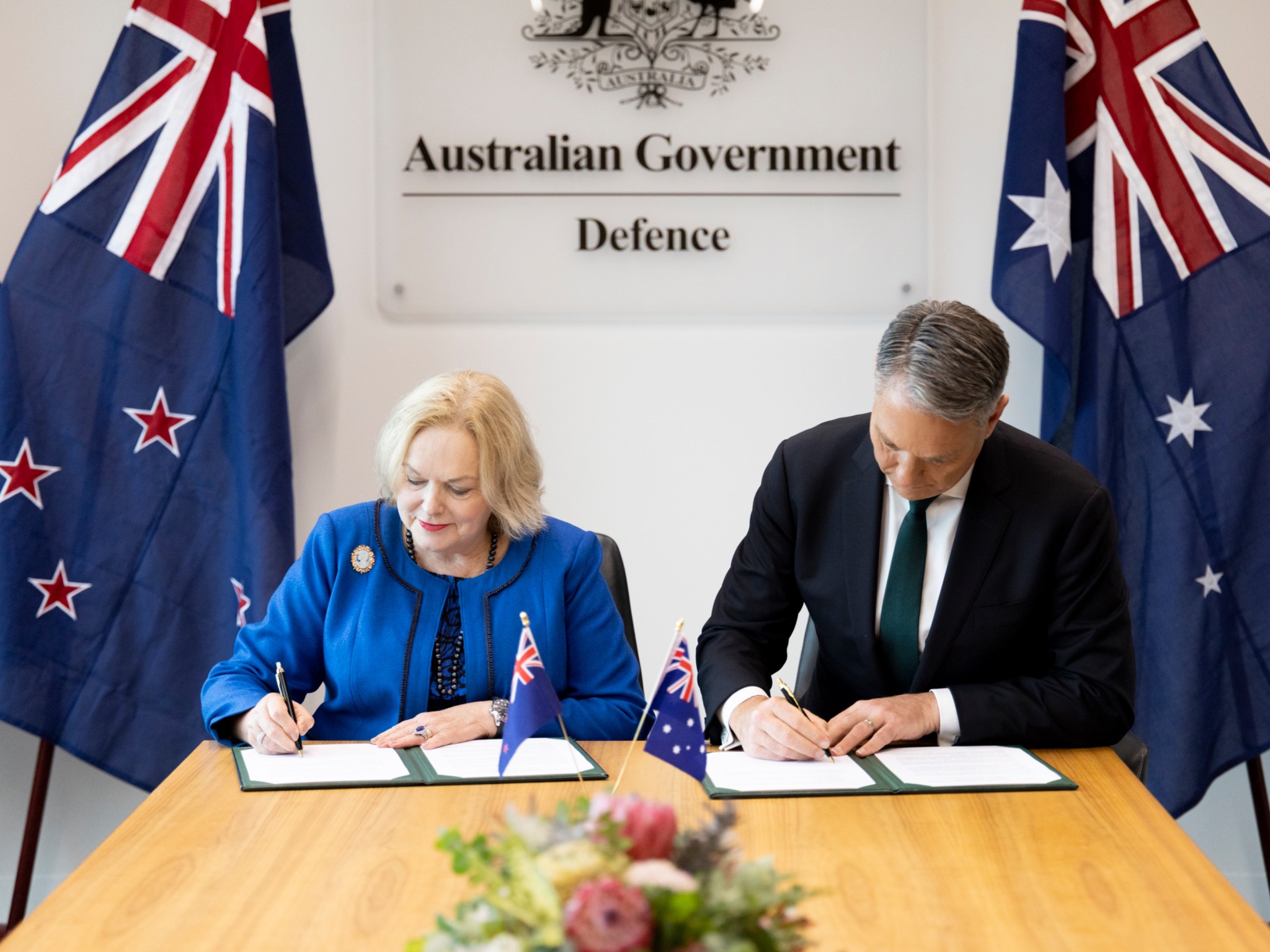
ANZAC 2035, also referred to as the ANZAC 2035 Vision, is a bilateral defence framework between Australia and New Zealand. It was announced in March 2026 by Australia’s Deputy Prime Minister and Defence Minister Richard Marles and New Zealand’s Defence Minister Judith Collins.
The agreement serves as a ten-year roadmap to deepen military cooperation and interoperability between the Australian Defence Force (ADF) and the New Zealand Defence Force (NZDF). The objective of this vision is to enable both forces to operate seamlessly as a combat-capable ANZAC force by 2035, while respecting each other’s sovereignty as independent nations in an evolving global security environment. It reflects an effort to strengthen coordination and work more closely as a unified operational partner.
A central aim of this bilateral framework is to ensure that the ADF and NZDF can function together more effectively by 2035. It also highlights the need to enhance force posture and operational flexibility. Both countries are working toward closer coordination in procurement and capability development, while also expanding joint military exercises that simulate real-world scenarios. In addition, provisions to allow access to each other’s territories are expected to support faster and more coordinated responses during emergencies.
The relationship between Australia and New Zealand has long been characterised by close collaboration across defence and security domains, including joint operations, training exercises, and humanitarian assistance. ANZAC 2035 builds on this foundation by outlining a more structured and operational roadmap to strengthen cooperation on the ground.
Defence capability and industry collaboration are also key elements of the initiative. Both countries have expressed their intent to enhance coordination in procurement and capability development, with a focus on efficiency and compatibility. This is expected to support the development of modern defence systems while strengthening collective capacity.
Another important aspect of this framework is the emphasis on preparedness and coordinated response mechanisms. By aligning planning processes and readiness frameworks, both countries aim to respond effectively to a range of contingencies. This reflects a broader approach to security that goes beyond traditional defence roles and includes wider regional responsibilities.
The initiative also underlines the importance of enhanced information and intelligence sharing. Strengthening coordination in data exchange and strategic assessments is expected to improve situational awareness and support timely decision-making in a changing security environment.
A significant feature of ANZAC 2035 is its focus on the Pacific region. Australia and New Zealand have reaffirmed their commitment to working with regional partners and strengthening cooperation in areas such as disaster response, maritime security, and capacity-building efforts, reinforcing their role as key partners in the region.
Implementation of the framework is expected to take place through existing bilateral mechanisms, including ministerial consultations and dedicated working groups, which will oversee progress across different areas of cooperation and ensure continuity.
Overall, ANZAC 2035 provides a clear and forward-looking roadmap for deepening Australia – New Zealand defence cooperation. By strengthening interoperability, enhancing preparedness, and supporting regional engagement, the initiative builds on an established partnership and sets out a structured approach for collaboration over the coming decade.