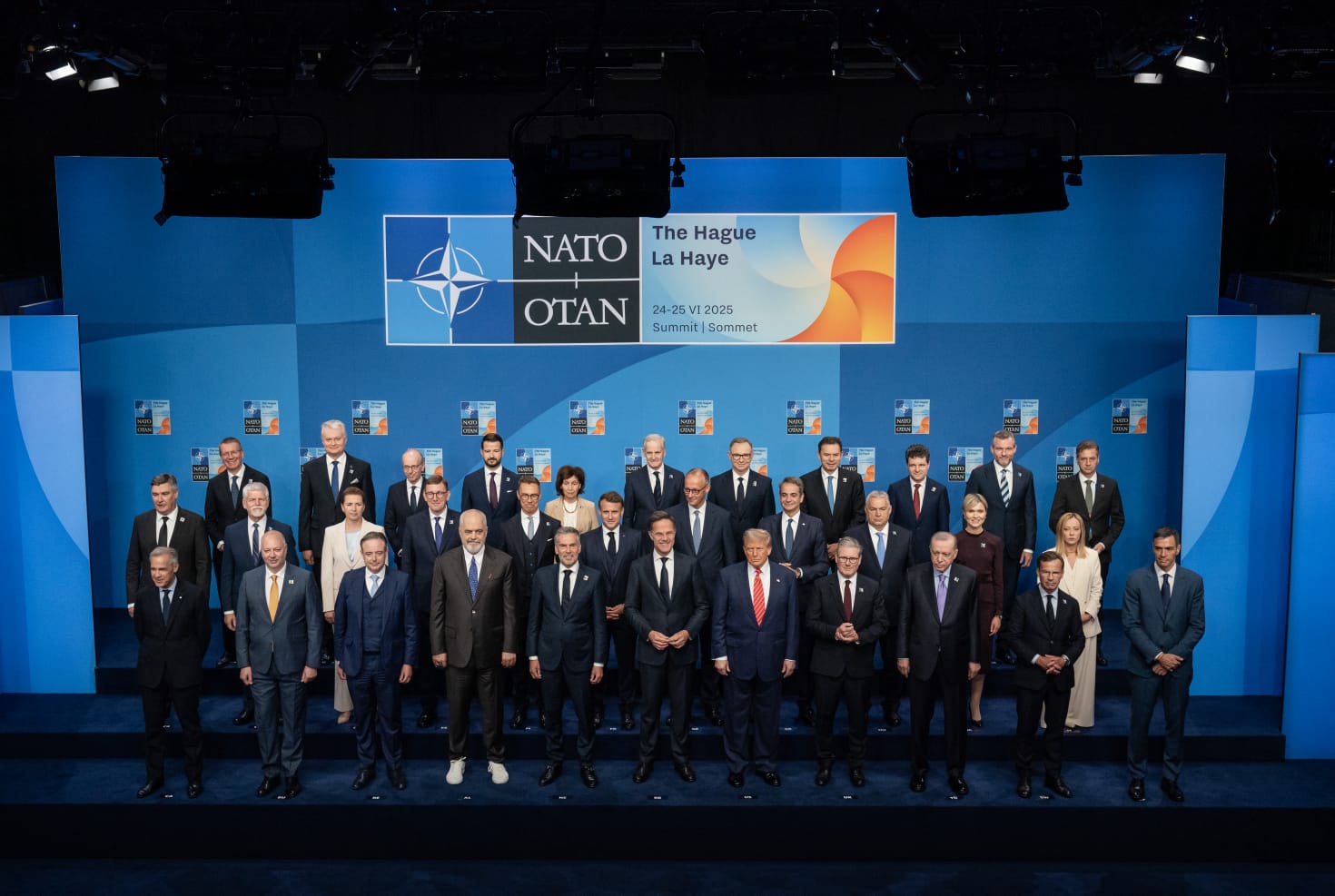
The 2026 NATO Summit was held on 7–8 July was held in Ankara, the capital city of Türkiye, at the Beştepe Presidential Compound. It marked the 36th NATO Summit overall, and the second occasion on which Türkiye hosted the gathering. The summit was convened to review the progress made on the objectives set out in 2025 during the NATO Summit held at The Hague, Netherlands, and aimed to advance a roadmap for the future objectives of the North Atlantic Treaty Organisation (NATO). The agenda for the allied countries included defence investment, defence industrial production, capacity building, and NATO’s commitments to Ukraine.
The summit was attended by representatives from the thirty-two Allied countries of NATO, along with representatives from Ukraine, the European Union, the Indo-Pacific, and the Gulf. Countries from the Istanbul Cooperation Initiative (ICI) – Bahrain, the United Arab Emirates, Kuwait and Qatar – were also in attendance. The key meetings held during the summit included the NATO Summit-Defence Industry Forum (NSDIF26), a meeting between the foreign ministers of the E5 countries (France, Germany, Italy, Poland and the United Kingdom), Türkiye and the European Union (EU), a meeting between the NATO foreign ministers and the ICI, and working dinners for NATO-Ukraine Council and North Atlantic Council at the level of Ministers of Foreign Affairs and Ministers of Defence respectively. A social reception for the heads of state and government was organised, followed by the North Atlantic Council meeting at the level of heads of state and government and NATO Secretary General, Mark Rutte’s press conference on the following day.
The NATO Summit Defence Industry Forum 2026 (NSDSIF) held at the ATO Congresium served to bring together NATO officials, partner countries’ representatives and industry leaders to discuss defence innovation and actionable plans on industrial production. The Forum discussed the progress made on the defence investment goal agreed upon at The Hague, where member countries committed to investing 5% of their Gross Domestic Product (GDP) annually towards the defence of their country and the alliance working towards the target by 2035. An overview was taken on how the defence spending had translated into scalable results in recruitment, industrial production and procurement. Under the redefined Capability Targets, the prioritised domains included space and surveillance, air defence, transatlantic co-production and adoption of defence innovations.
Some key outcomes included the signing of the Protected Business Network (PBN) programme by the NATO Communications and Information Agency (NCIA) with a private-sector partner, with the aim of enhancing digital communication through cloud operating models and standardised engineering practices. The Allied leaders endorsed the “Strategy for Industry-NATO Cooperation” to increase collaboration between the allied members and the industry, with a focus on enhancing contracting pathways, interoperability and interactions with non-traditional suppliers and small and medium-sized enterprises (SMEs). NATO launched the Drone Edge initiative, committing an investment of US$40 billion to counter-drone capabilities over the next five years, while also enhancing drone-training capacity through NATO Flight Training Europe. In addition, NATO’s new Airborne Warning and Control System (AWACS) was announced. It comes in the form of Saab GlobalEye aircraft jointly procured by 11 allies – Belgium, Canada, Denmark, Germany, Latvia, Lithuania, Luxembourg, the Netherlands, Norway, Romania, and Sweden.
In a major announcement, United States President Donald Trump confirmed that the US intends to lift the sanctions imposed on Türkiye in 2020 under the Countering America’s Adversaries Through Sanctions Act (CAATSA). With the sanctions lifted, Türkiye can participate in the F-35 programme, and benefit from an economic and technological boost.. President of the Republic of Türkiye, Recep Tayyip Erdoğan announced the deployment of Türkiye’s F-16 aircraft to Estonia under the NATO Air Policing Mission, confirmed that the country will assume command of the Alliance Response Force from 2028-29.
In his address, NATO Secretary General, Mark Rutte affirmed the effectiveness of the North Atlantic Treaty Organisation by stating, “NATO delivers.” He emphasised the progress made by the alliance since 2025 on its commitment made at The Hague in noting the rise in defence investments, expansion of industrial production, and the greater responsibilities borne by European Allies and Canada in already boosting their investments to 4% of their GDP. Secretary General Rutte also confirmed that the next NATO Summit will be hosted by Albania in 2027.