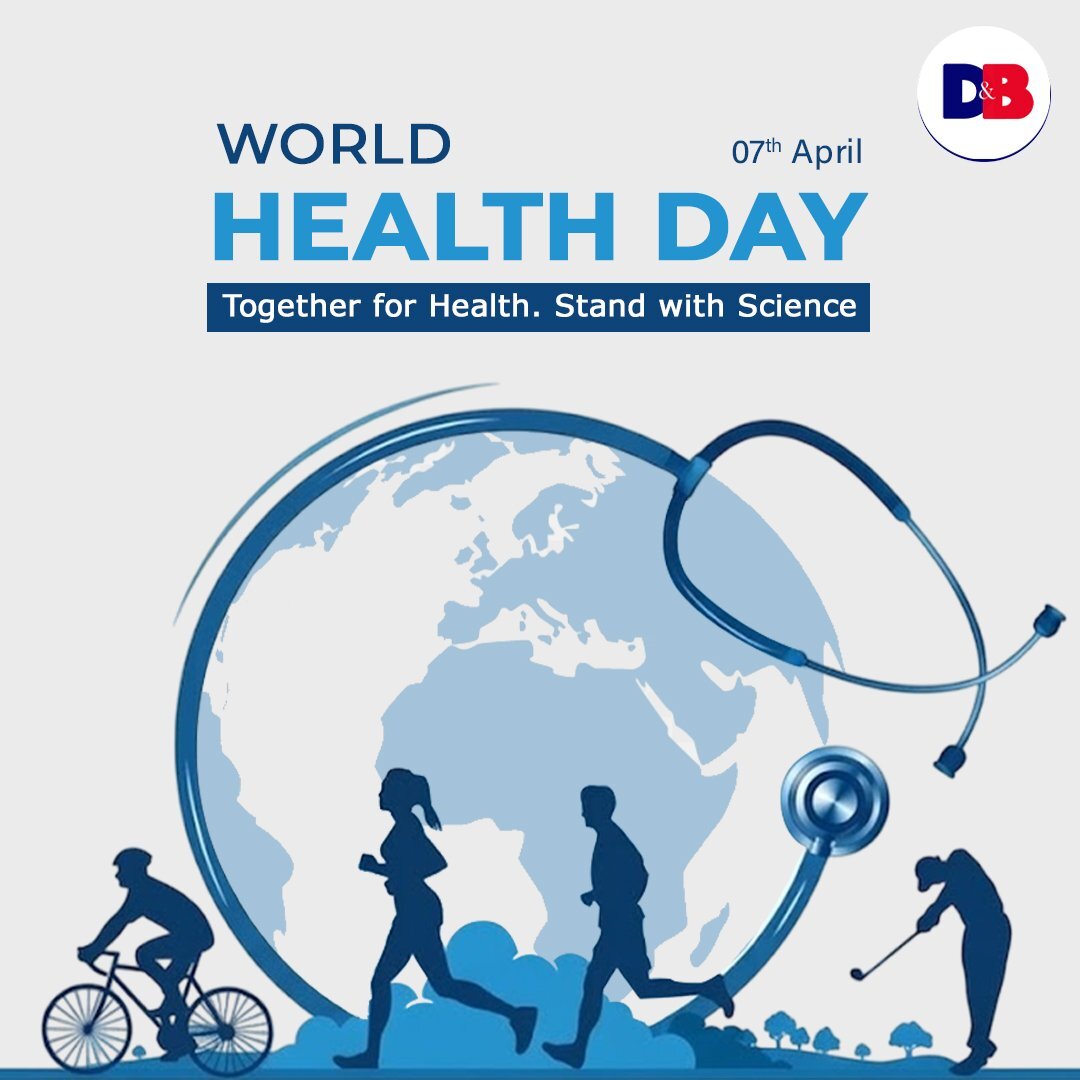
World Health Day 2026 falls on 7 April, marking the 78th anniversary of the founding of the World Health Organisation. This year’s theme is “Together for health. Stand with science.” It launches a year-long campaign focused on the role of scientific collaboration in protecting the health of people, animals, plants and the planet. Two major events held in Lyon, France, anchor the campaign: the International One Health Summit (5–7 April) and the inaugural Global Forum of WHO Collaborating Centres (7–9 April).
The International One Health Summit
The One Health Summit was hosted by the Government of France as a flagship event of the French G7 Presidency. Held in Lyon, the high-level segment on 7 April coincided with World Health Day. The summit brought together heads of state and government, international organisations, scientists, civil society, youth and local actors to advance global action on the One Health approach.
The summit focused on the main drivers of infectious and non-communicable diseases, including zoonotic reservoirs, antimicrobial resistance (AMR), sustainable food systems and pollution. It also showcased the quadripartite partnership between FAO, UNEP, WHO and WOAH. WHO will assume the chair of the Quadripartite on 8 April 2026.
The summit was co-chaired by French President Emmanuel Macron and Ghanaian President John Dramani Mahama, alongside WHO Director-General Dr Tedros Adhanom Ghebreyesus.
President Emmanuel Macron stated, “The One Health approach must now be our north star for developing our public health policies by systematically including animal health and ecosystem health challenges. Only then, will they be fully effective. Only then, will we improve our understanding of many diseases. Better prevention, better response.”
Inaugural Global Forum of WHO Collaborating Centres
Running alongside the summit, the first-ever Global Forum of WHO Collaborating Centres is taking place in Lyon from 7 to 9 April 2026. Under the theme “Collaborating for a Healthier Future”, the Forum gathered representatives from nearly 800 academic and research institutions across more than 80 countries. These institutions work in specialised fields such as radiation, influenza surveillance, nursing, bioethics and occupational health.
The Forum aimed to strengthen scientific and technical collaboration in support of WHO’s Fourteenth General Programme of Work and its commitment to ‘Health for All’. Participation was limited to officially designated WHO Collaborating Centres and invited WHO representatives.
Together, these two events formed the largest scientific network ever convened around a United Nations agency.
Key Statements from WHO Leadership and Social Media Engagement
WHO Director-General Tedros Adhanom Ghebreyesus said in an official press release: “Science is one of humanity’s most powerful tools for protecting and improving health.”
WHO Chief Scientist Dr Sylvie Briand added: “Science transforms uncertainty into understanding and reveals the pathways to protect and heal our communities.”
WHO called on the public to join the global conversation using the hashtags #StandWithScience and #WorldHealthDay on social media platform X and other channels. The campaign urged governments, health workers and citizens to share how science-based evidence improves health and wellbeing.
The WHO campaign message spread awareness on to Choose evidence, Trust facts, Support science-led health, for people, animals, and the planet.
The 2026 campaign comes at a time when health misinformation, climate risks and zoonotic disease threats continue to affect communities worldwide. Over 60 per cent of known infectious diseases and up to 75 per cent of emerging diseases originate from animals. Each year, antimicrobial resistance contributes to millions of deaths globally, and around 600 million people fall ill from unsafe food.
The One Health approach — linking the health of humans, animals, plants and ecosystems — is central to addressing these interconnected challenges through coordinated, science-based action across sectors and borders.