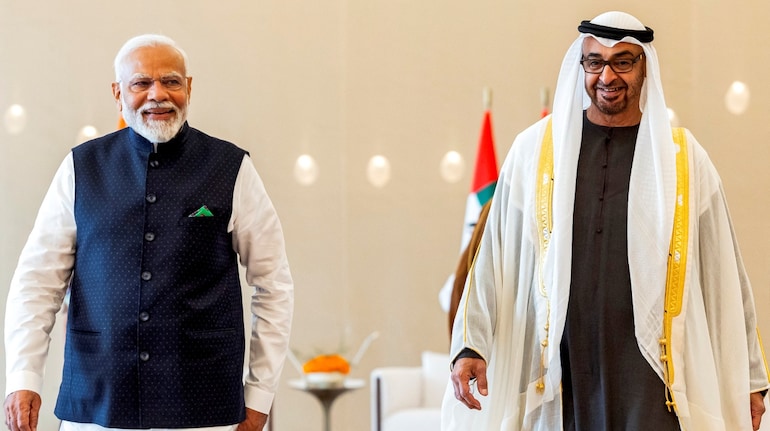
The United Arab Emirates and India took a significant step towards deepening their strategic partnership on Monday as the two countries signed a $3 billion agreement for the supply of liquefied natural gas, alongside pledges to sharply expand trade and cooperation in defence. UAE President Sheikh Mohamed bin Zayed Al Nahyan was received by India’s Prime Minister Narendra Modi at the airport in New Delhi before holding talks that lasted little more than two hours, underscoring the intensity and focus of the visit on 19th January 2026. Despite its brevity, the meeting produced a series of announcements that highlighted the growing breadth of ties between the two countries.
Under the agreement, Abu Dhabi state firm ADNOC Gas will supply 0.5 million metric tonnes of LNG annually to Hindustan Petroleum Corporation for a period of 10 years. The company said the latest deal takes the total value of ADNOC Gas contracts with India to more than $20 billion. “India is now the UAE’s largest customer and a very important part of ADNOC Gas’ LNG strategy,” the company said in a statement, describing the agreement as a cornerstone of its long-term expansion in Asian energy markets. The LNG deal was signed as both leaders committed to doubling bilateral trade to $200 billion within the next six years, reflecting ambitions to move the relationship well beyond hydrocarbons into manufacturing, technology, logistics and investment.
The UAE is currently India’s third-largest trading partner, and officials on both sides said the target was realistic given the pace of recent growth and the scale of existing economic links. Sheikh Mohamed was accompanied by a senior government delegation that included the UAE’s defence and foreign ministers, signalling the broader scope of the talks. India’s Foreign Secretary Vikram Misri told reporters that the two sides had also signed a letter of intent to work towards forming a strategic defence partnership. While details remain to be finalised, Misri said the framework would focus on cooperation, capacity building and security dialogue rather than any specific military commitments.
“Our involvement on the defence and security front with a country from the region does not necessarily lead to the conclusion that we will get involved in particular ways in the conflicts of the region,” Misri said, seeking to address concerns about India being drawn into West Asian disputes. The defence discussions come against a shifting regional backdrop. Pakistan, India’s long-standing rival, signed a mutual defence agreement with Saudi Arabia last year, and officials in Islamabad recently announced work on a draft three-way defence arrangement involving Pakistan, Turkiye and Saudi Arabia. At the same time, relations between Saudi Arabia and the UAE, once close allies, have shown strains over Yemen and differences on oil production policy. Indian officials stressed that New Delhi’s engagement with Abu Dhabi was driven by its own strategic interests and long-standing ties with the Gulf, rather than by regional rivalries.
The Ministry of External Affairs said Sheikh Mohamed’s visit was held at the invitation of Prime Minister Modi and built on momentum created by a series of recent high-level exchanges. These included the visit of Sheikh Khaled bin Mohamed bin Zayed Al Nahyan, Crown Prince of Abu Dhabi, in September 2024, and the visit of Sheikh Hamdan bin Mohammed bin Rashid Al Maktoum, UAE Deputy Prime Minister and Minister of Defence and Crown Prince of Dubai, in April 2025. This was Sheikh Mohamed’s third official visit to India since assuming office as UAE president, and his fifth trip to the country in the past decade. Officials on both sides said the frequency of such engagements reflected a continuity of political commitment and a shared view of the partnership as one of the most consequential in the region.