Egypt and Germany have reaffirmed their commitment to strengthening bilateral cooperation across a wide range of political, economic, and development fields, following a series of high-level meetings in Cairo and New Alamein City.
In Cairo, Egypt’s Minister of Foreign Affairs, Emigration and Expatriates, Badr Abdelatty, held talks with Reem Alabali-Radovan, Germany’s Federal Minister for Economic Cooperation and Development. Abdelatty expressed appreciation for the Egyptian community in Germany, noting its important role in deepening ties between the two nations and supporting joint projects in various sectors. According to the Middle East News Agency (MENA), Abdelatty highlighted Egypt’s contributions to energy and development initiatives on the African continent, as well as its continued efforts to promote peace and security. He underscored Cairo’s desire to expand cooperation in Africa, particularly through the Cairo International Centre for Conflict Resolution, Peacekeeping and Peacebuilding (CCCPA).
The minister also briefed his German counterpart on the Suez and Red Sea Initiative (STREAM), outlining its goal of linking economic, developmental, and environmental frameworks while enhancing capacity-building among Red Sea littoral states.
Madbouly and German Minister Discuss Gaza Crisis and Development Agenda
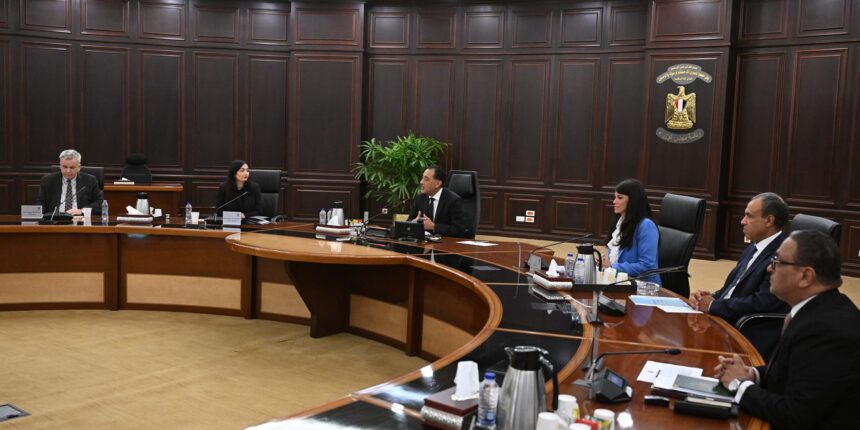
Later on Sunday, German Minister Alabali-Radovan met with Egyptian Prime Minister Moustafa Madbouly in New Alamein City for further discussions centred on advancing their strategic partnership and addressing pressing regional challenges. Madbouly emphasised the long-standing nature of the Egypt–Germany relationship, describing it as rooted in shared interests and mutual commitments to sustainable development. He noted that German development cooperation focuses on key sectors including renewable energy, technical education, energy efficiency, water resource management, and private sector development.
The German minister, on her first official visit to Egypt, reaffirmed Germany’s support for Cairo’s efforts to address the worsening humanitarian conditions in the Gaza Strip. She reiterated Berlin’s backing of the two-state solution and its firm rejection of any displacement of Palestinians. A government statement quoted her as affirming the “strength and diversity” of Egypt–Germany relations, particularly in economic fields, and expressing confidence that her visit would help deliver tangible outcomes for both sides.
Economic Cooperation and Investment Opportunities
The meeting was attended by Egypt’s Minister of Planning and Economic Development, Rania Al-Mashat, and Foreign Minister Abdelatty. Al-Mashat revealed that the current economic cooperation portfolio between the two countries stands at approximately €1.6 billion, allocated to development projects in priority sectors such as climate action, water and sanitation, irrigation, migration, solid waste management, and private-sector competitiveness. She expressed hopes for broader cooperation frameworks, increased German investment, and expanded technical support to bolster Egypt’s economic resilience and ongoing reform programme.
Abdelatty echoed the need to elevate bilateral relations to the level of a strategic partnership. He stressed the importance of encouraging more German businesses to invest in Egypt, citing improvements in the investment climate. The foreign minister also outlined the economic strain Egypt faces in hosting more than 10 million migrants and refugees, calling for enhanced cooperation on migration management and support to ease the associated burdens.
Both sides noted recent progress in bilateral cooperation, including new economic agreements, development partnerships, and debt-swap programmes. Madbouly expressed Egypt’s aspiration for Germany to continue supporting Egyptian-European relations within the framework of the European Union. The discussions concluded with a shared commitment to greater collaboration in development, regional stability, and sustainable growth—reflecting the evolving partnership between Cairo and Berlin at a time of heightened regional and global challenges.